Andrew Forrest’s iron ore giant Fortescue says it believes it has obtained the lowest cost pricing yet for big battery storage, a key part of its plans to ditch fossil fuels and reach “real zero” at its mining operations by the end of the decade.
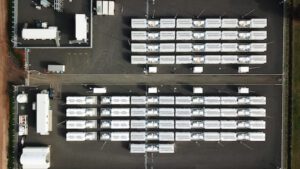
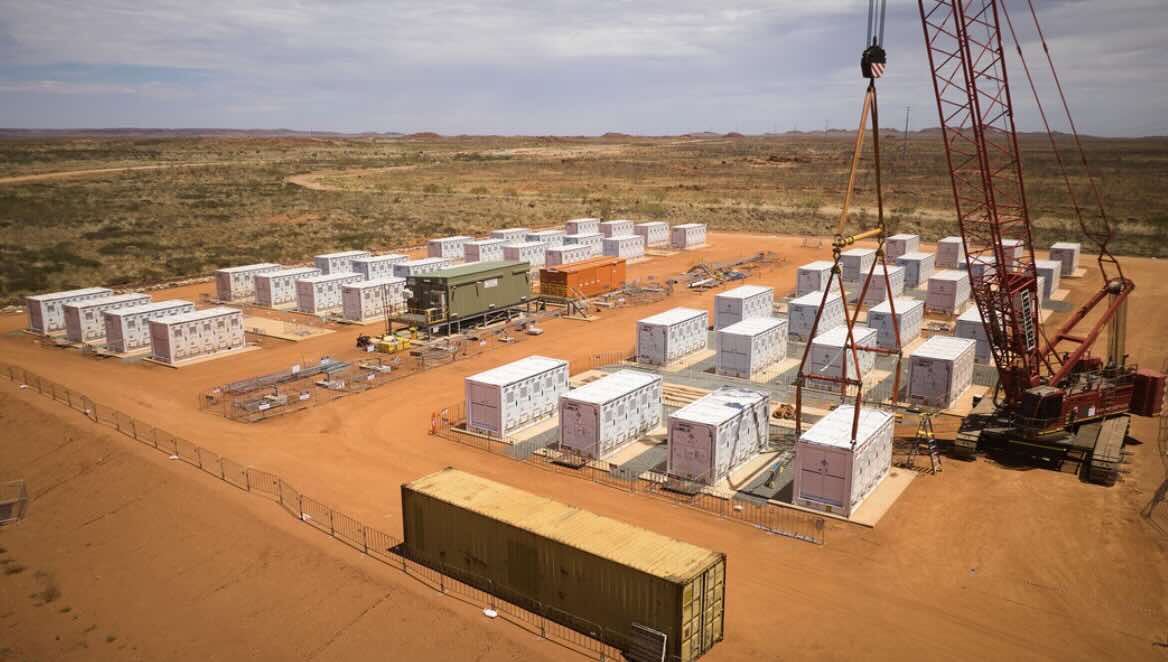
Fortescue has recently commissioned its first big battery, the 50 megawatt (MW), 250 megawatt hour (MWh) North Star Junction battery, the start of plans to install up to five gigawatt hours of storage to support the wind and solar that will power its sites and charge its electric transport and mining equipment.
The company is sourcing its battery technology from BYD, the world’s biggest supplier, as part of a suite of deals signed with Chinese manufacturers including Envision (wind turbines), Longi (solar) and XCMG (electric haul trucks and mining equipment).
Battery storage costs have plunged by around 40 per cent in Australia over the past year, by most estimates, allowing developers to supersize their projects – mostly adding more storage duration – at little extra cost.
Fortescue reckons it has obtained the best deal of all, which may not be surprising given the scale of its project plans.
“Without disclosing the amazing commercial outcomes that we’ve got, we’re pretty confident that we’ve secured large scale best at pricing that hasn’t really been seen, certainly in Australia,” Fortescue CEO Dino Otranto told analysts on the first quarter production report investor call on Thursday.
And Otranto says the company is already seeing other benefits, as the North Star battery steps in to support the notoriously variable performance of gas and diesel generators at its mine sites and processing operations.
“What we’re learning is … battery storage is not like building a power station with (all that) complexity. You put one down, and you multiply that by 1000s, just like Lego bricks that you stick in and plug in, and instantaneously they work.
“And they’ve already saved our bacon many times when you have the usual power fluctuation that you have in the Pilbara, our BESS has already meant that we did not have to shut down large parts of our processing facility.
And Otranto says that has already delivered a significant improvement in the performance of its mining operations and processing plants.
“This just takes out another one of those variables that you have with ageing assets,” he said.
“The battery stack is remarkable, and I invite anyone to come and have a look at it. It’s working. It’s economic. It’s 24/7, it’s exactly what we want, and really it’s what this country needs. It will drive down the cost of electricity.”
Fortescue plans up to 5 gigawatt hours of battery storage – delivered by BYD – to support its mining operations and back up the multiple gigawatts of wind and solar that it will also build.
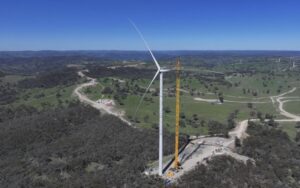
It has already installed half of the half million or so solar modules at the Cloudbreak solar project, and has just started construction of its first wind project, at Nullagine, where it will deploy – for the first time – the self-lifting tower technology developed by its recently purchased Spanish business Nabrawind.
Fortescue also expects big savings from the electrification of its mining equipment and transport, including the giant haul trucks that ferry the ore from the mine site to the processing plant.
The company’s mining costs came in at $US19.10 a tonne in the latest quarter, due to a variety of factors including a higher diesel price.
Otranto said the electrification strategy will deliver a saving of about “three to four bucks” a tonne, although most of those savings will come from the deliver of nearly 400 giant electric haul trucks.
“We think that the value for us is about three to four bucks … by 2030, and that will correspond to the delivery of full suite of the higher consuming, higher diesel consuming pieces of machines, which totals about 600 to 700,” he said.
“We’re really at the start of that. We’ve got about a dozen or so electric excavators running, which proportionately don’t use that much diesel, relative to the high consuming mobile fleet, which is where really you see the benefits coming through.
“And happy to report, we’re going to have a bunch of those this calendar year, and then you see the huge volumes coming through Liebherr and XCMG hitting us in the next two to three years, which where you get your biggest bang for your buck.”