The end of the calendar year is traditionally a busy one for the energy industry, with a seemingly endless number of major documents released in the lead up to and sometimes just before Christmas. And 2025 is no different. In fact, it is shaping up as one of the most crucial periods yet for the green energy transition.
Three key reports will be released: The draft of the 2026 Integrated System Plan – the multi-decade planning blueprint that shapes key decisions around the grid – will be the first to go this week.
It will be followed by an energy ministers’ meeting next Tuesday that is expected to precede the release of the Nelson Review on the future market design, and then the final version of the latest CSIRO GenCost report a day later.
The draft ISP is due for public release on Wednesday, with the “Step Change” scenario still as it central “optimal” path, despite the slowdown in large scale renewable construction starts in the last year, particularly in wind energy.
The ISP – first published under the Coalition government in 2018 at the urging of the Finkel Review – is an incredibly detailed document, with thousands of pages of inputs, assumptions and various consultations published in the 12 months leading up to the draft.
The 2026 version will be the second published under a Labor government, and while it purports to be partially driven by current government policy, the central tenor of the document is largely unchanged – the coal fleet is getting old and needs to be replaced, and the lowest cost way to do that is with wind, solar and storage.
One of the significant outcomes of the consultation process so far for the latest version has been the growing support of an “accelerated” transition.
The 2024 ISP had 43 per cent of stakeholders thinking that the “step change” scenario as most likely, just ahead of the slower “progressive change” (42 per cent), with just 15 per cent seeing the most ambitious scenario, green energy exports as most likely.
There has been some name changes for the scenarios this time round, and a lot more optimism. Step Change is now seen as most likely by 46 per cent of consulted stakeholders, with the rest split between “Slower Growth” and “Accelerated Transition.”
AEMO says the greater optimism reflects rapid developments in the last two years on battery storage, solar PV, energy efficiency, and – interestingly – the growing interest in data centres, and presumably the assumption that will, or at least should, be powering these with wind, solar and storage that they build or contract.
AEMO describes the ISP as a roadmap for the National Electricity Market that outlines the mix of generation, storage and network investments required to meet both consumer needs and government energy and emissions targets between now and 2050.
Since 2024, there has been a number of key developments, apart from the technology developments mentioned above which drove the changes in scenario weightings, and there have been two big spanners thrown into the works since the last edition.
Chief among these are the blowout in transmission costs, and the delays in some projects that will affect the timing of many large scale wind and solar projects.
The ISP never planned anything like the 28,000 kilometres claimed repeatedly by the Coalition and other detractors that would be built to meet the government’s 2030 renewable target – that was the forecast out to 2050 and only in the green export scenario.
But the rising cost of transmission and other civil construction works, and the plunging costs of battery storage could well provoke a rethink of what’s needed in the short to medium term
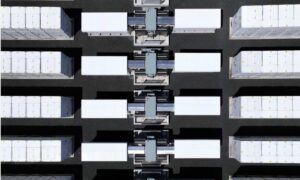
This could be in the form of using more large batteries as either giant “shock absorbers”, or what is known as “virtual transmission” – effectively boosting the capacity of transmission lines without having to build as many new ones.
The other spanner is the election of the LNP state government in Queensland, and the release of its new “energy roadmap”, which resembles more a trip down memory lane (extending coal fired generators and building more gas), than any forward looking document.
That matters because a lot depended on Queensland to develop its excellent wind and solar resources. The chances are that the industry will get things built despite the new state government, and its modelling assumptions that nothing will added apart from those already in train.
But it’s another unwanted barrier and reflects the profound influence of partisan politics on the energy transition. The fact that Labor won the 2025 federal election so decisively is probably part of the reason that the scenario outlook for the 2026 iSP is more optimistic than it was two years ago.
Another crucial part of the ISP will be the role of the local distributed networks, who have been pushing for a greater role in grid planning, arguing that they can support a lot more capacity than previously recognised, and at a fraction of the cost.
Then there is the role of distributed energy – the rooftop solar, battery storage and EVs that are owned by households and business – and how they form a key part of the system.
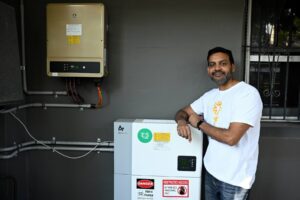
The success of the battery storage rebate for homes and businesses will also be food for thought for grid planners, but a big question mark hangs over the progress of “virtual power plants”, considered key for the market operator in visibility and flexibility in the market.
There is also the tricky issue of control of these assets. AEMO wants more because it is considered essential for the secure management of the grid, but customers are not showing much interest in allowing retailers or others have control over the assets that they have bought.
Has the phenomenal success of the federal battery rebate changed this?
And the issue of grid security is an important one. AEMO’s Transition Plan released last week highlighted the potential problems in allowing coal generators to retire before enough capacity has been installed to deliver inertia and system strength.
The main problem here is that the favoured technology – synchronous condensers – is both expensive and hard to get, and while battery grid forming inverters are seen as their likely successor, AEMO is wanting to see the results of more trials before agreeing to put most of its eggs in the one basket.
The Nelson Review has already flagged its main approach to the market review – addressing the issue of tenor through a new mechanism known as the ESEM – Electricity Services Entry Mechanism.
This is largely focused on what will replace the Capacity Investment Scheme once its series of auctions is completed over the next couple of years, and will largely set the market signals for the capacity needed to replace the remaining coal fired generators.
The devil, as in all these proposals, will be in the detail.
It will also seek to find solutions for the so-called “kalte-flaute” – a bit like the oft-remarked “dunkelflaute” (dark doldrums) but on this occasion combined with cold (kalte), meaning an increase in demand as well.
This is largely focused on what will replace the Capacity Investment Scheme once its series of auctions is completed over the next couple of years, and will largely set the market signals for the capacity needed to replace the remaining coal fired generators.