Australian-made technology that can detect grid faults before they happen has landed $50 million in venture funding, but it’s not the home market where that cash will be spent.
IND Technology is looking to the US where big utilities are already buying, and increasingly to Europe with sales to fire-prone Portugal and Greece, says founder and CEO Alan Wong.
Australia is yet to fully embrace the technology, designed and built by RMIT professor Wong.
Wong’s design is a sensor that is mounted on power poles up to 5km apart; these capture changes in radio-frequency signals as failing or stressed parts cause electrical arcing.
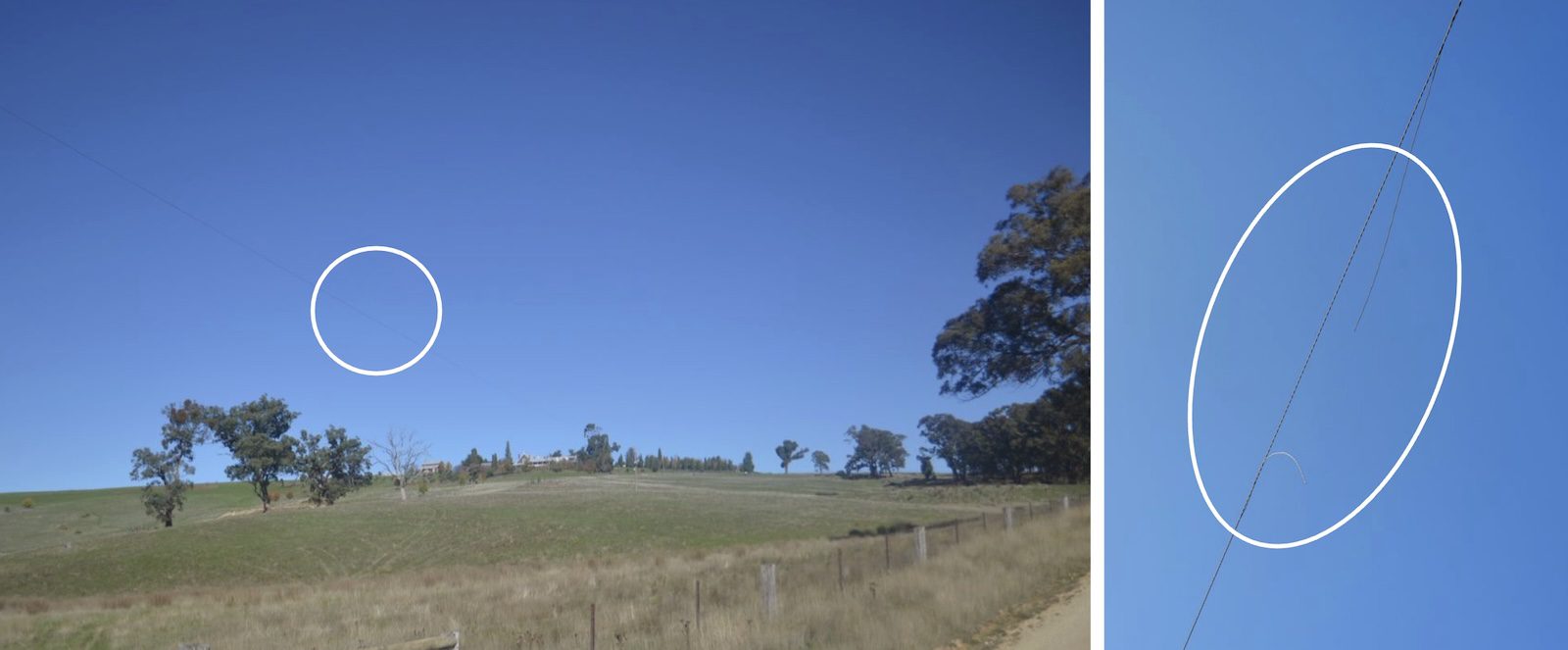
Those anomalies might be caused by a branch rubbing against a power line, a transformer about to blow, or a broken strand in a cable, and they can be located to within a 10m range, identified by an algorithm, and then fixed before becoming a problem later.
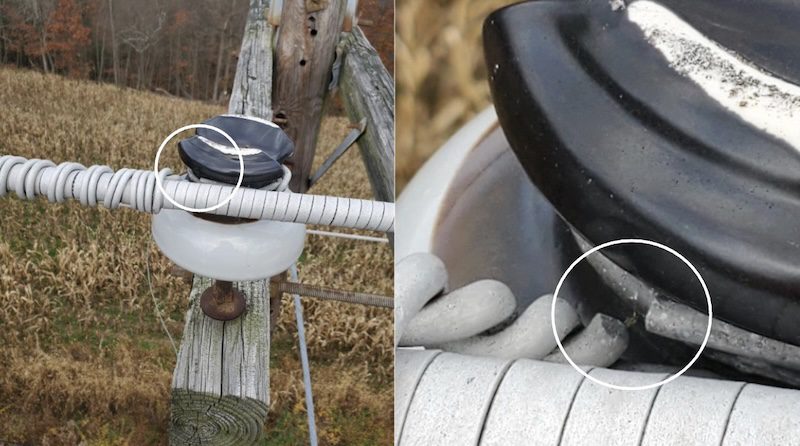
Broken cable ties. Image: IND Technology
“Bushfire is the most obvious risk but the issue we’re trying to address here is aging infrastructure, which is old and under pressure,” Wong told Renew Economy.
“[And climate change as] more weather, more heat puts more pressure on aging infrastructure around the world.”
The idea is to change maintenance from a reactive, five yearly inspection schedule to proactively stopping problems before they start.
As to how common these future problems are, Wong says the circa 5000 sensors that have been installed to date have detected up to 2000 anomalies.
The company believes it’s prevented some 500 fires around the world. Wong suggests utilities can face between 50 and 200 “ignition events” each year.
The funding round was co-led by US-based energy investors Angeleno Group and Energy Impact Partners, and included local investor Virescent Ventures and utility Edison International.
The extra cash will go towards beefing up the company’s presence around the world and sales of the flagship Early Fault Detection (EFD) system, as well as building out the machine-learning engineering team.
The technology is what’s needed to “underpin the electrification of the global economy”, says Virescent Ventures managing partner Kristin Vaughan.
“The potential is vast,” she said in a statement.
“Grid reliability and resilience are among the most critical challenges and opportunities for the energy transition. Ageing infrastructure, hotter and drier summers, and rising bushfire risk all mean utilities need smarter tools to detect faults before they become costly outages or catastrophic fires events.”
US are big buyers
The technology was built by Wong after the deadly Black Saturday bushfire in 2009, which was started by a faulty power line in Kilmore East, Victoria.
But it has not gained traction in Australia.
Wong says the company has run eight pilots in Victoria alone, but is yet to sign a commercial deal in the state.
Instead, IND Technology is looking to the US where utilities are very keen and have taken the lion’s share of the company’s 15,000 device sales.
PPL Electric in Pennsylvania is the company’s biggest customer, putting in multiple orders within a year of trying the technology with a view to building grid resiliency.
“The data they have from the EDF can help them to prioritise asset replacement programs, so on a higher level this is addressing affordability,” Wong says.
“Why are we replacing a power line when it’s still in good condition? Because we didn’t have that data before. We can deploy those resources more effectively rather than what we have been doing in the past.”
California’s PG&E has been a big buyer but with bushfires now a regular all-round problem in the state, it is considering the fire prevention aspect.
If you would like to join more than 28,000 others and get the latest clean energy news delivered straight to your inbox, for free, please click here to subscribe to our free daily newsletter.