Mining giant Rio Tinto has backed the green metals ambitions of New South Wales based environmental technology company Calix, pledging more than $35 million towards the development of a demonstration plant in Kwinana, Western Australia.
Calix, founded in 2005 to solve “urgent global challenges in industrial decarbonisation and sustainability,” said on Monday that it has executed a joint development agreement (JDA) with Rio Tinto for over $35 million in cash and in-kind support for the company’s green iron technology.
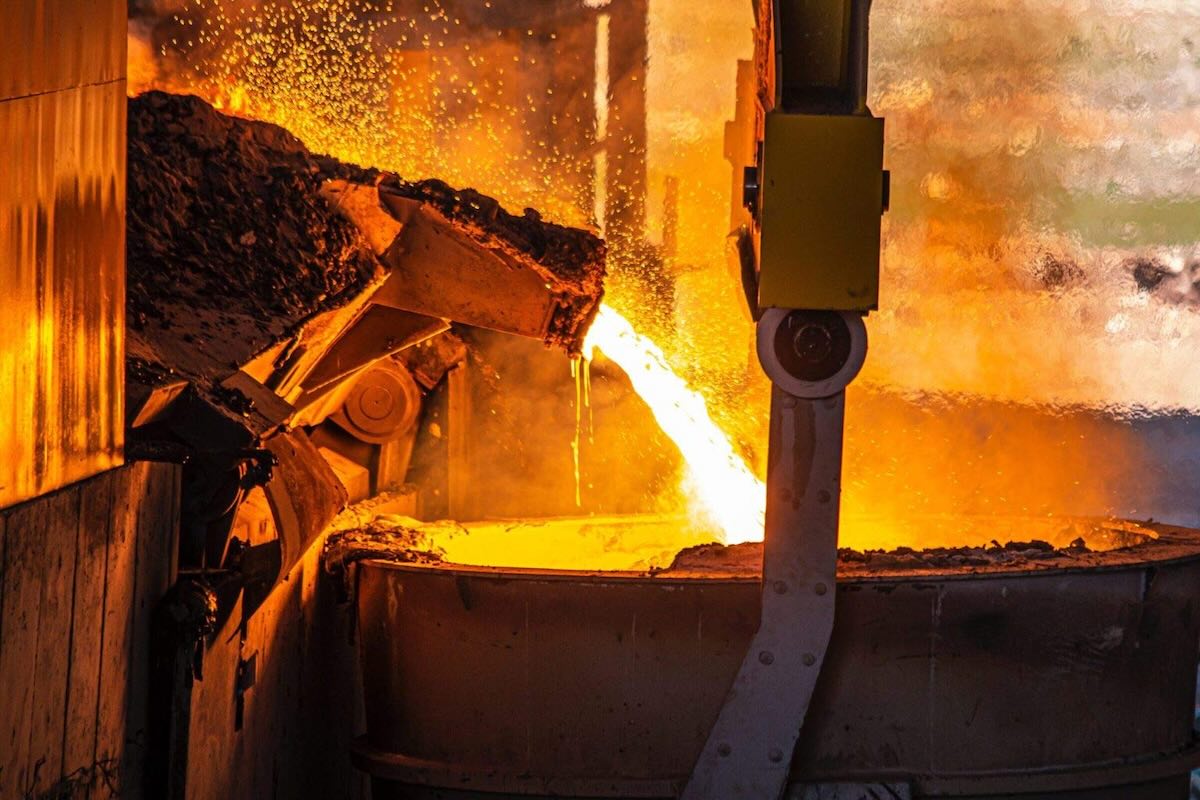
The focus of the financial support is a demonstration plant, to trial Calix’s Zero Emissions Steel Technology (Zesty), which uses combination of electric heating and hydrogen reduction to produce green iron and, ultimately, green steel.
The Zesty demonstration project has already been backed by a grant of up to $44.9 million from the Australian Renewable Energy Agency (ARENA), announced in July, and which is subject to matched funding being secured.
Under the terms of the newly executed JDA, Rio Tinto will contribute $8 million in cash across two tranches of $3 million and $5 million, prior to a final investment decision (FID), as well as in-kind contributions including support for development, commissioning, and operations of the demonstration plant.
The demonstration plant will be located near the NeoSmelt project for downstream processing of direct reduced iron, which is being jointly developed by Rio Tinto, BHP, BlueScope, Mitsui, and Woodside.

Phil Hodgson, Calix CEO and managing director, said the deal with Rio Tinto provides further validation of the potential for the Zesty technology to be deployed to the world’s largest minerals and metals market, and its potential to help decarbonise a critical industry responsible for ~8% of global CO2 emissions.
Calix claims that its Zesty technology offers the lowest cost pathways to green iron and steel through a combination of minimal hydrogen consumption, flexible electric heating compatible with intermittent renewable energy sources, the elimination of ore pelletisation, and enabling the use of fines and lower-grade iron ores.
Capable of being powered entirely by renewable energy sources, Zesty utilises Calix’s indirect heating technology to ensure that hydrogen is used only as a reductant in the production of green iron and steel. Hydrogen is therefore not combusted or used as a fuel, and unreacted hydrogen is simply recycled.
For more in-depth information about the Zesty process, Calix posted a full briefing back in mid-2024.
The Zesty Green Iron Demonstration Plant is currently designed to produce up to 30,000 tonnes each year of hydrogen direct reduced iron (H2-DRI) or hot briquetted iron (HBI) from a range of iron ore sources.
Once operational, the demonstration plant is expected to provide an industry-wide facility for the nonexclusive toll processing of iron ores into H2-DRI or HBI, which will in turn support the ongoing viability of Australian iron ore in a low emissions steel value chain and bolster the development of a green iron industry in Australia.
“The world needs low-emissions steel if it is going to decarbonise, and we continue to look at a range of ways Pilbara iron ores can help to do this as new technologies emerge,” said Matthew Holcz, Rio Tinto iron ore CEO.
“We’re pleased to partner with Calix, an Australian technology company, to help progress the Zesty technology to be able to use Pilbara iron ores for lower-emissions steel making.”
If you would like to join more than 28,000 others and get the latest clean energy news delivered straight to your inbox, for free, please click here to subscribe to our free daily newsletter.