Last week, farmers, energy experts and community leaders gathered in Narrabri for the inaugural New Energy Expo, to tackle a pressing question: How can regional Australia truly benefit from the renewable energy transition?
Across the country, massive solar and wind projects are taking shape, but many locals feel like spectators – watching the transformation unfold without seeing lower power bills or stronger local economies.
Sally Hunter, co-founder and director of Geni.Energy, which organised the Expo, is determined to make sure that doesn’t happen in Narrabri, a farming and mining town in northwest NSW.
“The transition is inevitable, and we don’t want to be left behind,” says Hunter, who started Geni.Energy five years ago to ensure a community-led approach to energy change.
Three large-scale renewable projects are currently planned for the Narrabri region:
- Engie’s Silverleaf Solar Farm, five kilometers northwest of Narrabri, Enervest’s Battery Energy Storage System (BESS) on Stoney Creek Road and Ace’s Narrabri Solar & BESS Hybrid, a 140MW solar farm with 100MW of battery storage, 11km northeast of town
Geni.Energy is working to ensure these projects deliver real benefits to the local community. Their Expo brought together speakers who demonstrated that renewables aren’t just about cutting emissions – they can also be a game-changer for rural economies when communities are involved from the start.
Farmers leading the renewable charge
One of the standout speakers at the Expo was Tony Inder, a sheep farmer from Wellington in NSW’s Central Western Slopes, who shared his journey from shearer to ‘solar grazing’ farmer.
Inder initially rejected lease offers from renewable developers to build a solar farm on his property. But in 2018, aware that AGL would be closing their coal-fired Liddell power station, he cold-called their 1 800 customer service line.
“When I was asked if I wanted to connect to solar I simply said, ‘No, I’m just wondering if you do’.”
Within a week, the head of AGL’s solar department was sitting at Inder’s kitchen table.
That conversation eventually led to a $10 million deal with AGL for his land near the Wellington electricity substation. In 2021, following AGL’s sale to Lightsource BP, 1,000 acres of solar panels were installed across 1,500 acres.
It was then that Inder noticed something unexpected – lush green grass thriving beneath the panels, while his adjacent paddocks remained dry.
“I could see over the fence that there was green grass under the panels and none on my side,” he said.
Realising the opportunity for both the solar company and himself, Inder struck a deal to graze 5,000 sheep across two solar farms. The result? Inder estimates that Lightsource BP saves $54,000 on mowing costs every year, and his sheep benefit from improved grazing conditions.
Following a recent study of Inder’s sheep that compared the output of sheep grazing under solar panels with those that don’t, Inder says he gets a 20% increase in wool yield and stronger, cleaner fleece.

It’s not only livestock farmers that can benefit from renewables.
Mike Casey, a cherry farmer from New Zealand, shared another compelling example of how renewables can transform agriculture at the New Energy Expo.
By electrifying 21 machines on his cherry farm, Casey has eliminated fossil fuel use and slashed his operating costs.
His solar array – 216 panels – powers all their farm machines and with the help of his 300 kWh battery puts excess energy back into the grid.
Whilst his electric machinery cost him around NZ $400,000 more in 2020 than if he’d bought fossil fuel equivalents, he is saving around $42,000 a year. His estimated payback for the machinery is 14 years.
Casey’s farm has since become a model for other farmers looking to make similar changes, drawing visitors from across the country keen to see electrification in action.
Young innovators taking action
The Expo also showcased local innovation. A team of Narrabri high school students – the ‘EvapEco Innovators’ – presented a project to reduce water evaporation on farms using floating solar panels.
The students all come from farming backgrounds and are aware of discussions in their community about the staggering amounts of water lost to evaporation on the region’s farms – up to 40% – especially the large dams needed for local cotton production.
They estimate that if a 1500 megalitre dam loses 40% of its capacity through evaporation in a season this would be 600 megalitres lost to the farming operation.
“If the crop is using 7 megalitres per hectare the grower is missing out on 85 hectares of production,” explained 15-year-old Holly Anderson.
“By covering 35% of a dam’s surface with modular solar panels, we can block UV rays, lower water temperature, and reduce evaporation”.
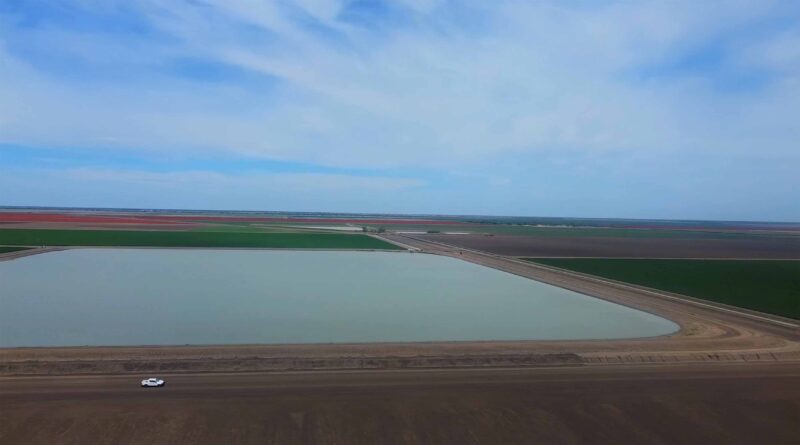
The ‘solar floats’ would be connected to an onshore battery system which can power farm equipment, including pumps, vehicles, and power tools.
The students estimate their design could save $627,000 annually on a 1,500-megalitre dam while generating renewable energy for farm use. They’re now looking for funding to pilot the project.
Overcoming distrust in large-scale renewables
Despite clear benefits, many regional Australians remain wary of large renewable projects, fearing a repeat of past extractive industries that provided little local return.
A 2023 federal survey by the Australian Energy Infrastructure Commissioner (AEIC) found that 92% of respondents were dissatisfied with community engagement by project developers, while 71% strongly disagreed that landholders and communities would benefit from renewables.
Mark Squires from RE-Alliance addressed these concerns at the Expo, highlighting the need for early and meaningful consultation, particularly in the Renewable Energy Zones (REZ) being rolled out across New South Wales.
“Communities are too often left wondering what’s going on and through that a grapevine happens,” explained Squires.
RE-Alliance is advocating for federal funding to establish local energy hubs across Australia to address the information gap that’s emerged for many communities in the REZs. These would be trusted sources of information to help regional communities navigate the energy transition.
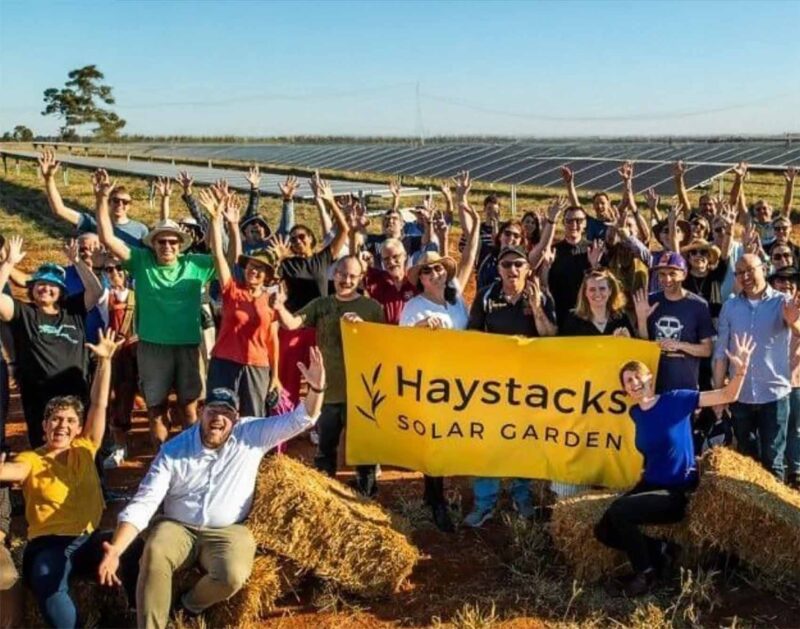
One example of where of proactive engagement has helped avoid conflicts and enabled genuine community buy-in is in the Riverina area of NSW, where the innovative community-owned Haystacks Solar Garden has been developed — Australia’s first large-scale, shared solar farm.
Hosted by Grong Grong Solar Farm the small 1.5 megawatt solar garden allows people who can’t install solar panels on their own homes – such as renters and apartment dwellers – to buy a ‘plot’ in the solar garden that is part of the solar farm and receive credits on their electricity bills.
Geni.Energy’s community-first approach
Geni.Energy had hoped to launch its flagship project – a 500kWh community battery in the Narrabri Town Hall car park – at the Expo. However, like many community battery projects, regulatory hurdles have delayed the rollout.
Once operational, the battery will store excess daytime solar energy for use at night, helping households maximise their solar investments. With a 44% rooftop solar penetration rate – higher than the national average of 35% – Narrabri is an ideal location for such a system.
Narrabri, like many regional towns, is at the end of long transmission lines vulnerable to voltage fluctuations and reliability issues. It’s hoped a locally stored energy solution, like the community battery, will improve energy resilience while keeping power benefits local.
While the project has faced delays, Hunter remains optimistic it will be switched on within weeks.
The New Energy Expo made one thing clear: Narrabri has the potential to be more than just a site for large-scale renewables – it can be a leader in community-driven clean energy solutions. But realising that vision requires ensuring locals, not just developers, reap the rewards of Australia’s renewable boom.