Energy companies of all stripes will be allowed to use cash as credit to meet their market obligations, after a rule change initiated by coal power station owner Delta Electricity last year.
The rule change means Delta, which found itself locked out of credit markets by sustainability-minded banks, and small retailers can give the Australian Energy Market Operator (AEMO) up to $20 million in cash as credit support for when they buy and sell electricity.
The Australian Energy Market Commission (AEMC) originally wanted to cap the amount of cash able to be used at $5 million, but pleas from four different market participants were convincing enough to bump that up to $20 million.
“While this rule change was initially requested by Delta Electricity to address specific financing challenges, our consultation revealed much broader market issues affecting many participants,” said AEMC chair Anna Collyer in a statement.
“The final rule improves flexibility and reduces costs for all participants, with particular benefits for smaller retailers who face higher financing costs and barriers to entry.”
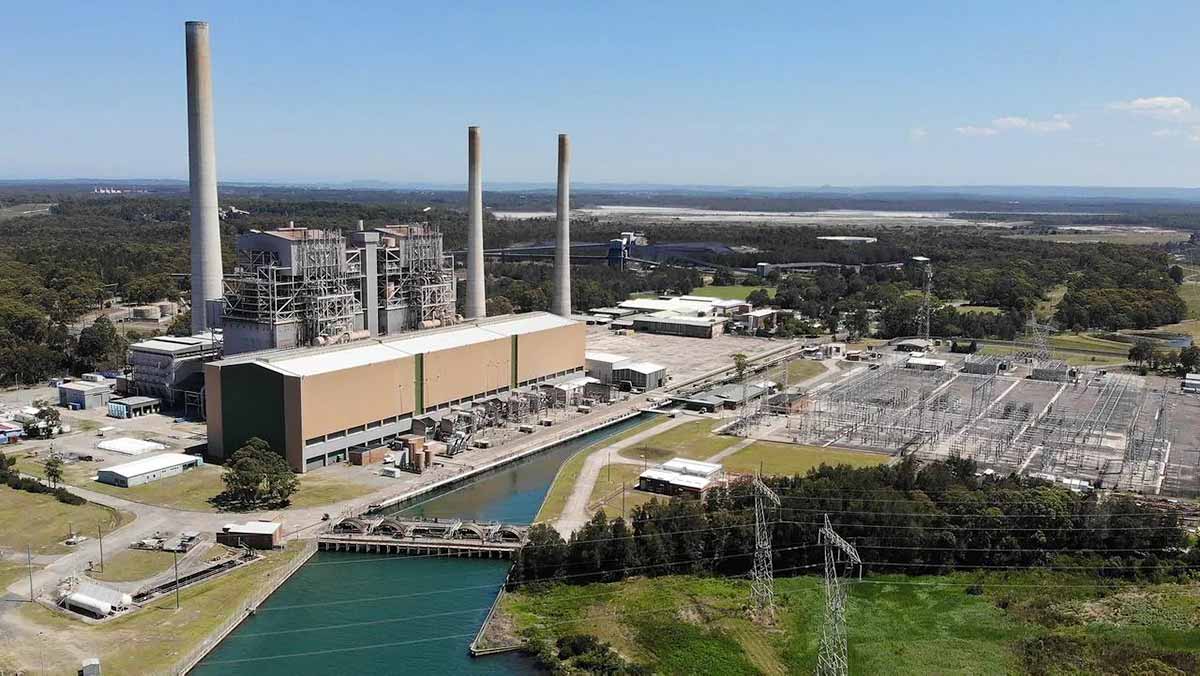
In October last year, the owners of one of Australia’s oldest operating coal fired power generators, Vales Point B, said it had been refused bank guarantees and needed the rules changed – urgently – to allow it to continue operating.
The 1,320 MW facility in New South Wales (NSW), now owned by Czech-based energy group Sev.en, had been scheduled to close in 2029, but in July last year announced an extension of its technical life that pushed out the closure date to 2033, when it will be more than 50 years old, depending on market conditions.
It was unlikely AEMO would just shut down a 1.32 gigawatt (GW) power station and the market operator can under some circumstances take cash in lieu of a credit note, but Delta said that was too uncertain.
“Delta contends that AEMO should not be expected to rely on this discretionary power to selectively suspend Market Participants based on their ability to meet credit support requirements,” it wrote at the time.
“Furthermore, such reliance would create significant uncertainty for businesses such as Delta and undermine the integrity of the existing prudential framework.”
Solving bias against small players
Small retailers are set to be the big winners from this rule change, with GloBird calling the reliance on third parties to validate a “structural problem” in its submission.
It was pushing for no cap on cash to give maximum flexibility to small and medium retailers, but if necessary could live with a $20 million cap.
“GloBird which has only circa 100k electricity customers currently needs to provide credit support of over $10m,” it wrote.
“In the event that a third-party financier refused to provide GloBird bank guarantee or security bonds, being able to provide $5m in cash would not help us or other similar sized retailers.
It also means that when third parties are late coming through with their required payments, AEMO can pay for an shortfall out of the company’s cash balance.
AGL on the other hand was not keen on a rule change at all. In its final, late, submission in May it suggested the scrutiny of new entrants to the National Energy Market (NEM) would need to be higher if banks weren’t doing that role as creditors.
“AEMO have noted that many would-be participants are unable to secure such guarantees due to the nature of their business model or other issues of capacity,” it submitted.
“Additional safeguards should also include… clear evidence that demonstrates a market participant has been unable to obtain credit support or that it would be prohibitively expensive to do so under standard mechanisms.”
Originally the AEMC also proposed a surety bond, but none of the 13 submitters said they’d use one, so that was dropped from the final rule.
The rule starts in November next year – a full two years after Delta Electricity made its first request and a year later than the company wanted.