The Liddell and Bayswater power stations. Image: AGL.
As I discuss below, the volume impact on electricity markets is usually bigger than the price impact. There are a number of gross assumptions in the note below but I don’t think they detract from the simple message: Batteries are going to kill coal generation profits as well as gas. They may do more damage to coal than they do to gas.
Although I illustrate this with NSW, the impact in Queensland will most likely be just as big,
In a previous note, I discussed the history and recent coal generation outcomes with a particular focus on NSW. A comment was made – and I paraphrase – that batteries wouldn’t change average prices very much, because they only impact at peak.
A plot from the previous note illustrates this.
Figure 1: Coal profitability by time of day
Futures prices are sitting at around $100/MWh and even if that’s a natural contango, it still suggests plenty of price for coal generators.
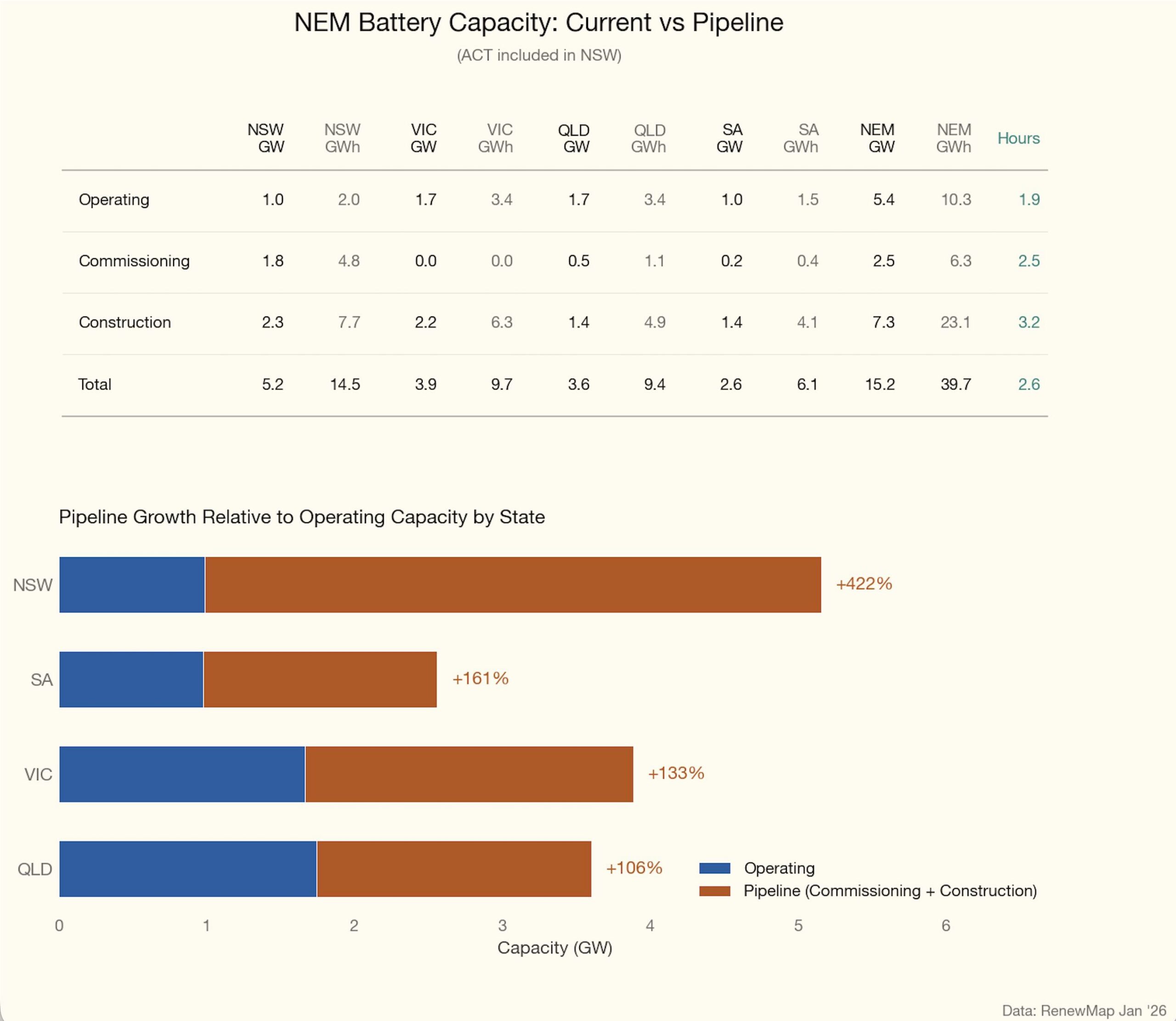
We do know that about 3.5 GW of new batteries are coming to NSW or even more, and that is before the long duration storage tender results of Thursday morning.
Figure 2: NSW battery pipeline
So how will that pipeline of battery projects impact coal profits?
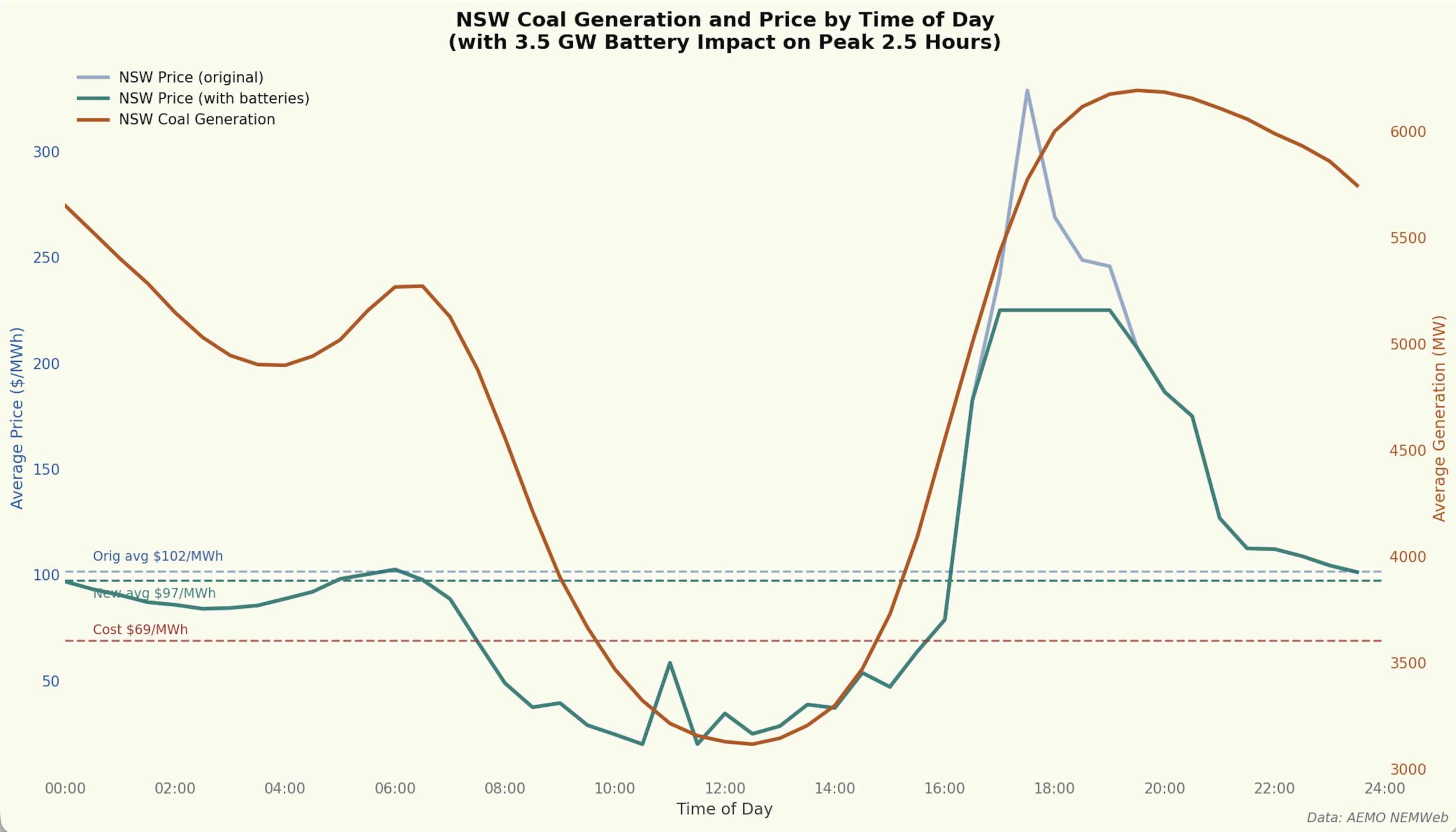
The first step was to think about spot prices. I assumed that this amount of batteries would be enough to see average evening peak spot prices in NSW no higher than $225/MWh but you can make your own number up.
This only reduces average price by about $5-7/MWh.
Figure 3: Projected spot prices with batteries
However, if we assume that coal bears all the volume loss, and it won’t – hydro and gas will lose some as well but let’s put it all on coal, then notional spot profit can take up to a 40% hit.
Figure 4: Coal profit impact from batteries
If you also take account of depreciation, fairly high as end of life approaches, accounting profits are not looking so good.
Of course it won’t work out like this; the idea is just to sketch out the impact of batteries in broad strokes. Although we think about price, it’s the impact on volumes and revenues that matters more.
Australia's most powerful battery now free to trade its full capacity on market after its…
The site of one of Australia's very first wind farms now shows little evidence of…
The "35 by 35" electrification goal has an Australian origin that the government seems to…
If we fail to ensure data centres pay for new renewables and storage to cover…
Home batteries look like resetting the behaviour of households when it comes to responding to…
South Australia energy minister hints that the 100 pct net renewables target may not be…