Two major, multi-billion dollar pumped hydro energy storage projects have been declared Critical State Significant Infrastructure by the New South Wales Labor government, underscoring the state’s urgent need for long-duration firming capacity to cancel out coal.
Zen Energy’s $3.5 billion Western Sydney Pumped Hydro Project and Acen Australia’s $3.6 billion Phoenix Pumped Hydro Project have been put on the planning fastrack by NSW energy minister Penny Sharpe on Friday as high-priority, essential projects for the state as it transitions to renewables.
The announcement comes a day after the state government revealed that big battery projects with up to 10 hours of storage or more had dominated its latest long duration tender. But the state is still hungry for more pumped hydro to fill in longer and seasonal gaps in wind and solar.
It also comes as former prime minister Malcolm Turnbull, now head of the International Hydro Association, prepares to meet with MPs and ministers this week in a new push to make sure hydro is built. You can hear his comments in this week’s episode of Renew Economy’s Energy Insiders podcast, to be published on Friday.
See: Energy Insiders Podcast: Malcolm Turnbull on hydro, LNP, One Nation and Trump
Zen’s project, the first brownfield renewable energy development project the company has ever undertaken, is proposed at 1 gigawatt of energy generation capacity and up to 16 hours of storage.
The Western Sydney Pumped Hydro Project will occupy WaterNSW land that once served the state’s coal industry, and would pump water through mostly underground tunnels from Lake Burragorang to a reservoir formed out of an old coal washing pit.
The Acen Phoenix project, which is the only pumped hydro project so far to be named as a winner in the NSW government’s long duration storage tender process, proposes to have a generating capacity of 810 megawatts (MW) for a nominal duration of 12 hours.
Acen’s project is proposed for construction next to Lake Burrendong, near Mudgee, in the Central West Orana renewable energy zone (REZ), also located on WaterNSW land.
In NSW, Critical State Significant Infrastructure (CSSI) projects undergo a specialised, streamlined, and rigorous assessment process due to their high impact – in this case on the state’s environment and its efforts to secure a clean energy future.
In a joint statement with state planning minister Paul Scully, Sharpe said the two projects, which a both in the early stages of planning, will undergo comprehensive assessment, including public exhibition and an opportunity for submissions from the community.
“These projects will help stabilise the grid, support energy reliability during peak demand periods and underpin the transition away from coal‑fired power,” Sharpe said on Friday.
“Long‑duration storage like pumped hydro is essential to building a modern energy system that works for households, businesses and industry across NSW.”
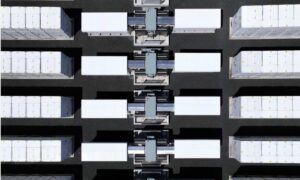
The new CSSI declarations follow closely on the announcement of the latest round of winners of the Minns government’s most recent energy storage tender: six new big battery projects, including the biggest in the country to date.
As Renew Economy reported on Thursday, the tender is being hailed by NSW Labor as the biggest and most successful battery tender of its type, both in terms of scale and number of projects, and also because of the falling costs of the technology and the bids.
The winning projects, which must be built by the end of the decade, include the massive 300 MW and 3,500 megawatt hour Great Western battery project, to be built by Neoen Australia at the site of the shuttered Wallerawang coal fired power station near Lithgow.
All told, there will be more than a gigawatt and 14,000 MWh of storage capacity, and $3.5 billion of investment from the battery tender.
NSW is striving to meet its 2030 target of 2 GW and 16 GWh of long-duration storage in place by 2030, followed by the newly expanded target of 42 GWh of long duration storage by 2034.
Another tender for 12 GWh of storage will be launched within the next few months, and the results of a special tender of 500 MW of dispatchable capacity will also be announced in May. Another long duration storage tender will be held in 2027, with two large scale generation tenders, both at 5 GW, scheduled for this year.
The main challenge for NSW is to build sufficient firmed renewable capacity to replace its ageing coal-fired power generators, and particularly the 2.88 gigawatt Eraring facility, whose operating life was last month extended out to April 2029 by its owner, Origin Energy.
There is no shortage of pumped hydro potential in NSW, with a range of various proposed projects vying for a spot on the grid alongside the huge Snowy 2.0 behemoth, which is under development and targeted for completion by the end of 2028.
Nevertheless, pumped hydro has struggled to compete with eight-hour battery projects as well as new technologies like advanced compressed air in recent tenders, partly due to growing civil construction costs and lengthy construction timelines.
Zen has said that construction of its Western Sydney Pumped Hydro project could begin sometime in 2027 and be completed and operational by 2031. Zen has been contacted for comment by Renew Economy.

Acen Australia managing director David Pollington said in a statement on Friday that the CSSI designation for the Phoenix project reflects the role it is designed to play within the National Electricity Market (NEM).
“Phoenix offers the kind of bankable, critical infrastructure that gives shape to an evolving energy system, backing in new renewable generation, flattening wholesale energy market price volatility and unlocking opportunity right across the grid,” Pollington said.
Acen says the Environmental Impact Statement for the Phoenix Pumped Hydro project will be lodged with the NSW government later this year. It says construction will begin once planning and environment approvals are granted, an offer to connect to the grid is obtained, and contractor selection and financing is completed.