The largest independent renewable energy and grid integration testing facility in Australia, used to simulate and stress test real-world conditions, has undergone a $3 million upgrade, backed by federal government funding.
The upgrade to the CSIRO Renewable Energy Integration Facility (REIF) was announced by the national science agency on Wednesday, as part of the Department of Education’s Trailblazer Universities Program.
The REIF, located at CSIRO’s Energy Centre in Newcastle, New South Wales provides industry, researchers and system operators with an independent laboratory to test how technologies like wind, solar, batteries, and electric vehicles can integrate safely and reliably into the grid.
The facility was first established opened in 2009 by then prime minister Kevin Rudd and remains one of the largest renewable and grid integration testing facilities in the southern hemisphere.
“As Australia transitions to a cleaner, more electrified economy, we need the confidence that new energy technologies can operate safely and reliably across the system,” CSIRO chief executive Doug Hilton said in a statement.
“This upgraded facility strengthens Australia’s capability to test exactly that.”
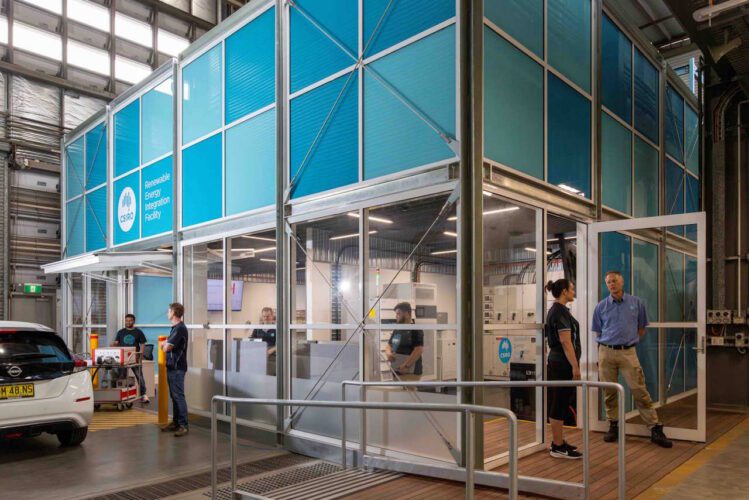
Research at the facility currently focuses on EV charging, vehicle-to-grid (V2G) technologies, renewable generation and storage integration, inverter control, and grid stability solutions.
Over the course of more than 15 years, the facility has supported a range of major innovation projects including smart inverter development with Google X, testing of virtual power plants (VPPs), Australian Standards development, and residential solar and storage aggregation trials.
The upgraded and expanded facility is now home to a suite of advanced capabilities including the ability to simulate microgrids and grid faults, test inverter performance under real-world conditions, and run large-scale experiments that combine solar, batteries, and electric vehicles (EVs).
The facility’s power testing capacity has been more than doubled, and improved high resolution data capture has been introduced along with advanced grid and battery emulation tools, programmable inverters, and improvements to its loop simulation to better create large-scale and real-world experiments.
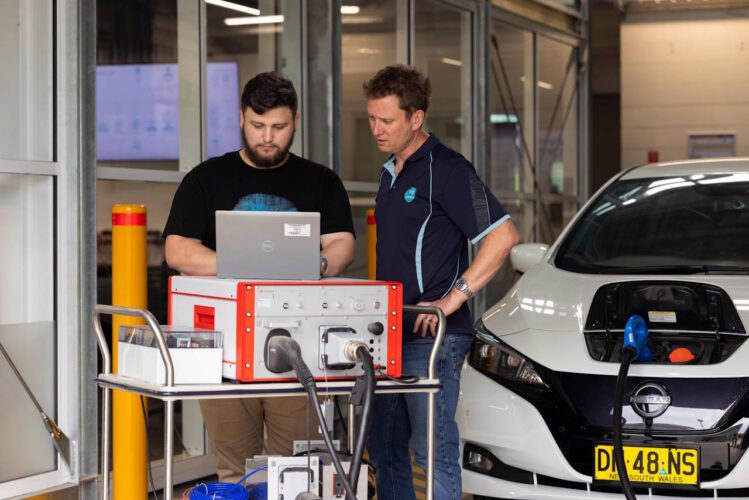
“The Renewable Energy Integration Facility allows us to simulate and stress test real-world grid conditions, giving us deeper insight into how inverter-based technologies like solar and batteries perform as their share grows across the electricity system,” said Dr John Ward, CSIRO energy systems research program director.
“Australia faces unique challenges – from long, remote distribution networks and record levels of rooftop solar, to increasingly volatile weather and rising demand from energy-intensive data centres.
“This facility allows us to work side-by-side with industry and market bodies to design innovative solutions, while providing a rigorous, independent environment to evaluate new technologies before they’re deployed.”
The Renewable Energy Integration Facility is open to external industry and research organisations for collaboration and commercialisation projects that seek to address energy sector challenges. Expressions of interest should be directed to [email protected]
Similarly, start-ups and small- to medium-enterprises are encouraged to explore support through CSIRO’s Kick‑Start Program.
If you would like to join more than 29,000 others and get the latest clean energy news delivered straight to your inbox, for free, please click here to subscribe to our free daily newsletter.