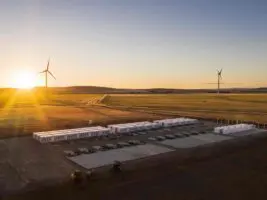
It is now nearly eight years since the first big battery storage project in Australia – at Hornsdale in South Australia – opened for business.
The so-called “Tesla big battery” seemed big at the time, and at 100 megawatts (MW) and 129 MWh it was indeed the biggest in the world, and around 100 times bigger than many energy experts had thought was even plausible.
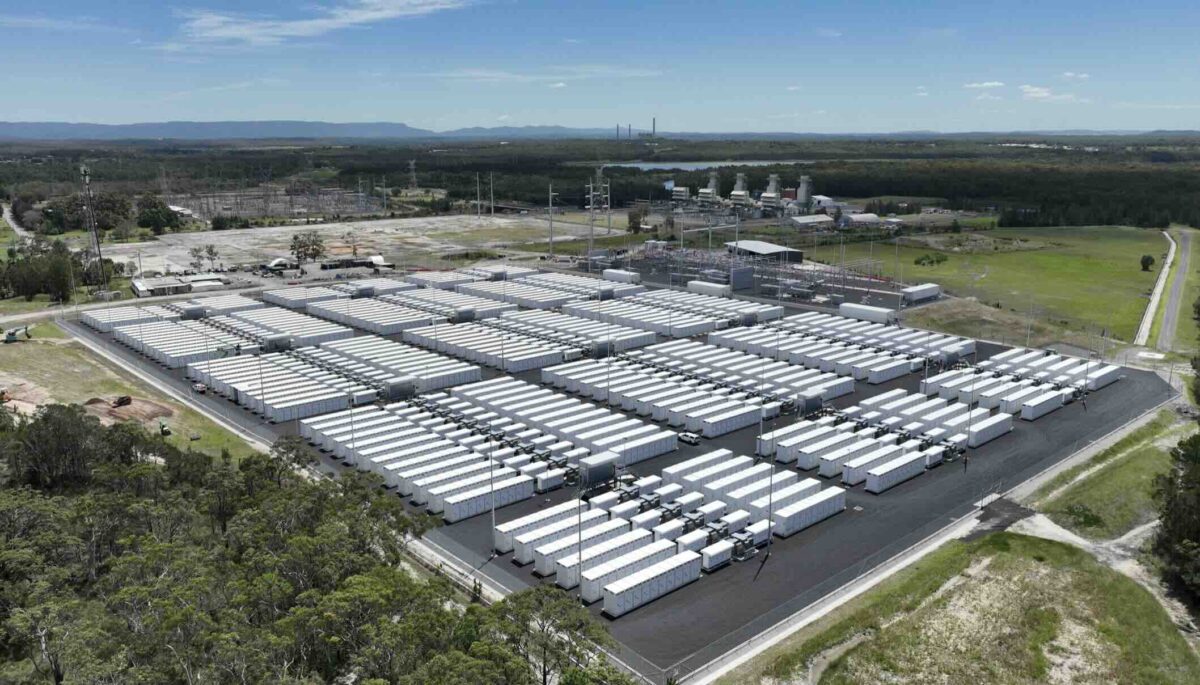
There are now nearly 50 big batteries operating across Australia, and more in construction, commissioning and in advanced development, and the Hornsdale battery – since expanded to 150 MW and 193 MWh – is dwarfed by the size of the projects being rolled out now.
Many in our tally of the ten biggest battery projects in Australia have more than 10 times the storage capacity of Hornsdale. One will have nearly 15 times.
Part of the reason is price, with battery cell prices plunging more than 80 per cent since that first battery project was built. Part of the reason is that new battery projects are focused more on different activities, and the average storage duration has shifted from a little over one hour, to two hours, four hours, and now to eight hours.
This list below focuses only on those big battery projects which are actually operating, or are in the commissioning process, are under construction, or have firm off-take agreements.
There is no doubt that battery storage projects will get even bigger – and some of those proposed, but still in their early development phase are up to four times bigger than what has been committed to date.
Some of the batteries included below – including the Supernode and Collie batteries – have additional growth plans, but have yet to lock in contracts for those later stages.
If some of the big batteries contemplated by the likes of Sun Cable and the Western Renewable Energy Hub are ever delivered, then the scale will leap again.
For the moment, however, these are the batteries that top the list in terms of storage capacity. Do let us know if you think we have missed out on something. (We have updated and expanded the list since the newly announced expansion of the Western Downs battery).
1. – Eraring – 700 MW and 3,180 MWh. (NSW)
This will be the country’s biggest battery when complete, at least until overtaken by the Supernode battery mentioned below if that project adds its planned eight hour storage component.
Eraring is being built over four stages next to the country’s biggest coal generator, the 2.88 GW Eraring facility, that is likely to shutter in late 2027, but could keep one or two units open until early 2029. The battery will target the evening peaks, but will also provide system services to the grid.
Owned by Origin Energy. Wärtsilä battery systems. Completion date: 2027.
2. – Supernode – 760 MW / 3096 MWh (Qld)
The Supernode battery is being built in three stages on the outskirts of Brisbane, next to a large data centre and at a pivotal point in the state’s grid. The first two stages are contracted to Origin Energy and a third stage contracted to the Queensland government owned Stanwell Corp.
The first stages are a mix of two hour and four hour battery configurations, and the first 260 MW has been “energised”. Owner Quinbrook is flagging a fourth stage with eight hour batteries, possibly 250 MW and 2,000 MWh, that will take total capacity to more than 1 GW and 5 GWh.
Owned by Quinbrook Infrastructure Partners. CATL batteries. Completion date: 2028.
3. – Western Downs – 845 MW and 2,300 MWh. (Qld)
The battery near Chinchilla has completed its first two stages – 540 MW and 1080 MWh – and is now building a third stage sized at 305 MW and 1220 MWh. It has signed virtual toll agreements with AGL, Shell and Engie, and will also provide system services via its grid forming inverter technology.
It is located next to the Western Downs solar farm, which shares equal billing as the biggest in the country.
Owned by Neoen (Brookfield). Tesla Megapack batteries. Commissioning of first two stages completed in December, 2025, third stage due late 2027.
4. – Collie – 560 MW and 2,240 MWh. (WA)
The newly commissioned project is currently the biggest operating battery in Australia, and likely will remain so until Eraring (see above) is completed. It will act initially as a giant solar soaker, charging mostly from rooftop solar in the middle of the day and discharging into the evening demand peaks.
It will also help fill the gap created by the closure of the state’s last coal-fired power generators by the end of the decade. It has planning approval to expand to 1 GW and more than 4 GWh.
Owned by Neoen (Brookfield). Tesla Megapack batteries. Commissioning completed in September, 2025.
5. – Richmond Valley – 275 MW and 2,200 MWh (NSW)
Located in northern NSW, the winner of a state government tender for long duration storage, the Richmond Valley battery will be the biggest eight-hour battery in the country (at least for a time) which means that its power capacity (275 MW) is the lowest of this list.
Owner Ark Energy. Hanwha Energy batteries. Completion date: 2027.
6=. – Collie – 500 MW and 2,000 MWh (WA)
Like the Neoen owned Collie battery just up the road, mentioned above, this battery will also act as a giant solar soaker, charging up with rooftop solar in the middle of the day and discharging into the evening peaks. It will also help fill the gap created by the closure of the state’s last coal-fired power generators by the end of the decade. It is currently going through commissioning.
Owned by Synergy. CATL battery systems. Completion date: Late 2025.
6=.– Tomago – 500 MW and 2,000 MWh (NSW)
To be built at a site once earmarked for peaking gas generator and located next to giant aluminium smelter. It will be the biggest battery in the AGL portfolio as the country’s biggest coal generator transitions to renewables and dispatchable power.
Owned by AGL Energy. Fluence battery systems. Completion date: 2027.
8. Merino solar and battery project – 450 MW and 1,800 MWh (NSW)
To be built near Goulburn, paired with a 450 MW solar and the battery co-located and behind the same connection point. It is one of 20 winners in the recent CIS generation tender, of which 11 were solar and battery hybrids. First major project in Australia for Portugal’s EDP.
Owned by EDP. Completion date: 2029.
9. – Waratah Super Battery – 850 MW and 1680 MWh (NSW)
Billed as a giant shock absorber, the Waratah battery has a contract known as a System Integrity Protection Scheme that aims to allow transmission lines feeding into the major load centres in NSW to operate at greater capacity. It may not have as much storage as other batteries, but it is the most powerful. In fact, in MW capacity terms, it is the biggest machine of any type to be connected to the Australian grid. In the final stages of commissioning.
Owned by Akaysha Energy. Powin battery systems. Completion date: 2025.
10. – Orana – 415 MW and 1,660 MWh (NSW)
Located in the central west of NSW, the battery has won an underwriting agreement through the federal Capacity Investment Scheme and also has a 12-year “virtual” offtake deal for a 200 MW component with EnergyAustralia.
Owned by Akaysha Energy. Tesla Megapack batteries. Completion date: 2026.
11. – Melbourne Renewable Energy Hub – 600 MW and 1,600 MWh (Vic).
Being built in three separate stages, comprising two 200 MW and 400 MWh batteries, and a separate 200 MW and 800 MWh battery, primarily to soak up excess rooftop solar in the middle of the day, and inject into the grid in the evening peaks.
There are plans to grow the facility by a further 400 MW and 1,200 MWh, but that is yet to be committed.
Owned by Equis and SEC. Tesla Megapack batteries. Completion date: 2025.
There are some projects just outside the top 10 under that are have CIS underwriting or with grid access deals, including AGL and Someva Energy’s Pottinger Energy Hub in NSW, Atmos Renewables’ Teebar battery in Queensland, and EDP’s Punch’s Creek project in Queensland – all rated at 400 MW and 1,600 MWh.
And there are a whole bunch of other projects that could be propelled into the top 10, such as EnergyAustralia’s Mount Piper battery, that is likely to 500 MW and 2,000 MWh, but so far only has an underwriting agreement for 250 MW and 1,000 MWh. AGL has permission for the 500 MW, 2,000 MWh Tuckeroo battery in Queensland.
Edify Energy’s Nowingi project, a winner of a CIS agreement for 300 MW and 1,200 MWh of battery as part of a solar hybrid, could grow to 2,400 MWh.
Edify’s neighbouring Smoky Creek and Guthrie Gap solar hybrids near Gladstone, each 300 MW and 1,200 MWh, which are destined to help power Rio Tinto’s giant aluminium smelters and refineries, would rank highly if rated as a single project.
See also Renew Economy’s Big Battery Storage Map of Australia for more information and more projects.