The federal government’s intervention in the Cheaper Home Batteries scheme has taken some of the heat out of a red-hot market – for both home solar and storage – with monthly battery installations tumbling from April’s record high to a total of 1.51 gigawatt-hours in May.
The latest data from industry analysts SunWiz shows the May 1 changes to the national battery rebate delivered the expected “comedown” from frenzied April levels, when consumers scrambled to get the full rebate on super-sized batteries – and the bigger solar arrays needed to fill them.
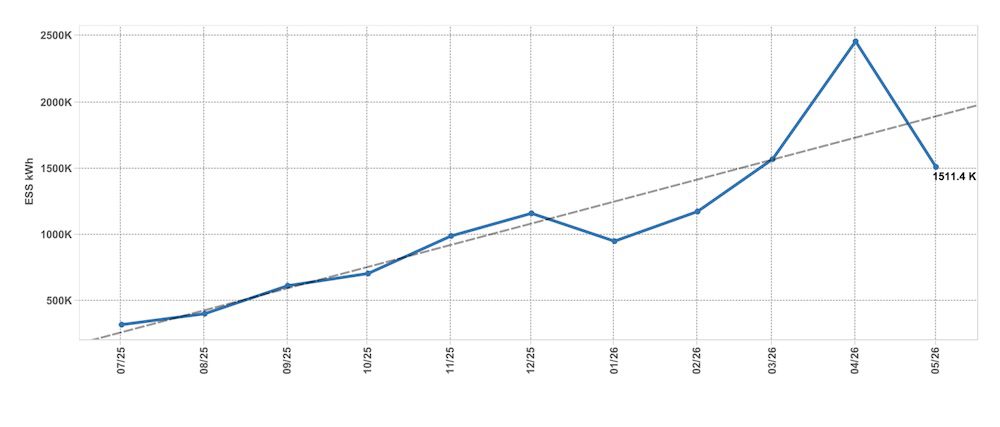
Image: SunWiz
For more than a month now, federal Labor’s Cheaper Home Batteries has switched over to new settings – a combination of minor adjustments written into the rules at the start and some quite major design rethinks announced in December to make the scheme last longer and go further.
As it stood, the break-neck rate of uptake of discounted home batteries – more than 420,000 have been installed under the scheme so far – and the average size of batteries being installed, which had hit levels nearing 50 kilowatt-hours (kWh) by March, was unsustainable.
Under current settings, households can get the full, but slightly lower-rate discount on the first 14 kilowatt-hours (kWh) of usable capacity of a battery system. Bigger batteries can get 60% of the discount on capacity between 14-28 kWh and just 15% on capacity between 28-50 kWh.
Already, these changes have had an impact, says SunWiz managing director Warwick Johnston – appearing as “the expected unwind of the pre-cliff pull-forward rather than a genuine downturn.”
Johnston says May’s energy storage system volume has fallen back to March levels, reflecting what is likely to be a “significant carryover” of April installations registered late, as well as a sharp correction after the pre-rebate rush unwound.

Image: SunWiz
“With the new subsidy parameters now in effect, installers are pivoting their attention to the sub-20kWh segments, where growth is starting to emerge,” he says.
And while growth has slowed somewhat, Johnston stresses that new home battery install volumes are still tracking above historical averages and possible registration lag may understate May’s true figures.
The average battery size dropped down only slightly to just under 38 kWh, while Johnston says 40 and 50 kWh systems remain the dominant size band, even as all size categories have eased back from April’s “exceptional spike.”
The same patterns can be seen in the rooftop solar market, which in April rode the battery boom to an all-time high: with 442 megawatts (MW) of new small-scale PV capacity registered nationwide – a 31 per cent month-on-month jump and and the strongest month in STC history, according to SunWiz.
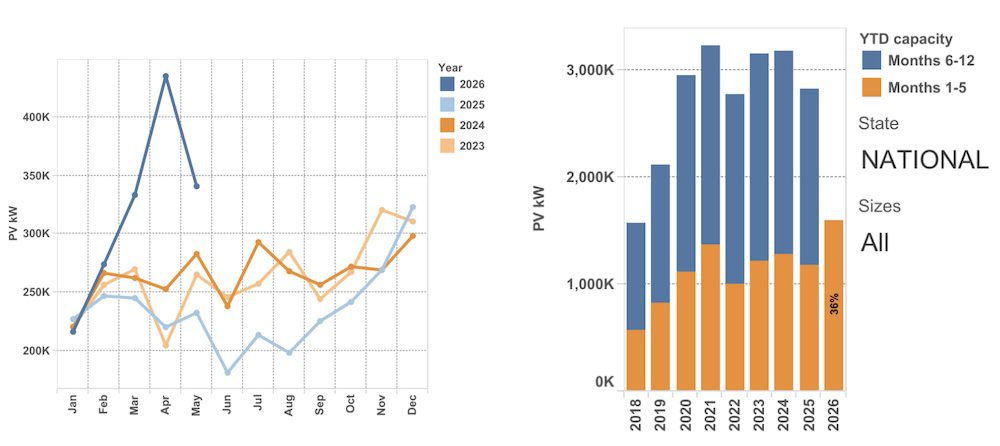
Image Source: SunWiz
In May, the market has eased back to 341 MW (-22% month on month), but still roughly 46% above installation levels of a year ago. As was the case with home battery capacity, Victoria was the only state to keep growing.
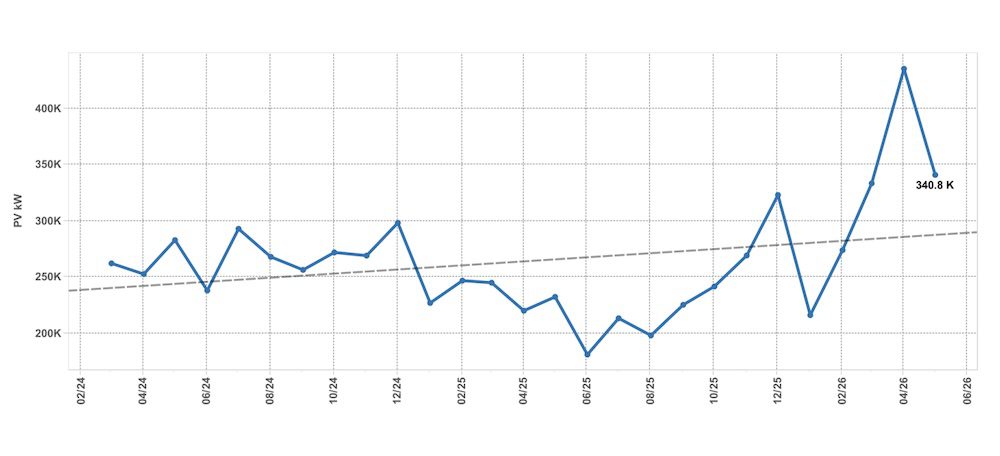
Image: SunWiz
The January-May tally for rooftop solar volume, meanwhile, is the highest ever and is running ~36% ahead of the same point in 2025, says Johnston.
“The looming rebate cut pulled large-format battery demand – and the bigger solar arrays needed to run it – forward into April, producing the record spike,” says Johnston.
“May reflects the comedown from that surge, not a structural slowdown: every size band and state remains well above year-ago levels, and the Cheaper Home Battery Program continues to act as a multiplier on PV.
“Electrification of appliances and EVs is the likely next leg of the cycle.”
If you would like to join more than 29,000 others and get the latest clean energy news delivered straight to your inbox, for free, please click here to subscribe to our free daily newsletter.