Australia’s energy transition is often framed as a story of scale. A story of building enough new generation, connecting it with transmission, and doing it quickly enough to replace coal before the clock runs out.
The harder story to tell – and where opinions begin to differ – is about the best way to do this while ensuring nobody is left behind.
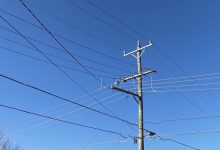
As with most grand plans, the devil is in the detail. We are so focused on building transmission, akin to new super-highways, that we’re ignoring the smaller stuff – the tried and tested distribution networks, like existing roads that run across our country.
They may not be as big as the flashy new highways we have planned. But they’re already built and are available to be leveraged.
The energy transition will truly succeed if it is fast and low-cost, but also fair. That means paying attention to the middle of the system, the distribution networks that sit between large-scale transmission and households – and using them much more intelligently than we do today. Using them to support energy solutions which benefit everyone, not just those who can afford a battery in their garage or solar panels on their roof.
In the Hunter–Central Coast Renewable Energy Zone, Ausgrid is playing a critical role supporting new generation by leveraging our existing sub-transmission assets and corridors to connect renewable projects faster, cheaper and with less disruption than a greenfield approach.
By using our existing infrastructure, 1 gigawatt (GW) of new renewable hosting capacity has already been planned in the Hunter–Central Coast REZ and is expected to be delivered by mid-2028.
Our analysis shows that a further 3.7 GW could follow across several additional phases if the opportunity is fully unlocked. All of this done by leveraging the poles and wires which are already in the area – quietly supplying electricity to those who need it, as they’ve done for decades.
But this is only a fraction of what distribution networks could be doing.
The Distribution System Plan (DSP), a roadmap for the energy transition in New South Wales developed by Ausgrid, Endeavour Energy and Essential Energy, shows that current planning processes systematically under-recognise latent capacity in the sub-transmission network.
This leads to missed opportunities to connect generation and storage quickly, at lower cost, and with greater equitability.
That last point, ‘equitability’ is critical. By spreading new infrastructure across network areas, not just clustering them in regional communities, we ensure metro areas do their fair share of the heavy lifting – reducing the physical and social footprint of infrastructure while still delivering system-wide benefits.
And by pairing this with shared assets like distribution-connected community batteries, we create infrastructure that works for everyone, not just those who can afford their own technology.
This is how networks help build social licence – not by asking communities to carry more burden, but by sharing the benefits more evenly.
Where infrastructure must be located in regional areas, distribution networks can help, too. The DSP demonstrates that unlocking distribution-connected generation can buy between two and five additional years for major transmission-level projects to be delivered, easing pressure on the system and reducing exposure to energy security risk caused by project delays.
To use the highway analogy again, it’s like adding a lane to our smaller existing roads for the people who need to drive today, while we wait for the superhighways to be built, carrying the drivers of tomorrow.
This is not about replacing transmission. Transmission remains essential. It is about using the network we already have now to de-risk the transition while the big builds catch up.
This matters because the scale of what we need to deliver is unprecedented. Electricity consumption across the NEM is expected to almost double by 2050, while generation and storage capacity will need to more than triple to meet electrification, data centre growth and population increases.
If we rely solely on transmission-connected solutions, we increase exposure to timeline blowouts and rising capital costs. The DSP modelling shows there is $2 billion – $4.3 billion in net system value available across NSW by unlocking distribution-level opportunities.
Distribution-connected solar, wind and storage can also free up additional capacity for wind generation at high voltage across NSW, resulting in less reliance on interconnection and reducing gas consumption in NSW by over 50 terawatt-hours (TWh) to 2050 – one of the biggest drivers of wholesale prices.
And critically, distribution-connected assets can be delivered faster, closer to demand, and with lower cost than transmission-only alternatives.
This is how we deliver the generation the transition to a decarbonised future needs without over- building, over-paying, or over-burdening regional communities.
The energy transition can either succeed or fail in the detail. But if we get the middle right, we reduce costs, accelerate delivery, and bring communities with us.
The super-highways that are the transmission projects will revolutionise the energy transition – no doubt about it. But they will take time before they’re ready. Until then, using the distribution networks – the roads we already have – more efficiently, is where the hidden value lies.
Kelly Wood is group executive of transmission, development and growth at Ausgrid.