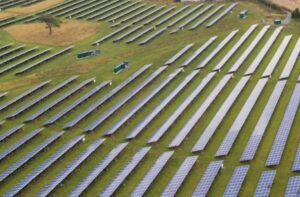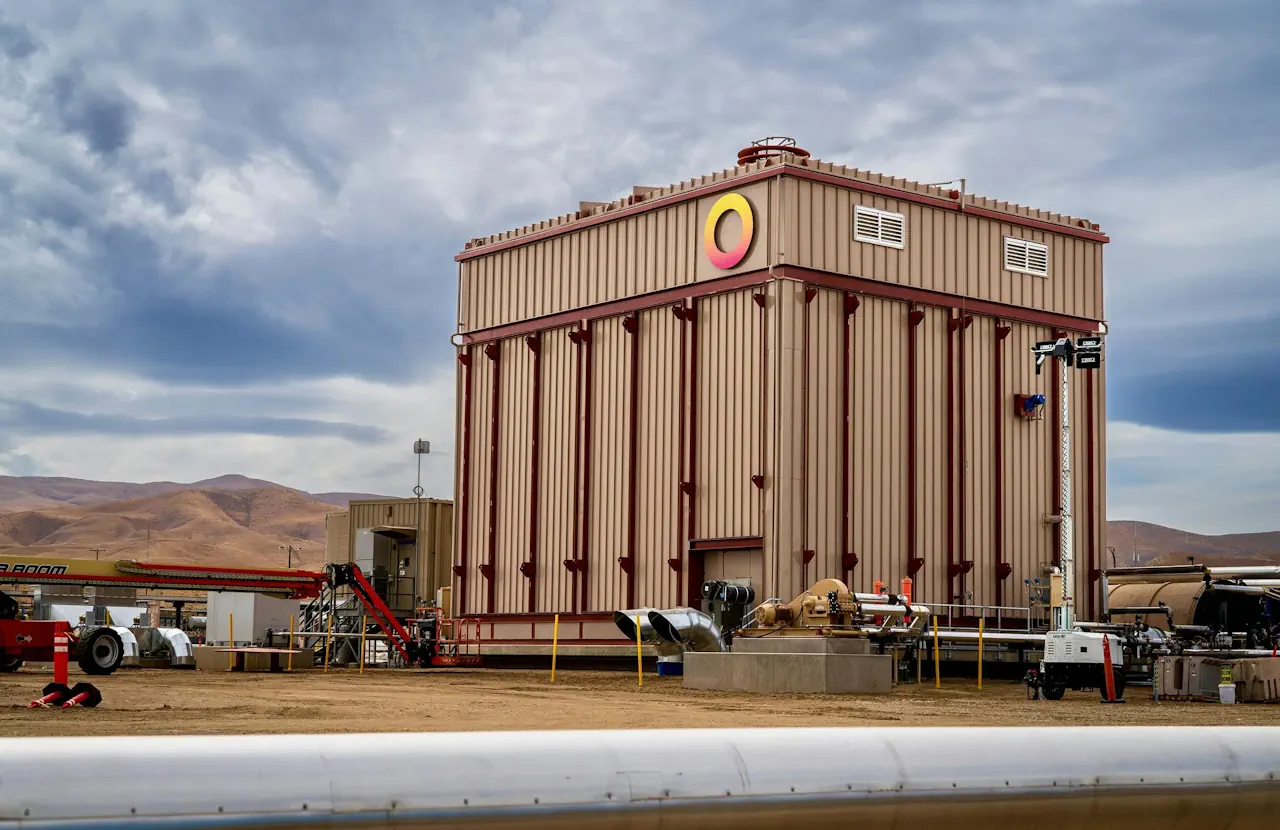
The world’s largest industrial heat battery has begun commercial operations in California where it is powered exclusively by an on-site solar PV array and is delivering continuous high-pressure industrial heat and steam to a fuel production facility.
The 100 megawatt-hour (MWh) Rondo Heat Battery (RHB) began commercial operations late last week for oil and gas company Holmes Western, following a 10-week period during which it achieved milestones for daily automatic operation, performance, efficiency, and reliability.
Boasting storage temperatures over 1,000°C and round-trip efficiency above 97 per cent, the RHB was built by Rondo, a California company backed by a raft of big-name investors including Microsoft, Rio Tinto, and Bill Gates’ Breakthrough Energy.
Rondo’s RHB technology is designed to charge during the day from variable electricity sources like wind and solar, which in turn power radiant heaters that heat refractory bricks to between 1,100 – 1,500°C, storing heat for hours or days.
When heat is needed, air is sent over the brick stack and superheated to over 1000°C and delivered at the desired temperature, before the air is eventually recycled back through the system, helping to minimise heat loss and maximise efficiency.
The Rondo Heat Batteries can therefore provide continuous heat, power, and steam for 24 hours a day.
The storage medium used in each Rondo Heat Battery consists only of brick and wire, abundant and proven materials that can’t catch fire, explode, or cause toxic leaks.
Moreover, the heat batteries can replace or be dropped in alongside existing industry-standard boilers, seamlessly integrating into existing steam flanges to deliver steam at any conditions at 100+ bar (1450+ PSI).
For example, the new Rondo Heat Battery in California is now delivering steam alongside existing gas-fired boilers without any changes to the facility. As such, the project is able to easily replace gas consumption with fixed-cost on-site power, reducing energy cost volatility and reducing regulatory and carbon market exposure.

“The Rondo Heat Battery is now proven at industrial scale,” said Eric Trusiewicz, CEO of Rondo Energy.
“We are already developing and operating heat batteries across four continents and five industries. Our customers are improving their competitiveness and slashing their carbon emissions at the same time.”
With industrial heat accounting for a quarter of global final energy use, and a variety of industries ranging from chemicals to cement relying on high-temperature heat, the importance of clean and renewable sources of industrial heat has never been more important.
And unlike heat pumps or electric boilers which require constant power, Rondo’s heat batteries require only six hours of the lowest-cost electricity each day to provide 24/7 heat.
“The commercialization of the heat battery represents yet another global inflection point for solar & wind power, said Andy Lubershane, partner at Energy Impact Partners, another of Rondo’s big-name investors.
“Just as electric vehicles opened up the transport market to renewable electricity, heat batteries will open up an even larger new market, industrial heat, which accounts for roughly a quarter of global energy consumption.
“We’re thrilled that Rondo is leading the way.”
Rondo claims that it is already developing or operating a number of other projects around the globe, in North America, Europe, Asia, and Australia.
If you would like to join more than 26,000 others and get the latest clean energy news delivered straight to your inbox, for free, please click here to subscribe to our free daily newsletter.