
Retailers, consultants and even community groups are lining up to tell network giant Ausgrid that its proposal to become an owner-operator of distributed energy assets needs big adjustments.
Last month the Australian Energy Regulator (AER) asked for feedback on the five-year Community Power Network pilot that would see Ausgrid incentivise the rollout of solar across commercial and industrial rooftops.
It would do this by offering higher feed in tariffs and to be an installer of last resort, and it would store any excess in batteries it also owns to then discharge and cut local grid costs.
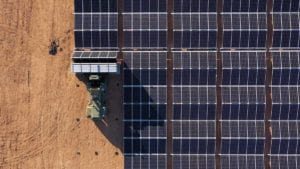
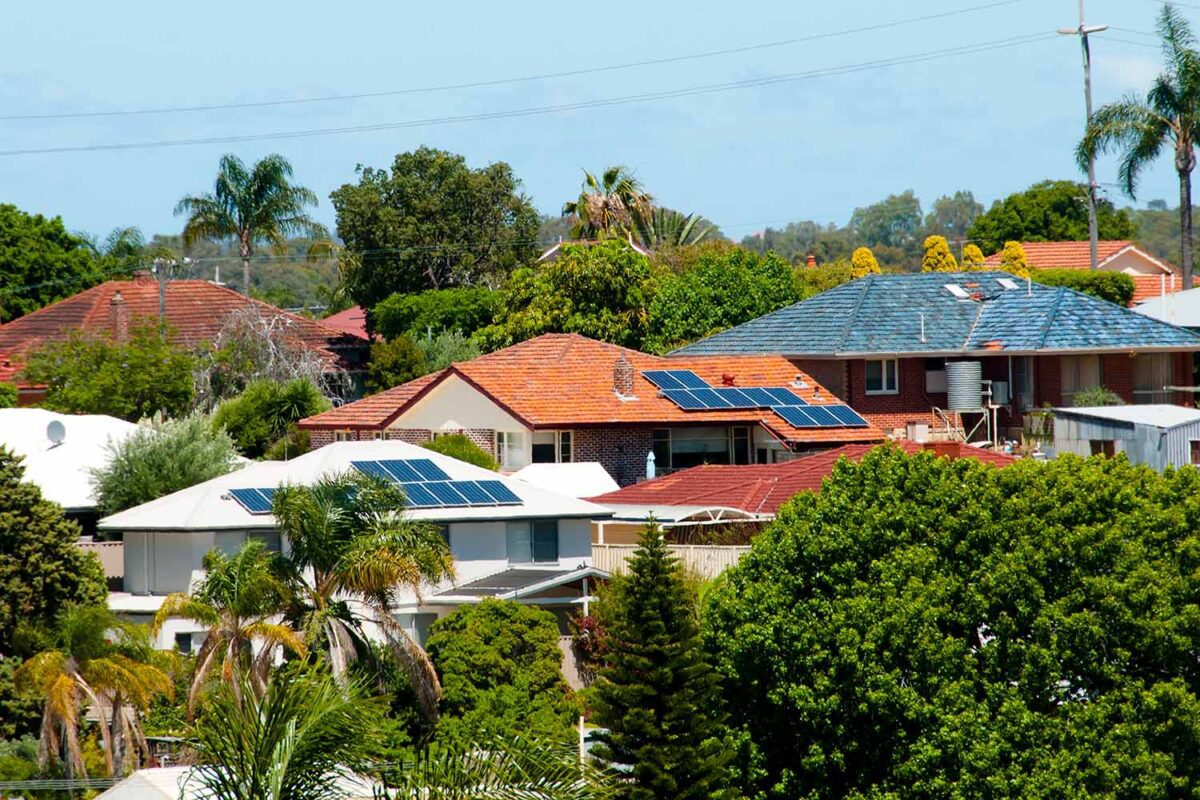
Ausgrid says the intent of the concept is to use unused rooftops on apartment buildings, warehouses, office buildings and others to generate power, and the intentions have been lauded.
But the details of the $110-180 million trial are being met with concern, and it has become the latest focus of the massive turf war between networks and retailers, and concerns by some community advocates that monopoly network companies are simply adding to their data base.
Ausgrid CEO Marc England recently put his case for the project, and to be allowed to “swim out of regulatory lanes”, in this interview on Renew Economy’s weekly SwitchedOn Australia podcast.
See: SwitchedOn podcast: The “poles and wires” company busting to get into solar hubs. And you can read the story here: Ausgrid hopes new solar pilot can help “break the boundaries” on narrow network limits
Those with the most to lose from such changes are the big retailers, who have managed to keep the networks at bay because of the regulatory guidelines that largely exclude them from being a retailer or generator.
AGL, for instance, has spelled out its concerns in a 49 page report and points out a range of problems with the current pilot design, from not enough data on what the trial will do to consumer bills.
It says also that, given Ausgrid has “the second lowest uptake of rooftop solar in the NEM after Tas Networks, “it’s unlikely that it’s the best DNSP to offer decongestion ideas, given it doesn’t have a congested network.”
And the Australian Energy Council, which is advocating for energy retailers, says the CER Taskforce wants consumers to lead orchestration.
“Ausgrid’s central hypothesis is that the coordinated deployment and orchestration of distributed storage by the network operator can deliver the lowest cost of electricity to all customers,” it said.
“[But] Ausgrid’s proposal is likely to crowd out other market-led solutions.
“While Ausgrid’s proposal allows other parties such as retailers and aggregators to participate in the Community Power Network, the scale of Ausgrid’s proposed investment, and the automatic opt-in of customers, means that in practice, behind the meter solutions would not be able to attract customer interests and provide a viable alternative.”
Stay out of our patch
The continued push into competitive markets by Ausgrid and other DNSPs underlies the worries expressed in the submissions to the AER.
To run the trial Ausgrid needs a waiver from ring-fencing rules that prevent it from owning both the distribution network and electricity generation and storage. It also wants to pass $72.8 million of the cost of running the trial onto customers across its network.
The AER has been offering waivers to some ring-fencing rules so new products, services, and business models can be tested and foster innovation while protecting – and ultimately benefitting – consumers.
Distributors in particular have been saying for years that they have spare capacity and could be used more cheaply and more quickly to deploy wind and solar than building out new transmission lines.
But DNSPs are also monopolies, and have been ruffling feathers already as they seek more ways to deploy their vast networks in increasingly competitive spaces.
DNSPs are now allowed to buy and run government-funded “community” batteries, albeit with the proviso that the actual wholesale energy market participation side has to be leased to an electricity retailer.
And last year they began trying to muscle in on kerbside electric vehicle charging, asking for ring-fencing waivers that let them run multi-year trials of DSNP-owned and operated pole chargers.
“The proposal lacks any evidence to support its purported costs, benefits and learnings, and through it Ausgrid attempts to blatantly flout several regulatory processes,” reads the submission from Nexa Advisory.
The Nexa submission says the trial doesn’t offer much of anything new: distributed network service providers (DNSPs) are already allowed to own community batteries; orchestration via virtual power plants is now well known, if not well used, in Australia; and several trials have already explored energy or benefit sharing.
Solar Citizens, meanwhile, is worried that Ausgrid’s plan is still framing rooftop solar as the problem, rather than a solution.
It notes that Ausgrid believes the Community Power Network trial will increase network productivity by up to 40 per cent through smarter integration of rooftop solar and batteries – but it asks why the distributor isn’t doing this already.
“To increase network utilisation, Ausgrid should remove export limits so that solar owners can share more clean power with their communities,” Solar Citizens points out in a submission.
“Ausgrid should establish Dynamic Operating Envelopes (DOEs).
“This would improve equity by spreading available hosting capacity more fairly across customers; support orchestration by enabling aggregators and VPPs to optimise fleets of solar and storage for both customer benefit and grid stability; and help future-proof the grid by avoiding over-investment in poles and wires while still integrating more renewables.”
Both those submissions point out that Ausgrid’s intent to encourage rooftop solar, store power in batteries and reduce network costs, and orchestrate these can already be done under the energy market rules – just not by a DNSP.
“Granting a ring-fencing waiver would not serve the long-term interests of consumers. It would set a damaging precedent, undermine trust at a time when trust levels are already low, and risk undermining all the progress made in developing a competitive consumer energy resources market,” the Nexa submission says.
“This is not a trial designed to test a regulatory hypothesis, but rather a self-interested attempt to reshape the rules in Ausgrid’s favour … Consumers deserve solutions that build trust, stimulate competition and respect their autonomy – not proposals that seek to bypass them.”
Spatial energy planning
But there is one element of the Ausgrid plan which has won plaudits: a proposal to launch a spatial energy plan for the two locations it’s proposing to put the Community Power Network in.
“Mapping current and projected household, commercial, and industrial energy use would allow Australian councils to anticipate where demand will rise… It would enable smarter siting of substations, storage hubs, and DER, while enabling local governments to play a role in helping to establish Urban Renewable Energy Zones,” Solar Citizens said.
The problem in Australia is that DNSPs have that data and aren’t sharing it with councils in a useful format.
“We are advocating for Ausgrid to support Australian local government councils within its distribution network by providing local spatial energy mapping data,” it said.
“Additionally, we are advocating for Ausgrid to make this data available publicly more widely, to encourage market competition.”
Want the latest clean energy news delivered straight to your inbox? Join more than 26,000 others and subscribe to our free daily newsletter.