Plans to develop a 100 megawatt (MW) solar farm and a 100 MW, four-hour battery in central western New South Wales have been waved through the federal government’s environmental approval process in less than two months, but could face a bumpier road through the state approvals process.
The Department of Climate Change, Energy, the Environment and Water published a notice on April 16 advising that Edify Energy’s Burroway Solar Farm is not a controlled action and therefore does not require approval under the EPBC Act.
According to the EPBC portal, the NSW solar and battery project was referred for assessment just shy of two months earlier, on February 19.
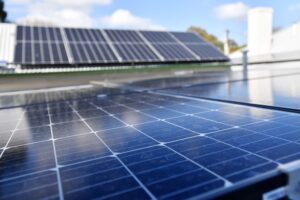
Edify Energy’s Burroway project proposes to install a 100 MW solar generator and battery energy storage system (BESS) with an estimated 100 MW / 400 megawatt-hour energy storage capacity.
Referral documents say the site falls within Central West and Orana region, around 17.5 km north of Narromine and 27 km west of Dubbo on land comprising a “large agricultural property” made up of mostly flat and cleared paddocks, largely used for cropping.
The project area is within the Central West and Orana Renewable Energy Zone (REZ) and Edify says it will form “an important part of Australia’s response to climate change and Commonwealth and NSW government renewables commitments.
Edify says construction of the project would take around 18 months and it hopes to get it underway in the 2026/27 financial year, with up to 250 full-time equivalent jobs expected to be created during construction.
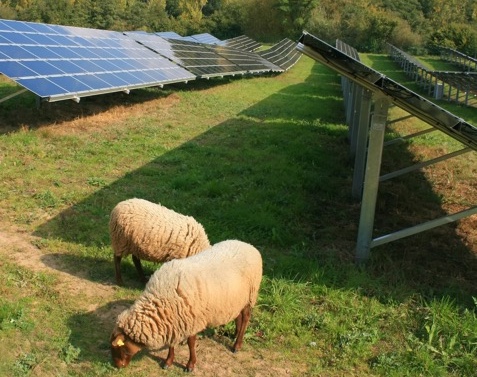
First, Edify’s plans – which include running sheep among the panels – will have to make it through the NSW state planning and environmental approvals process.
At this stage, the project looks destined to be referred to the NSW Independent Planning Commission, which is the default process for any proposals that attract more than 50 public objections.
According to the NSW planning portal, the Burroway plans attracted 84 public submissions, just two of which are in support of the project while one is a comment from the Narromine Council.
A quick glance at some of the 81 objections reveals concerns ranging from a lack of trust in renewable energy generation, to damage to the environment, animal cruelty, risk of fire and destruction of farming land. A number of objections also refer to concerns about “land poisoning” caused by the panels and battery.
According to the NSW planning portal, Edify is currently working up a summary of, and response to the submissions, which will show more clearly who and where the objections are coming from.
It is not uncommon for a majority of submissions in opposition to a project to come from outside the community where it is being developed, often more than 100 km away and occasionally from a different state entirely.
In this case, the tone of the objections illustrates that there remains a major disconnect between sections of regional and farming communities and the renewable energy sector. It also suggests that some of the negative messaging from well organised anti-renewable groups and individuals is taking root.
“This project represents part of an unreliable energy system that will require a fossil fuel powered system as ‘firming’,” says one anonymous submission from Coolah in NSW.
“This so called net zero project will require a 5000% increase in open cut mining, resulting in enormous environmental damage. There will still need to be a fossil fuel generator project to provide 24/7 power.”
“This solar/battery swindle is not in the public interest,” says another anonymous submission, also from Coolah.
“The devastation caused by the construction of these sites and the unreliable transmission lines that connect them to the cities is a catastrophe,” says an anonymous submission from Victoria.
“Our countryside will be a toxic waste dump.”
A submission from anonymous in Moulamein, NSW, worries that “the large scale solar field may alter local temperatures and humidity impacting agriculture and livestock. Over 400Ha that is a lot of radiant heat. What investigation have been done?”
Rainforest Reserves, a registered charity based in Queensland, is also among the objectors to the Burroway project, arguing that it “poses severe environmental, agricultural, and socio-economic risks, with significant potential to breach NSW policies on biodiversity, soil conservation, water management, and land use.
“Without addressing these fundamental concerns, the Burroway Solar Farm cannot proceed without causing substantial, irreversible harm to the Dubbo region,” the submission says.