A stock image of a hot water system (right) and an industrial size air conditioning unit in a home in Sydney, Tuesday, October 17, 2017. (AAP Image/Brendan Esposito)
More than a third of Australians have rooftop solar, and 30 per cent of Australians rent their homes – yet there is very little overlap between those groups.
The same is true for other energy performance features – renters are almost twice as likely to lack insulation in their homes, for example.
Australians who own their own home now have access to a wide range of home energy upgrades that are highly effective at cutting energy bills, but renters are at risk of being left behind.
At the root of the problem is the “split incentive” dilemma: Landlords are responsible for upgrading rental properties, but they lack the financial motivation, as energy bills are paid by the tenants.
Prior attempts to address this problem by providing incentives to landlords have seen underwhelming results. A federal government program in the 2000s offered a $1,000 rebate for landlords to install insulation, aiming to reach 700,000 properties. Less than 1% of that target was achieved.
Arguably, this isn’t a surprise. Incentive-only approaches cannot address the core issue: that most landlords are unlikely to undertake property upgrades when they have nothing to gain financially.
The rise of rooftop solar and batteries has shone a spotlight on the growing gap between households with consumer energy technologies, and those without.
The Australian Energy Market Commission, for example, recently proposed a major shake-up of network tariffs to address one part of this problem. But that proposal carries its own pitfalls, and doesn’t address the more fundamental reality: homes with energy efficiency features, rooftop solar and batteries will almost always have lower energy bills than those without.
The only way to resolve this inequality is to enable renters to access these household energy upgrades. Minimum energy efficiency standards for rental properties are one of the few policy tools that can bypass the split incentive problem to do so.
The ACT introduced ceiling insulation requirements for rental properties in 2023, and Victoria will soon go further, introducing requirements for insulation, draught-proofing, and the phase out of certain gas appliances.
But elsewhere, renters in Australia aren’t protected by any kind of minimum energy efficiency standard.
A window of opportunity has opened in New South Wales and Tasmania, with both states seeking input on whether they should introduce minimum energy efficiency standards for rental properties.
This week, IEEFA released a report that asks the question: What would it take to halve renters’ energy bills, using home energy upgrades?
For most homes, you could achieve this through switching to efficient electric appliances, undertaking ceiling insulation or draught-proofing, and installing a small rooftop solar system.
Most of these upgrades could be interchanged in different ways to achieve the same outcome (although phasing out gas or highly inefficient electric appliances is particularly important).
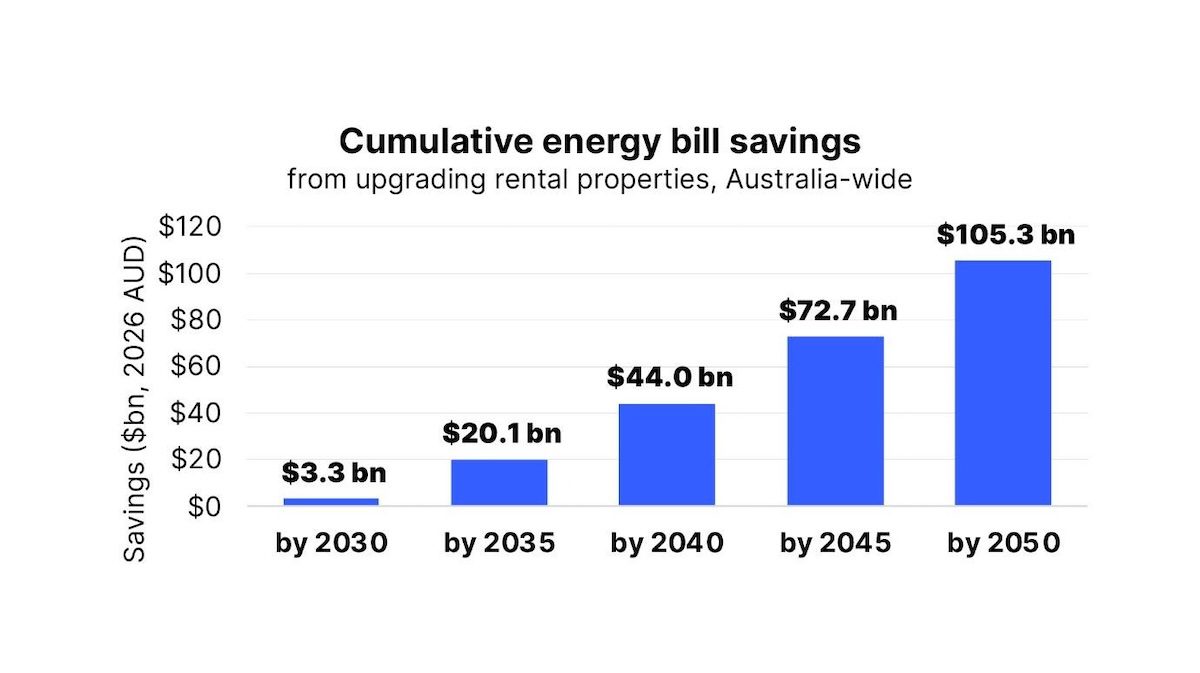
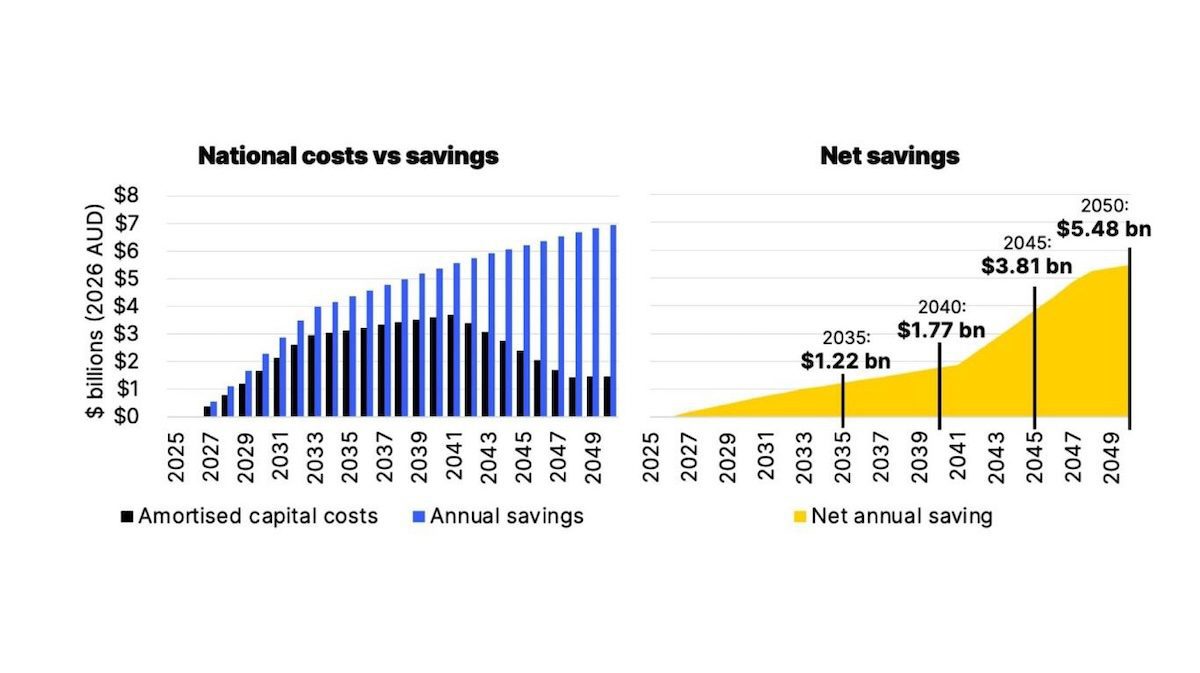
We modelled what it could look like if these upgrades were rolled out across rental properties in Australia as part of an ambitious effort to roll out minimum energy efficiency rental standards. The modelling revealed a few key things:
So what’s needed to turn this into a reality?
Minimum energy efficiency standards are one of the few policy tools that can bypass the split incentive problem. They have been implemented in a number of countries including the UK (since 2018), New Zealand (since 2019) and many parts of mainland Europe.
Victoria’s incoming requirements to phase out certain gas appliances in rental properties are arguably world-leading. However, even these have room for future improvement, and minimum energy efficiency standards are a clear gap in most Australian state and territories’ rental laws.
The responsibility to upgrade rental properties ultimately rests with landlords, and there are legitimate concerns that these costs could flow through to higher rents for tenants.
It could be argued that landlords have capacity to absorb some of these costs. After all, current record high rents have arguably been driven by an undersupply of housing, and weak controls over allowable rent increases.
However, if financing for upgrades is available to landlords at reasonable terms – for instance long-term loans at an interest rate similar to their mortgage – this could ensure that the annual savings exceed the upgrade costs, even if some are eventually passed on to the tenant.
Transitional incentives for landlords could help smooth the implementation of standards even further, as would simple tweaks to the federal tax system, such as making existing incentives conditional on whether the property meets minimum energy efficiency standards.
The rise of efficient technologies, solar and batteries should prompt us to rethink the technological reality of our energy system. But it should also prompt us to rethink what it means to meet essential energy services at least cost.
The number of Australians who rent their homes is only increasing, and only a purposeful policy effort – centred around minimum energy efficiency standards – can close the energy gap between renters and owner-occupiers.
Jay Gordon is IEEFA’s Energy Finance Analyst, Australian Electricity.
Incat founder Robert Clifford explains how a family-owned Tasmanian company built a ship many thought…
A company looking at hydrogen and graphite technologies among two low emission proposals for the…
We are installing inertia for poorly justified reasons, and we are imposing economic penalties that…
The experience of decommissioning Australia's second-oldest wind farm proves that selling parts for re-use can…
Tech bros pushing SMRs are going to be "very angry" when they discover nuclear is…
Bowen says data centre demand could be key in getting struggling wind projects over line,…