According to SolarChoice analyst James Martin – and illustrated in the graph below – around one in 10 people who have visited the company’s website seeking information since the start of 2015, have done so via a battery or energy storage-related page (indicating an energy storage-related search).
As Martin notes, it’s no coincidence that the numbers began to rise most significantly in May – when Tesla announced its Powerwall “and ignited the world’s imagination with the promise of widespread uptake of home energy storage.”
Collecting information from interested customers
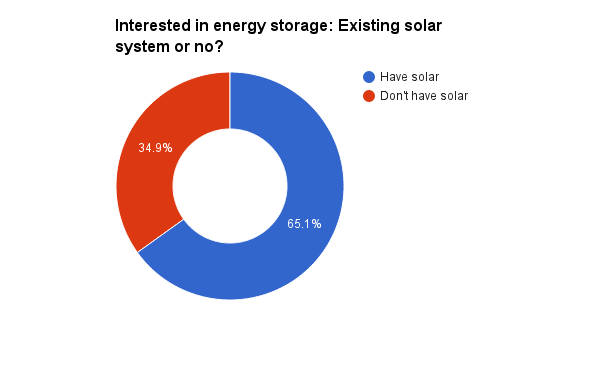
SolarChoice has also been inviting visitors to its website, since early June this year, to fill out a short survey. Martin says about 300 people (about 1.7% of the storage-related visitors) have done so to date, and the bulk of them (more than 65 per cent) already had a solar PV system.
“While this may simply be an result of the fact that there is no ‘storage only’ enquiry form on the Solar Choice site (soon to change), it still provides some insight into the already high level of interest in batteries among those who have existing solar systems,” said Martin.
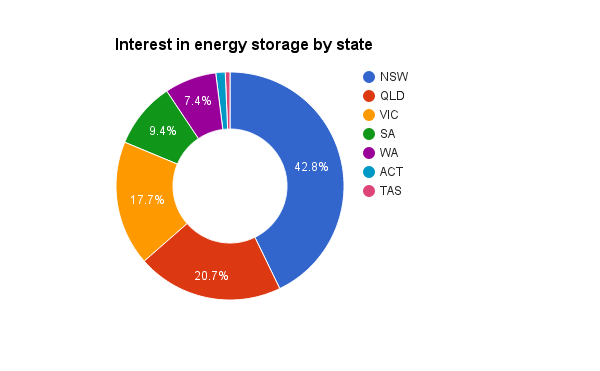
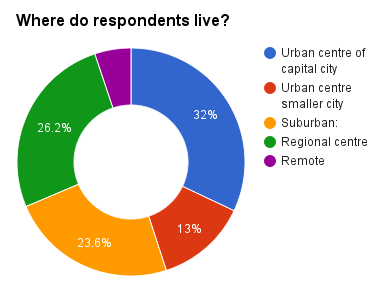
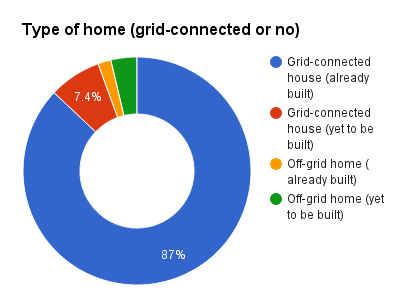
According to Martin, the results of another, more detailed survey showed that around half of respondents were from NSW, with Victoria in second place. It also revealed that roughly 66 per cent of respondents lived in an urban or suburban area, with 87 per cent living in a grid-connected home.
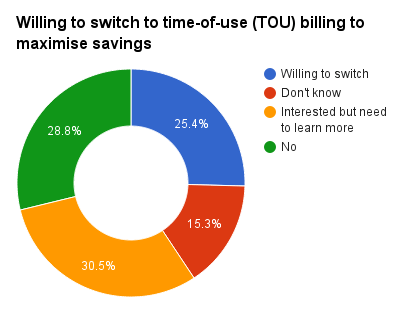
Interestingly, the survey also revealed that more than half of respondents would either be willing to switch to time-of-use (TOU) billing, or would be interested in learning more about it in order to maximise electricity savings.
Asked how much they would like to be paid for selling their stored energy into the grid, the most common response was 20c/kWh, said Martin.
“This indicates (consumers) are still thinking in terms of solar feed-in tariffs, and may not be aware of the higher rates that may potentially be offered through programs like Reposit Power’s GridCredits,” said Martin.
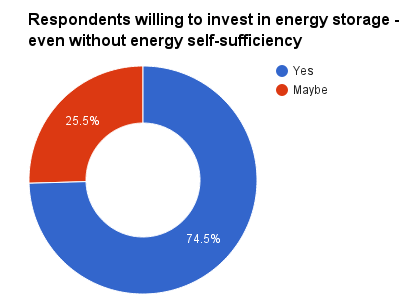
In other results from the survey, just over half of respondents indicated that they more or less know what they’re after and are well-informed enough to make a decision. A much smaller number indicated that they know ‘a lot’ about energy storage, while the remaining 36% or so said that they know ‘very little’.
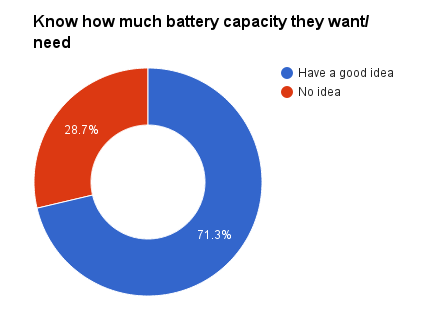
Another 70 per cent of respondents said they had some idea of how much energy storage capacity they wanted or needed, while around 30 per cent said they had no idea what capacity would be most appropriate for them.
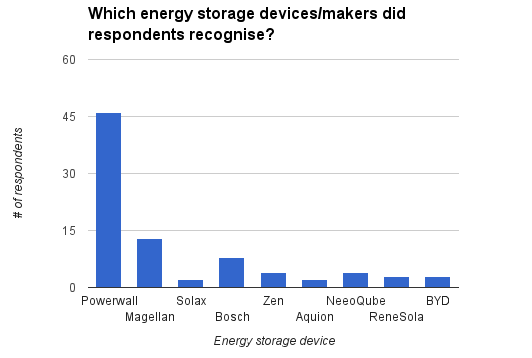
Unsurprisingly, Tesla’s Powerwall – still not available on the Australian market – was the most recognised energy storage device among respondents. Australia’s own Magellan Power was a distant second, with Bosch Power Tec in third place.
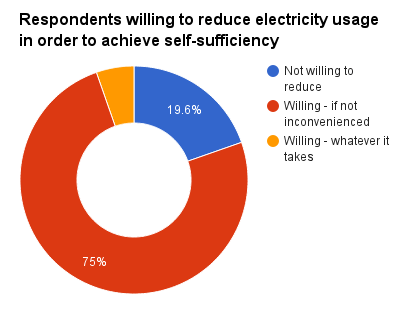
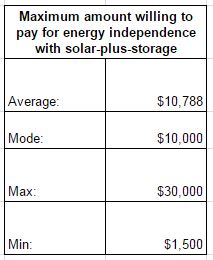
Although the survey results above are probably not a representative sample of the Australian energy storage market, they’re still useful in drawing some general conclusions about where things are at and how they are changing.
This article was originally published on RenewEconomy sister site, One Step Off The Grid. To sign up to the newsletter, click here
To read the original article on the survey by SolarChoice, click here
Fiji and Tuvalu will host key meetings ahead of the 2026 COP31 summit, bringing the…
Plans for the first two stages of a major wind, solar and battery precinct being…
The last 12 months reinforce big batteries as a central part of the NEM’s operating…
Industry warned to keep home battery installation standards high, with demand expected to ramp up…
Project behind Barnaby Joyce's "packet of poo tickets" comment has been sent for independent review…
Leading home battery provider joins forces with the Hawks to deliver energy independence and exclusive…