Source: Tilt Renewables
The growth in renewables between 2015 and 2025 – including on the nation’s rooftops – is on track to cut Australia’s electricity sector emissions by nearly 40 per cent, a new report has found, equivalent to reducing the emissions from all of the nation’s light cars, commercial vehicles and aeroplanes to zero.
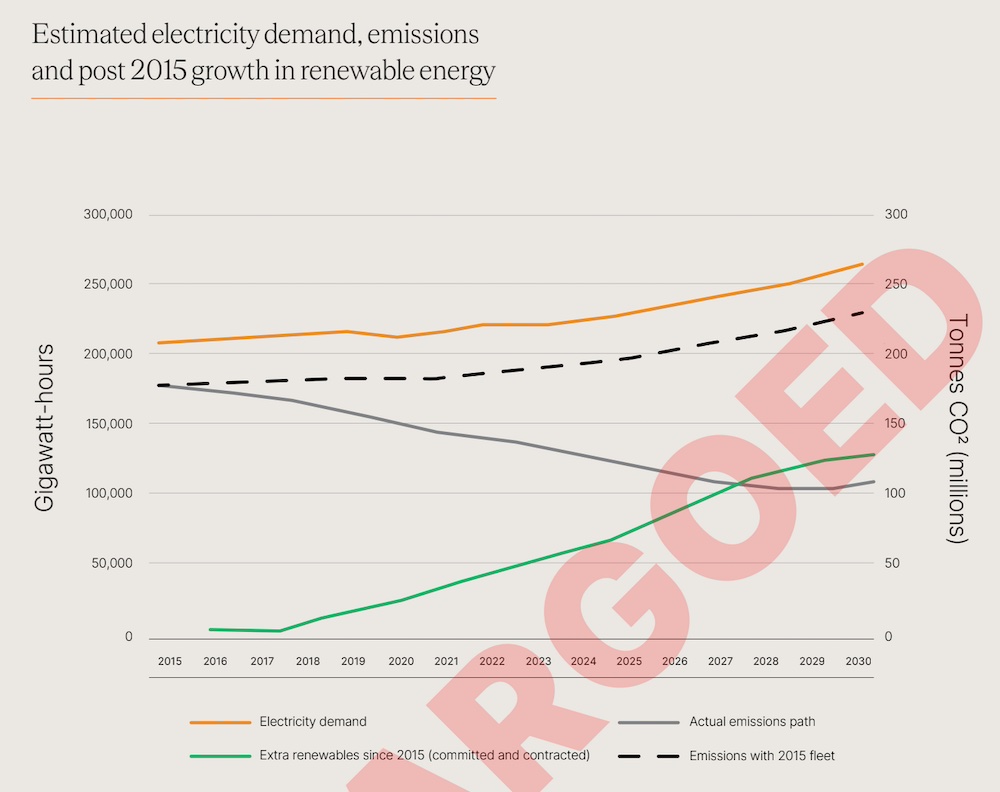
The report, prepared for the Clean Energy Council by Green Energy Markets and due to be unveiled on Wednesday at COP29 in Baku, says renewable energy in 2023 was 2.5 times greater than what it was in 2015 and its share of generation increased from 16 per cent to around 40 per cent.
This surge in the renewables share of the grid has already reduced power sector emissions by 30 per cent relative to if Australia had remained reliant on the 2015 fleet of mostly coal-fired power stations, the report says, or by more than 200 million tonnes.
CEC chief Kane Thornton says that if Australia achieves its 82 per cent renewable energy target by 2030, the total emissions saving between 2015 and 2030 is expected to reach 998 million tonnes – “an extraordinary effort” by the sector.
“Since 2015, when Australia’s renewable energy policy settings were rebooted, a quiet revolution has been taking place, with 40 GW of new rooftop solar and large-scale renewable energy capacity deployed across the country,” Thornton says in the report.
“[The] success in driving down Australia’s electricity sector emissions is a true cause for celebration. Even more so when considering the broader economic benefits the clean energy transition is delivering,” he adds.
But while further slashing electricity sector emissions will support the decarbonisation of the transport and other fossil fuel reliant sectors, the shift to renewables can’t do the job of meeting Australia’s emissions reduction targets alone.
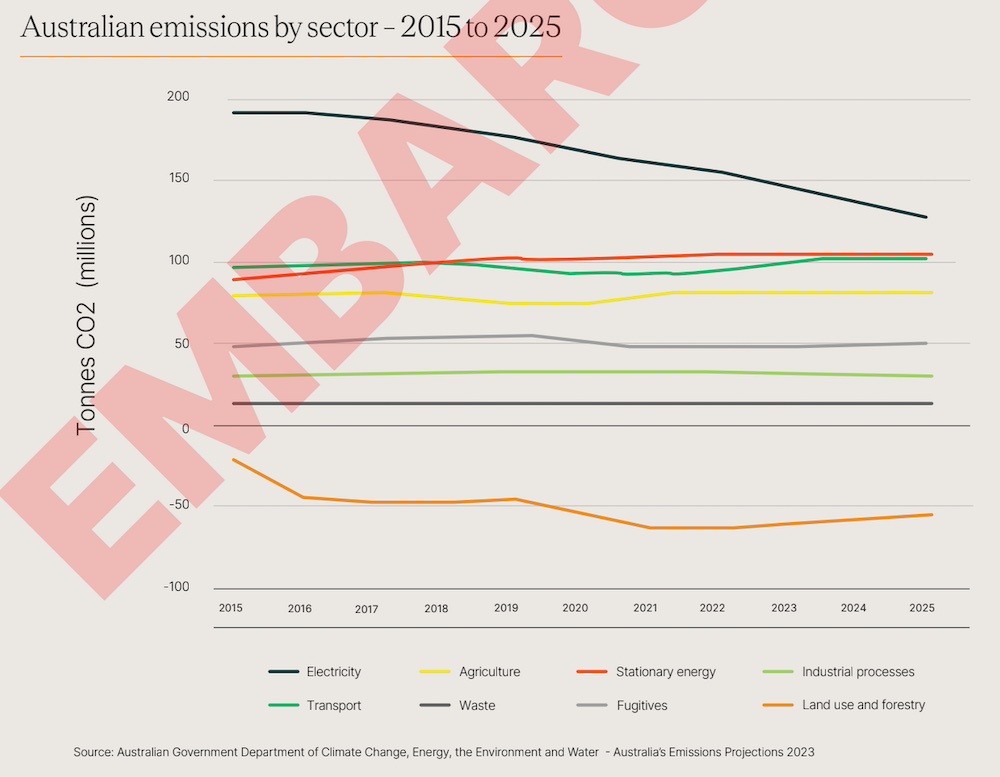
As the chart below shows, most other sectors’ emissions are currently on track to either remain the same or increase over the 2015-25 period. Recent data has shown that rebounding agriculture and transport emissions, in particular, are cancelling out reductions in the power sector.
This is perhaps one of the reasons why the Albanese government has been reluctant to commit to a 2035 emissions reduction target before next year’s May federal election, despite it being due – according to Australia’s Paris climate obligations – by February.
Getting from 43% below 2005 levels in 2030 to the 65-75 per cent mark being called for in some quarters just five years later will require gutsy policies that move well beyond the realm of renewable energy targets.
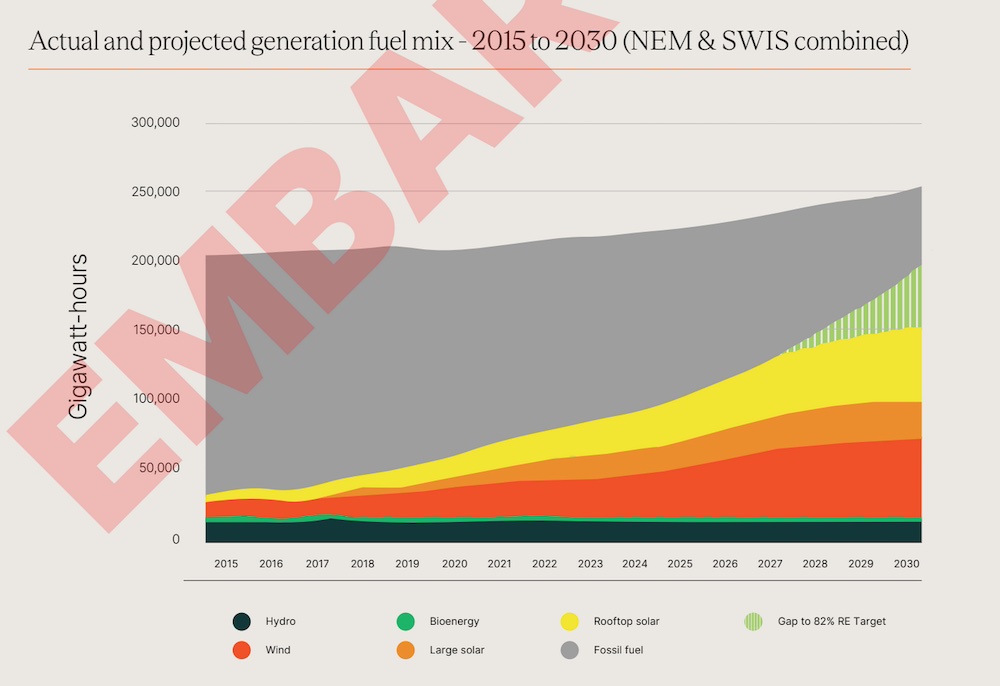
For the electricity sector, too, there remains – as the report puts it – “substantial work to do.” As the green-striped section in the chart below shows, a big acceleration in the rollout of renewables to get to 82 per cent by 2030.
“The challenge now is to move even faster in decarbonising the electricity sector, given its critical role in setting Australia on a path to net zero emissions and meeting our international obligations,” says Thornton.
The initial survey work on the longest tunnel in Snowy 2.0 involved just 22 investigation…
China solar giant launches powerful new all-black solar module that targets premium market and “pushes…
Plans to build one of the world's biggest industrial heat battery projects win Arena funding,…
Board of Queensland energy utility says it needs new leadership, and asks 28-year company veteran…
How do regenerative land practices make renewable energy more reliable? How does government policy reward…
Developer of nearby big battery project offers up to 75 positions to sacked Whyalla Steel…