Minister for Climate Change Chris Bowen during Question Time in the House of Representatives at Parliament House in Canberra, Thursday, May 11, 2023. (AAP Image/Mick Tsikas) NO ARCHIVING
The Federal Labor government has put a $387 billion price tag on the cost of the federal Coalition’s push for nuclear energy, describing those plans as “lies and fantasies” and based around a hatred for wind and solar.
The number has been produced by the Department of Energy and is based around the cost of replacing Australia’s remaining coal fleet of 21.3GW with a minimum of 71 small modular reactors, each of 300MW.
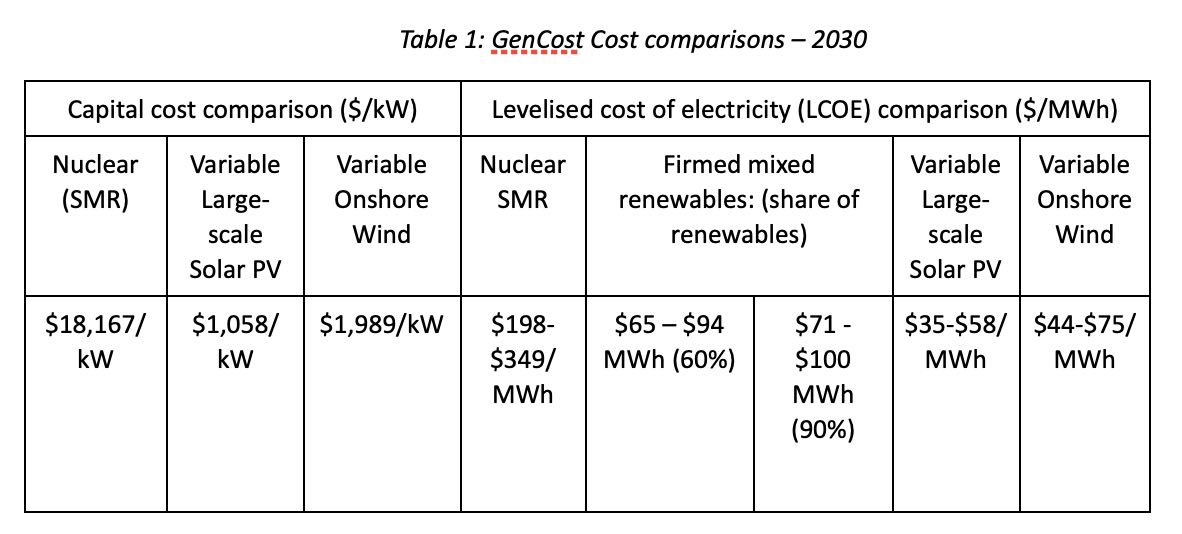
The government estimates put the cost of such a plan at $25,000 for each Australian tax payer, and it says the Coalition claim that nuclear energy is the lowest cost form of low carbon electricity is a lie, and that nuclear is 3 times more expensive than firmed renewables.
“The Opposition want to trump the benefits of non-commercial SMR technology, without owning up to the cost and how they intend to pay for it,” federal energy minister Chris Bowen said in a statement.
The push for nuclear is being propelled by Liberal leader Peter Dutton and the National’s David Littleproud, and has been accompanied by a call to stop the roll-out of wind and solar. Littleproud has sought to justify this by saying that the net zero 2050 target means not having to do much on emissions in the next decade.
The Coalition’s campaign for nuclear has been accompanied by a massive social media and mainstream media campaign demonising wind, solar, storage and transmission.
The cost estimate from Labor is based on the GenCost report produced by the CSIRO and the Australian Energy Market Operator.
The Coalition, conservative media and the nuclear lobby have attacked those reports, but in reality nuclear SMRs don’t exist in commercial form and are unlikely to in the next decade, and the lobby’s marketing claims of cheaper “mass production” are simply not believed by the energy industry.
The $387 billion price tag is even higher than Australia’s controversial commitment to spend $368 billion obtaining a fleet of nuclear-powered submarines, and the SMRs would not be delivered much before the first submarines in the early 2040s.
Climate scientists say that rather than slow down the rollout of renewables and storage, Australia and other countries need to accelerate it.
They say that Australia should be pushing for a net zero target by 2035. Those calls have intensified amid new fears that the climate is nearing, or may already have passed, a new tipping point given the new temperature records on land and in the ocean, record low sea ice in the Antarctica, and numerous extreme events.
Many argue that even a net zero by 2050 target requires a zero emissions grid by 2035 in any case – something that is simply not possible if renewables are delayed while waiting for a technology that does not yet exist.
The Coalition has refused to put any costings on its nuclear plans, and Dutton talks about them in the present tense, as though they already exist. “New nuclear technologies are factory-built, portable, scalable and can even be relocated,” he has said. “New nuclear technologies can be plugged into existing grids and work immediately.”
But they can’t, because they don’t exist. As the former head of the US Nuclear Regulatory Commission, Allisson MacFarlane, wrote recently, there are designs, but they are just that – designs. And none have licences to be built, and some have had their licence proposals rejected.
One U.S. company, NuScale, is the only SMR design in the US to received “design certification” from the NRC, but can’t or won’t built that, and has now reapplied for a larger unit which might be more economic.
The Coalition has also failed to explain how energy companies could keep existing coal plants running until SMRs are available. Most of Australia’s ageing coal plants are already struggling to maintain reliability even now, and would have to extend their operating lives well beyond 50, or even 60 years, in the wait for SMRs.
Bowen accused the Coalition of being climate deniers. “Peter Dutton and the Opposition need to explain why Australians will be slugged with a $387 billion cost burden for a nuclear energy plan that flies in the face of economics and reason,” he said.
“After 9 years of energy policy chaos, rather than finally embracing a clean, cheap, safe and secure renewable future, all the Coalition can promise is a multi bullion dollar nuclear flavoured energy policy.”
There is something for everyone in China’s coal data, but the direction that the energy…
Santos beat greenwashing claims in court, and while the ruling exposes the limits of climate…
A flurry of new solar and battery projects has appeared in AEMO's grid management system,…
One of Australia's fiercest defenders of nature and biodiversity has thrown his hat into the…
Lauri Myllyvirta, lead analyst at the Centre for Research on Energy and Clean Air, on…
As early works – and a legal challenge – get underway for Marinus Link, the…