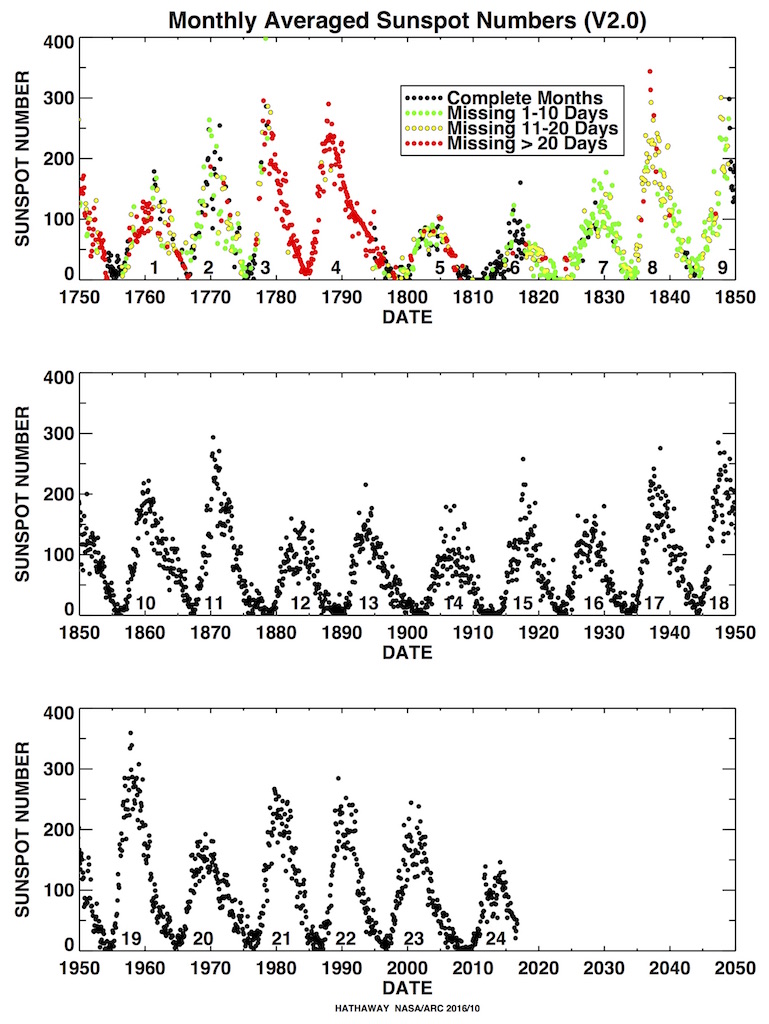
Recent statements by James Lovelock, the distinguished physicist, are not easy to reconcile with his statements, writings and books over the years, including The Vanishing Face of Gaia; The Revenge of Gaia and others.
As recently as March 30th, 2011, it was reported: “Professor James Lovelock, the scientist who developed Gaia theory, has said it is too late to try and save the planet. The man who achieved global fame for his theory that the whole earth is a single organism now believes that we can only hope that the earth will take care of itself in the face of completely unpredictable climate change.”
But now Lovelock says:
The world has not warmed up very much since the millennium. Twelve years is a reasonable time … it (the temperature) has stayed almost constant, whereas it should have been rising – carbon dioxide is rising, no question about that …
The problem is we don’t know what the climate is doing. We thought we knew 20 years ago. That led to some alarmist books – mine included – because it looked clear-cut, but it hasn’t happened …
The climate is doing its usual tricks. There’s nothing much really happening yet. We were supposed to be halfway toward a frying world now.
Unfortunately, these statements by James Lovelock are inconsistent with up-to-date climate data sets. These indicate:
It is a strawman argument to expect temperature trends to change smoothly, or to highlight periods when temperatures have risen at low rates or even declined, and at the same time overlook the mean decadal trend where measured temperatures have risen during the 20th – early 21st centuries by more than 1.0 degrees Celsius (see Figure 1).
A far greater rise is currently masked by sulphur aerosols of short (one to two years) atmospheric residence time, without which mean global temperatures would have risen above 2.0 degrees C since the early 20th century.
Given the above it remains a mystery as to the nature of the evidence or reasons underlying James Lovelock’s statements. It is particularly perplexing, since 20th century greenhouse and temperature rise rates are orders of magnitude higher than during any previous period, excepting intra-glacial Dansgaard-Oeschger cycles (see Table 1)
Popular notion on media and TV shows juxtapose a “belief” versus “scepticism” in climate change. Science, however, is not about “belief” but about measurements and empirical evidence consistent with the basic laws of nature. It is practising scientists who are the true sceptics – examining and re-examining their methods, data, observations and explanations numerous times, subsequently subjected to rigorous review procedures, prior to peer-review publications.
“Everyone is entitled to his opinions but not to his facts” (Senator Daniel Moynihan)
An Australian startup promising to transform the economics of green hydrogen has celebrated its fifth…
One of the leading lights of a new breed of renewable-energy based utilities placed into…
Some households will use batteries, EV charging and behaviour change to make very good use…
China battery giant launches two major initiatives aimed at improving the sustainability of battery manufacturing,…
A report into the progress of the federal government's Arena-backed community battery rollout has revealed…
One of Australia's first solar and battery hybrid projects reaches financial close, confirming big shift…