Rooftop solar. Photo: Giles Parkinson.
Proposed Solar Sharer tariffs for electricity network operators in South Australia, New South Wales and Queensland have been released by the Australian Energy Regulator (AER).
Victoria also plans to introduce solar sharer tariffs too, but it has an independent process.
This has happened at the same time as the Australian Energy Market Commission (AEMC) is finalising the outcomes of its pricing review (see The Pricing Review: Electricity pricing for a consumer-driven future | AEMC ).
It will be a challenge for many consumers to work out the separate and overall impacts of all these changes for their circumstances, and whether they would come out ahead.
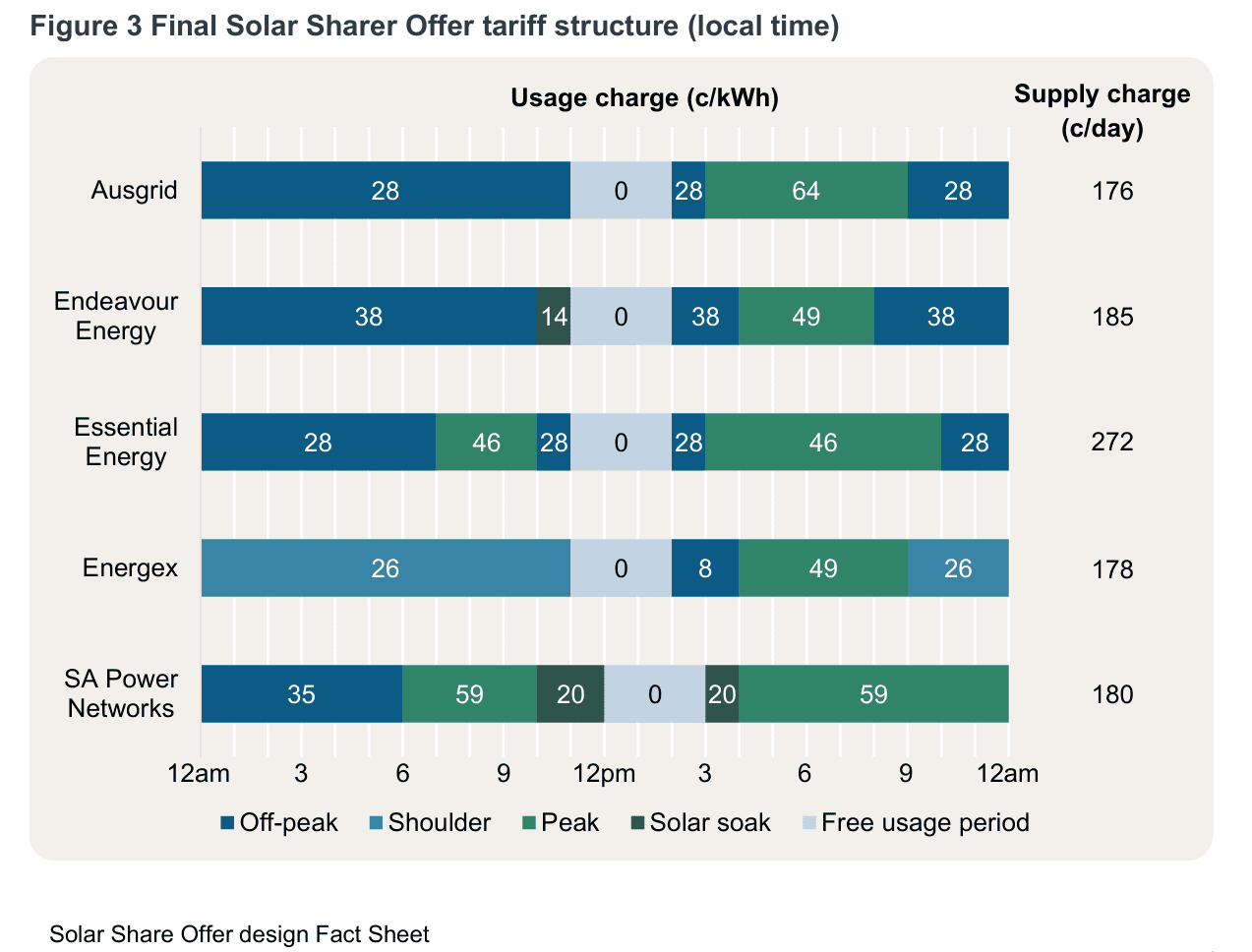
Figure 1. Proposed tariffs ‘3 free hour’ electricity. (source: AER – Solar Sharer Offer fact sheet )
Retailers will presumably incorporate the SSO (solar share offer) with network tariffs into their own agendas and pricing – and most measures proposed by AEMC will be phased in over time.
There will be winners and losers, though the AEMC has certainly proposed some important beneficial changes for consumers among the complexities.
To what extent does ‘optimising’ network pricing and incorporation of the three-hour free power period achieve overall societal cost and benefit allocation and equity?
Complex and changing tariff structures challenge many Australians to work out if they will benefit overall. High prices at times when consumers see greater energy use essentially discourages the adoption of time variable pricing.
Consumers may worry that the tariff structures will change after they are locked in for years through their appliance and building purchasing decisions and evolving family characteristics. Perception of risk is a significant barrier to adoption.
This isn’t just about low trust in retailers and network operators – look at the impacts on many PV buyers’ trust as governments dramatically reduced rooftop solar feed-in prices after encouraging people to buy big PV systems, often with borrowed money.
The most visible near-term impact of the many changes will be the availability of the three hours of zero cost “Solar Sharer” tariffs, intended to mop up the “excess” solar generation that often drives daytime wholesale prices to low or negative levels. It is actually the lack of flexibility of coal-fired generators that drives much of this excess solar.
While I can understand the desire for seasonal pricing simplicity, free electricity on a cold, cloudy, low wind winter day may actually cost the supply sector a significant amount. Energy businesses will seek to recover this, as well as fixed costs incurred in those periods. Blurring seasonal costs is not cost-reflective, which is claimed to be an aim.
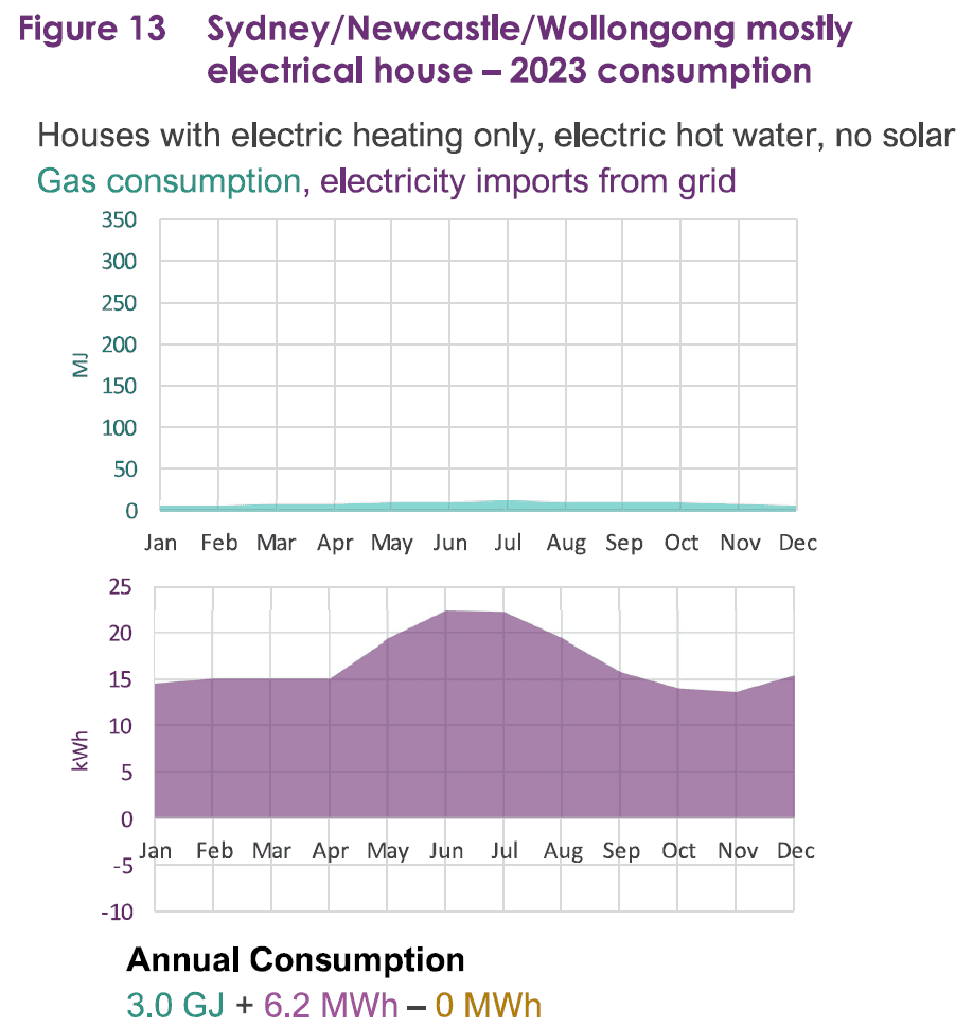
I have had a go at working out the impacts of these proposed tariffs on overall consumer costs. I did my best to translate graphs from the Australian Energy Market Operator (AEMO)’s very useful 2025 report (Gas-Electricity Meter Data Linking Project Report) to numbers, so accuracy is limited – see Figure 2 for one of the original AEMO graphs.
Figure 2. Example of AEMO graphs on which my analysis of costs under proposed tariffs in Figure 1 was based. The small gas use is likely to be mostly for cooking. Those that remain connected to gas for cooking will pay significant fixed charges to their gas supplier.
That shows hourly demand profiles averaged over the year for a typical all (or almost all) electric home in the Wollongong-Sydney-Newcastle region. AEMO also provided hourly graphs.
This hypothetical home uses 16.7 kWh/day, about 6,100 kWh annually. Low consumers may use less than 2,000 kWh and high consumers more than 20,000 kWh.
Many households will not be able to make use of the free daytime power while others will use batteries, charging of electric vehicles and behaviour change to make very good use of it. None will be able to avoid the daily fixed charges that AEMC has proposed to increase over time.
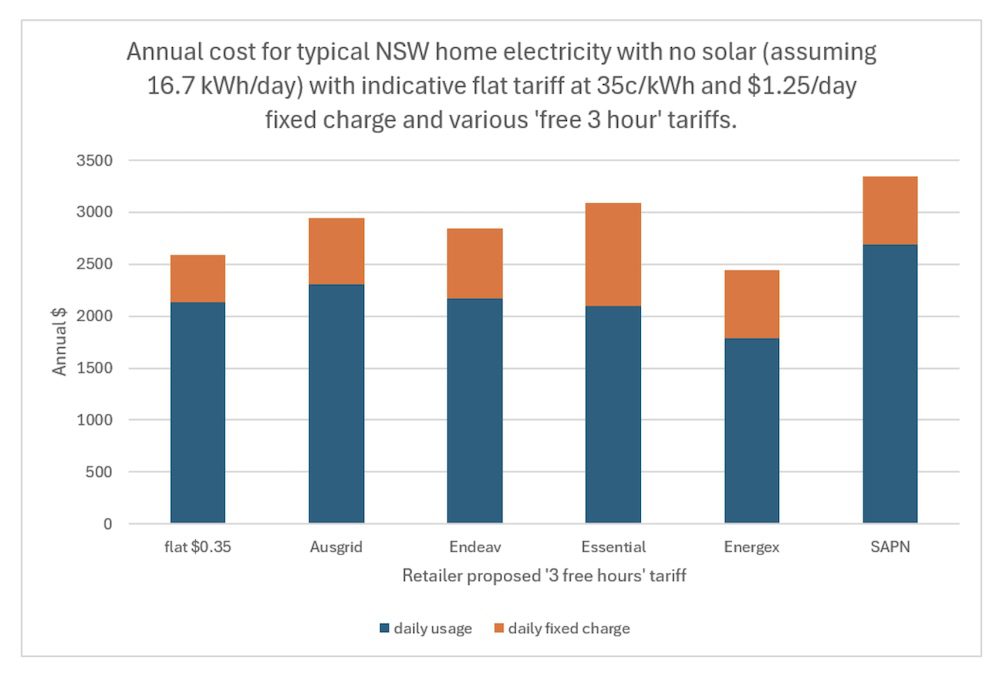
Figure 3 shows the annual electricity cost based on the electricity tariffs shown in Figure 1 for this hypothetical home if it doesn’t change its daily electricity usage pattern or install solar or a battery.
Figure 3. Estimates of daily network electricity costs for ‘solar sharer’ tariffs shown in Figure 1, proposed by various National Electricity Market electricity network operators, and based on AEMO consumer consumption data from Figure 2. The 35 cents/kWh for the flat tariff may understate actual prices, so it is just indicative.
Prices and price structures vary a lot from one network operator to another, but it looks as though pricing does tend to reflect the varying situations of different electricity suppliers.
Essential Energy have very long powerlines with relatively few consumers on them. South Australian Power Network (SAPN) doesn’t have base load coal-fired generation, Queensland has coal-fired base load generation, and so on.
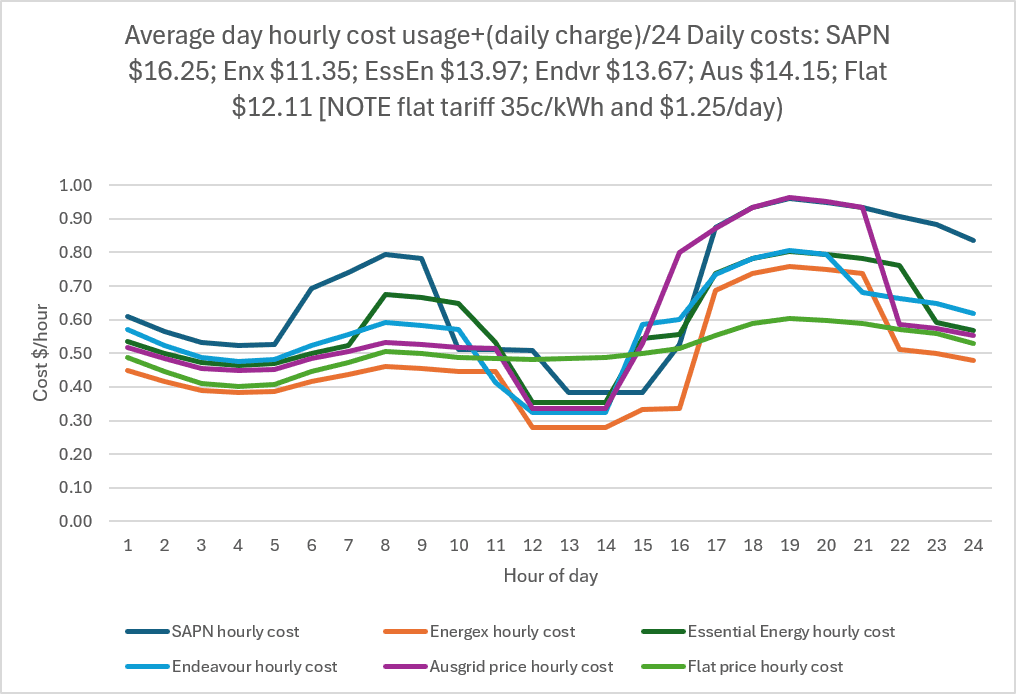
I used other graphs from the AEMO report to look at hourly data on an average day for typical homes in Wollongong, Sydney and Newcastle regions of New South Wales and costs for the NEM network operators, in Figure 4. Electricity consumption of individual consumers and consumers in different regions will vary for many reasons.
Figure 4. Hourly network charges in different network areas based on average daily demand profile over a year for a typical home in Wollongong, Sydney and Newcastle regions of New South Wales (Source AEMO)
A key issue is that peak period network prices vary from 46 to 64 cents per kilowatt-hour, up to double what people have been paying on flat-rate retail tariffs. I suspect that will be a problem that triggers consumer concerns.
‘Economically rational’ retailers and policy makers may see these high peak time prices as reasonable reflections of their costs. But many consumers will see them as exploitation.
They will be charged high prices when they can’t avoid using electricity to deliver services they consider to be essential, such as feeding hungry kids, providing comfort and a healthy environment, and running TVs and gaming computers.
In some ways, for many people it’s not really about the money. Compared with the cost of food, the value for a parent of happy kids – or avoiding screaming kids or illness, are much greater than marginal changes in energy costs.
An average household spends less than the cost of a couple of coffees per day on electricity. But low income, vulnerable households and occupants of energy-disastrous homes do pay a lot for energy relative to their incomes, and the big bills come at times that matter, especially extreme weather.
Equity in relation to overall energy bills matters, and media can deliver powerful messages using examples of hardship. Many consumers have limited scope to adapt: renters have limited control.
When someone buys a fridge, clothes dryer, TV, hot water service or an existing home, or adds to their family, much of their energy use is locked in for quite a few years.
Energy-related incentive programs have been popular, and are worthwhile, but they can actually amplify social division. Indeed, the failure of energy markets to acknowledge the circumstances of 40 per cent or more of renter and strata title occupant households and small businesses for decades has created significant mistrust of governments and policy makers as well as the energy industry.
Future demand and supply patterns are also very uncertain. When coal generators shut down, excess daytime generation will decline. Transition from gas will increase electricity demand, especially in colder climates and for businesses.
Emerging technologies such as ever-bigger and more numerous batteries, industrial high temperature thermal storage (e-TES), pumped hydro and existing hydro hoarding electricity to sell at high prices at other times, already being done by Hydro Tas, will compete for cheap renewable electricity.
Will energy policy makers have to review the Solar Sharer model? How might voters react to that?
Australia's leading home battery supplier offers bigger all-in-old battery solution for commercial and industrial sites…
Data centres should carry the cost of higher electricity rates if allowed to build now,…
Coalition leader Angus Taylor wants to scrap renewable energy agency, funding for home batteries and…
Across Australia, $32.5 billion of generation and storage is now under construction or at financial close,…
The response to the shocking attack on Helen Haines suggests we need to bring more…
A new 4 GW wind and solar project is intended to power green iron prospects…