International Energy Agency executive director Fatih Birol at COP26 in Glasgow. Photo by IISD/ENB.
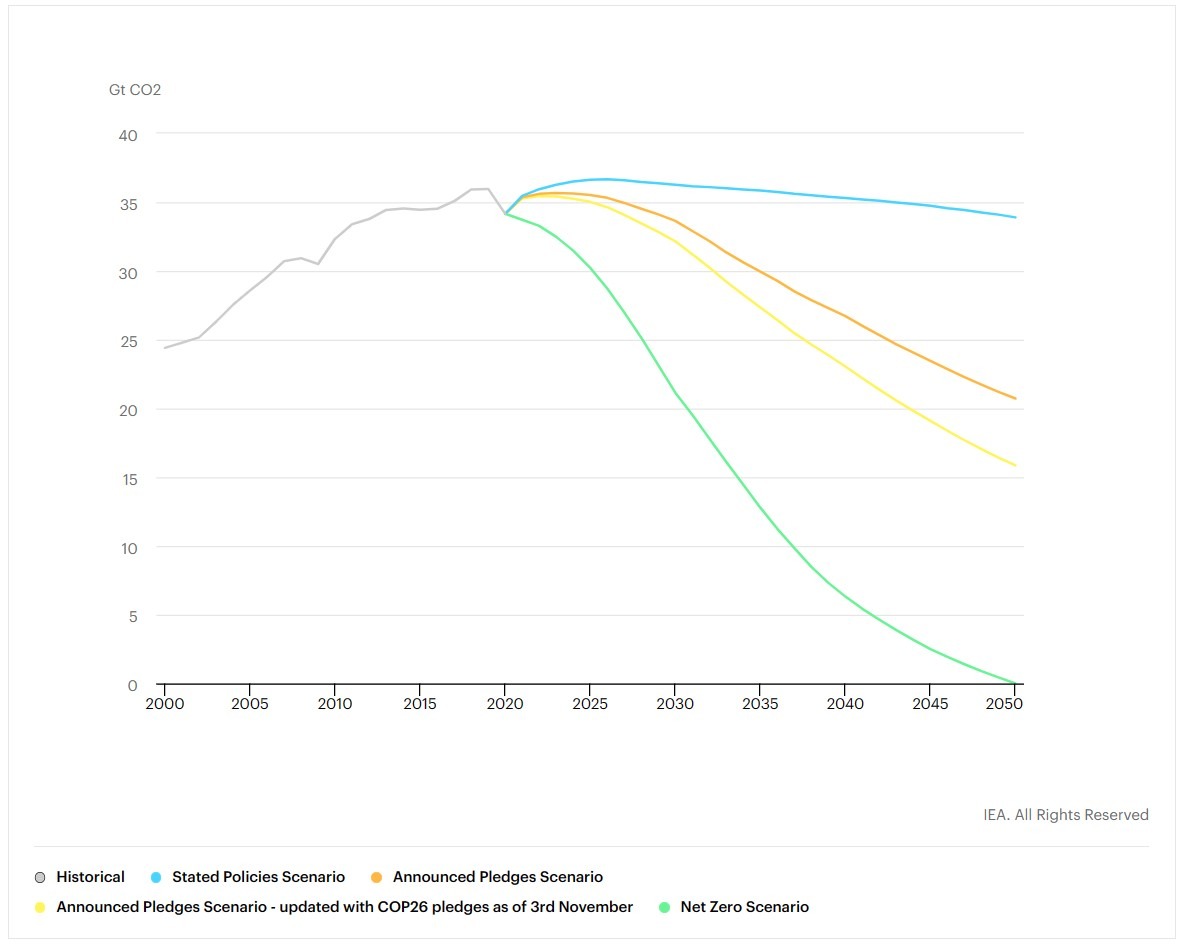
Pledges to slash greenhouse gas emissions announced at the COP26 talks in Glasgow this week may be enough to keep average global warming to below 2°C a new analysis published by the International Energy Agency suggests.
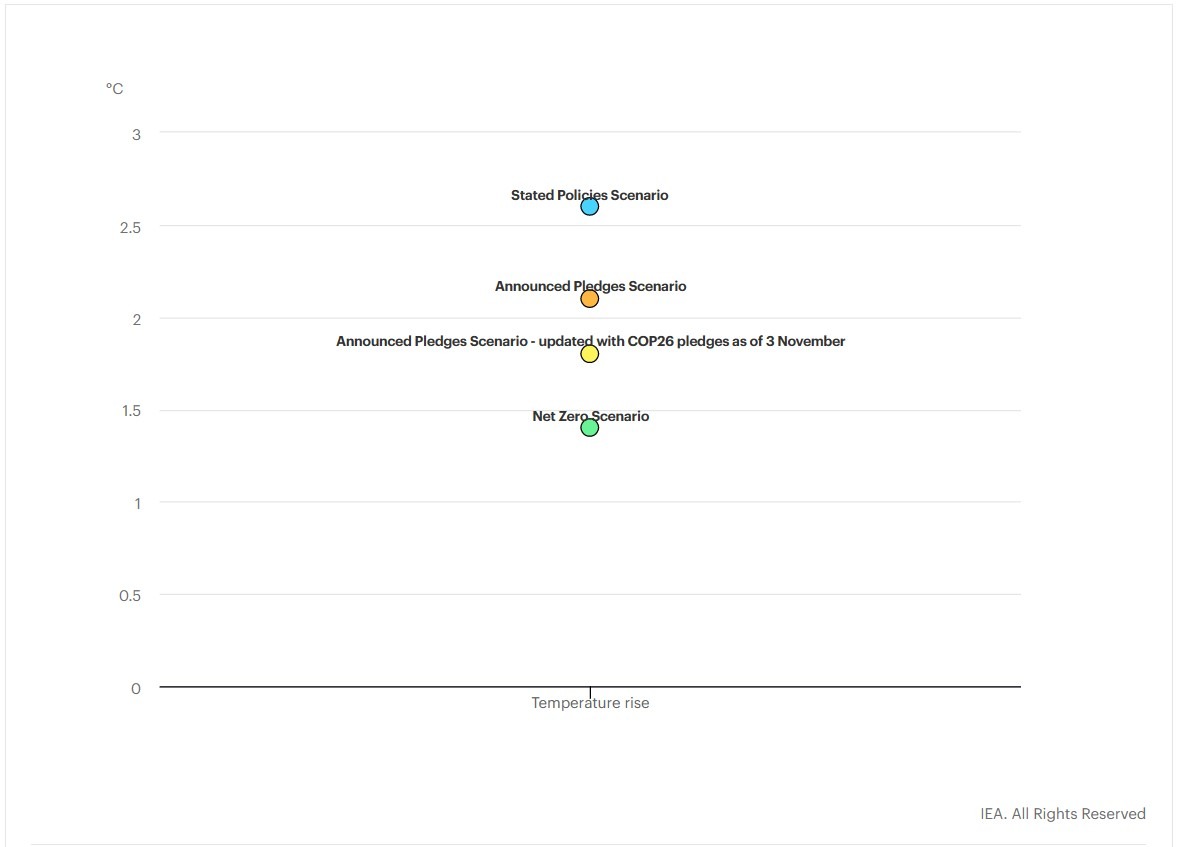
While the success of the COP26 talks will not be fully measurable until after the negotiations wind up next week, the IEA has found that new national commitments to zero net emissions and strengthened interim targets could be enough to limit warming to just 1.8°C.
Such an outcome might be enough for the UK hosts of COP26 to claim a victory in global efforts to tackle climate change.
The Glasgow climate talks have seen a number of countries announce new commitments to zero net emissions targets – including Australia (2050) and India (2070).
More importantly, a number countries have committed to slash methane emissions by 2030, and other initiatives include ending investment in new coal fired power stations and ramping up investment in clean energy technologies.
See: Glasgow Brief: Big “anti-coal day” as Taylor confronted in Glasgow
“Our updated analysis of these new targets – on top of all of those made previously – shows that if they are met in full and on time, they would be enough to hold the rise in global temperatures to 1.8 °C by the end of the century,” the IEA said.
“This is a landmark moment: it is the first time that governments have come forward with targets of sufficient ambition to hold global warming to below 2°C.”
It suggests that the world has been able to bridge a significant ambition gap that previously had the world on track to exceed the global warming limits contained within the Paris Agreement.
Critically, however, the IEA warned that the more ambitious goal of limiting average global warming to below 1.5°C, a level recommended by climate scientists as an appropriate goal to keep warming within safer levels, and help protect key natural assets such as the Great Barrier Reef, is not yet within reach.
In the lead up to COP26, the Intergovernmental Panel on Climate Change warned the world was quickly running out of time to cut emissions at the rate now necessary to avoid exhausting the carbon budget aligned with a 1.5-degree temperature increase.
The IPCC said that the world could surpass 1.5 degrees of warming before 2040, based on current trajectories.
The IEA’s latest update underpinned the need for governments to do more, particularly over the short term (which Australia has so far refused to do), and to actually deliver the policies needed to meet their emissions reduction pledges.
“Even as we welcome this progress, we must also sound a note of caution: 1.8 °C is still above the Paris Agreement target of limiting global warming to well below 2 °C and pursuing efforts to limit it to 1.5 °C,” the IEA added.
“Scientists have clearly warned of the major climate risks of breaching the 1.5 °C limit. Our latest analysis – reflected in an Announced Pledges Scenario updated to include all the recent announcements – shows that even with these new commitments, we still fall well short of what is needed to keep the door open to 1.5 °C.”
The IEA analysis mirrors similar projections produced by the Australian based Climate Resources group, which likewise found that national pledges made at Glasgow would keep warming to just 1.9 degrees.
The UNEP, as part of its pre-COP “emissions gap report” projected that the world was on track for 2.7 degrees of warming based on pledges announced before COP26
“The large difference between the 2.7°C warming estimates and an estimated peak warming of 1.9°C is twofold: For one, the 1.9°C estimate includes all the 70+ countries’ long-term strategies (2050, 2060 or 2070 net-zero targets etc),” Climate Resource says.
“Secondly, it includes the new NDCs by China and a few other countries, including the announcement by India for lower 2030 emissions and net-zero by 2070.”
“The UNEP Gap report published in October 2021 quantified the effect of net-zero targets in the decades beyond 2030 as reducing mean projected 2100 warming by 0.5°C, and together with targets announced in the last few days, we estimate this difference is now approximately 0.8°C.”
A renewables developer with four grid-scale battery projects currently under development in Australia has been…
Dan Tehan's attempt to win the climate wars carried a whiff of napalm - dropped…
Plans to build a 1,561 km gas pipeline from the NT Beetaloo Basin to south-east…
A fundamental challenge of the energy transition risks being overlooked: managing complexity. But this is…
The most important imperative for Australia is to get rid of diesel. It is a…
Contracts awarded for the biggest new wind project in Australia for more than two years,…