Credit: EPA
Winter Storm Fern is the latest proof America’s power grid can’t depend upon fossil fuels for reliable power, especially during extreme winter weather.
In PJM Interconnection, the nation’s largest power grid operator, fossil fuel power plants were forced offline due to constrained natural gas supplies and frigid temperatures. On Sunday afternoon, PJM reported nearly 21 gigawatts of generation was offline, roughly 16 percent of the grid’s afternoon demand.
But that forces the question – what kinds of power plants were offline?
Power market operators don’t report individual plant outages or say what type of fuel outages occurred during extreme weather until long after the storm has passed, but our analysts did some digging and the data is clear: Fossil fuels failed during Fern.
On January 24th, the day before the storm, PJM gas generation maxed out at 60 GW during the evening peak. However, on January 25th, the day of the blizzard, gas generation fell to 50 GW, even as prices remained high across the entire region and expensive oil generators made up the gap.
And the picture becomes clearer when looking at data from Monday morning, January 26th.
Based on PJM data from GridStatus.io, during the 8:00 a.m. morning peak demand, gas-burning generation was down 10 GW, coal-fired generation was down 2 GW, and oil-burning generation was down 3 GW, all compared to the same time on January 24th.
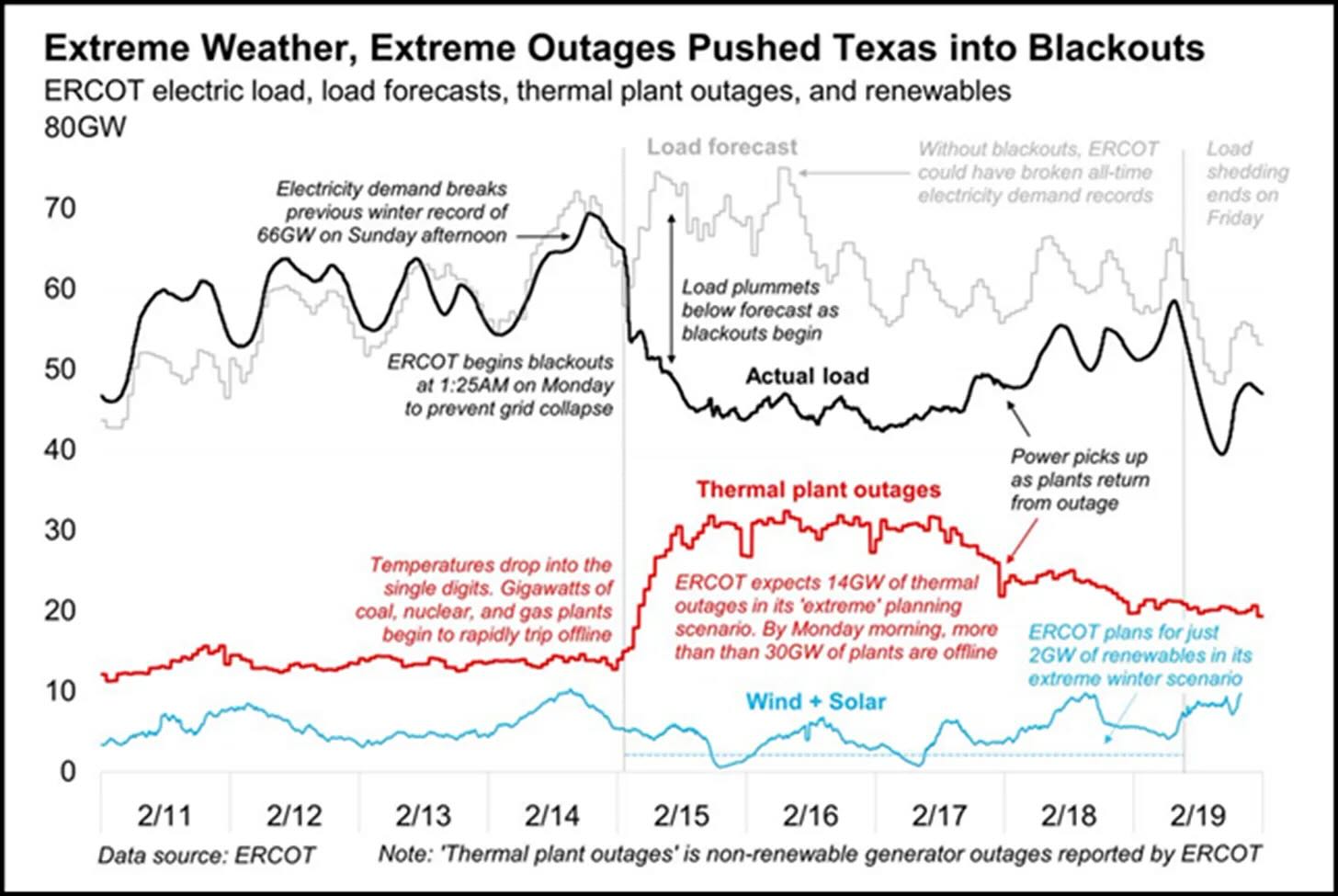
History shows that fossil fuels fail in cold weather. During the Texas blackouts that killed hundreds during 2021’s historic Winter Storm Uri, frozen gas pipelines and compressors cut off fuel supplies, while some gas-burning plants couldn’t run operate in such cold conditions.
Meanwhile multiple coal-burning power plants were knocked offline by the cold for more than 24 hours and frozen coal piles locked up fuel supplies that utilities wanted to burn for electricity.
The same problems hit Texas in a 2011 blackout – coal piles froze, coal plants froze, and gas infrastructure froze, leaving millions without power.
Compare that to the situation today, where the state has enough battery capacity to cover nearly 20 percent of its all-time demand record — up from almost zero during 2021’s devastating winter blackouts.
We don’t yet know why exactly PJM’s fossil fuel power plants failed during Winter Storm Fern, but gas supplies are already emerging as a culprit for some of the problems.
Fox Business reported “the center of the strain is the nation’s heavy dependence on natural gas delivery” and noted any disruption to pipelines or infrastructure can quickly threaten power generation.
Meanwhile, though PJM has few renewables in its electricity mix, those that are online delivered, with wind and solar combining to produce almost 7 percent of the region’s electricity, higher than the day before the storm, according to Gridstatus.io.
While PJM didn’t suffer blackouts, Winter Storm Fern shows why the U.S. Department of Energy’s pro-fossil fuel policies are a problem.
Coal plants break down more than any other source of generation, meaning when DOE forces coal-fired power plants to stay open past their planned retirement, it’s only adding the least-reliable supply – even when the plants are already broken down or cost consumers hundreds of millions to keep running.
And increasing America’s dependence on natural gas generation, despite constricted supply routes into our most populated regions and shipping record amounts of domestic gas to foreign markets willing to pay higher prices, makes our communities more vulnerable to frozen pipelines and constrained supply.
“Adding more natural gas generation will not fix and may exacerbate the risks,” Didi Caldwell, CEO of Global Location Strategies, told Fox Business.
It also forces customers to pay the price for volatile gas price spikes – natural gas prices soared 59 percent the week before Winter Storm Fern hit, on top of gas prices rising 59 percent between 2024-2025, and ahead of an expected 14 percent jump in 2026.
True grid reliability, especially during extreme weather, is only possible by strengthening our existing transmission system, adding solar-plus-battery systems, expanding onshore and offshore wind power – which historically perform better in winter storms – and increasing energy efficiency measures that prevent demand spikes when temperatures fall.
Silvio Marcacci is a US-based senior energy policy strategist and the author of The Power Line substack, where this article was first published. Reproduced here with the permission of the author.
Construction of the "hydroelectric station the size of the Sydney Opera House" has started laying…
Leading solar expert says cost of recycling scheme should be paid by end-users, including solar…
A new report finds that monitoring of methane emissions can be significantly improved, particularly for…
Germany's cabinet approves roadmap to phase out oil, coal and gas across energy, industry, buildings and…
Eastern Australia is not yet in the grip of a terrible 2019-20-like drought but early…
Queensland has ripped up its renewables target and cancelled projects, but it remains a hot…