The lack of coal supplies, problems with a gas pipeline and the closure of a major gas generator in Western Australia have prompted the Australian Energy Market Operator to turn to industrial customers to help manage supplies over the summer.
The Western Australia grid – which is the biggest isolated grid in the world – has been hit by a series of problems from it traditional fossil fuel generation, which still dominate the grid despite some spectacular new wind and solar penetration records in recent months.
The share of renewables has hit “intantaneous” records of up to 81.4 per cent, and while the share of renewables hit a record 43 per cent in the month of November, the grid is still largely dependent on coal and gas.
But problems with this technology is creating massive headaches for AEMO and the state government, despite the existing of a so-called “capacity” market that is supposed to avoid such situations.
The state’s biggest coal supplier has failed produce to enough coal, prompting one 300MW coal generator to shut down for at least three months, and others to dial down their output, and authorities have been forced to look at shipping coal from interstate.
A unit at the Pinjar gas station is also out of action until at least April, and a major leak in a Santos facility that has raised questions about gas supplies.
These failures, along with the early closure of a co-generation facility, and ongoing concerns about the reliability of its thermal fleet, has prompted a search for industrial users who can dial down demand if supplies are insufficient at peak periods in summer.
“Due to a combination of increased forecast demand, extended generation outages, fuel supply constraints, and delays to power generation and storage projects, AEMO has sought additional reserve capacity,” it said in a statement last week.
It is seeking to offset a potential shortfall of approximately 174MW for Western Australia’s South West Interconnected System (SWIS), and – through a tender – has been offered up to 200MW of capacity from various providers, most of them industrial loads.
“We’re in the process of finalising the total reserve capacity and associated technical reviews, which includes a mixture of load curtailment and power generation solutions,” Kate Ryan, the head of WA and strategy said.
“These reserves will add further resilience to the grid during the challenging summer period when the power system is under increased stress.”
It is the first time since 2008 that there has been a special tender for demand management in WA, which normally relies on a controversial “capacity” market that pays generators to be available, but which has resulted in big handouts to some generators that are never used.
In a presentation last October, AEMO said there were several risks to supply reliability in the SWIS – the name of the state’s main grid – over the coming years.
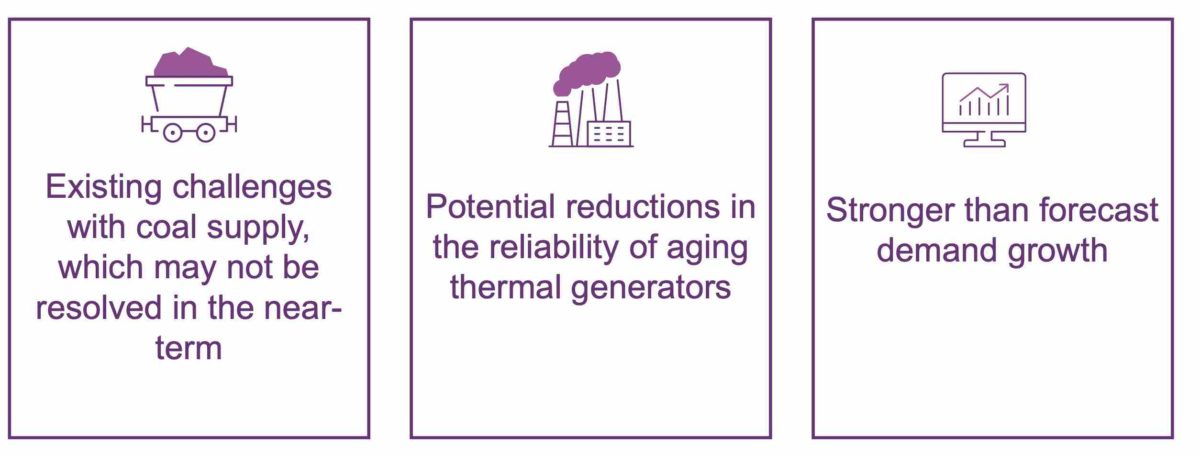
These include existing challenges with the coal supply, which AEMO says may not be resolved any time soon, and the potential reduction in the reliability of ageing thermal generators.
The tender provides for payments to reduce demand in peak periods, usually between 5pm and 9pm and air conditioning use soars and the state’s big resource of rooftop solar facilities winds down.
Providers will be paid up to $47,448.42 per MW made available, and up to $2,204 per megawatt hour if their offer is actually activated. The scheme lasts for 12 weeks to cover the peak demand period over the summer months.
“With capacity generally certified around two years prior to the relevant capacity year, the SRC mechanism exists for circumstances just like these,” Ryan said.
“We’re in the process of finalising the total reserve capacity and associated technical reviews, which includes a mixture of load curtailment and power generation solutions.
“These reserves will add further resilience to the grid during the challenging summer period when the power system is under increased stress.”
AEMO is also recalling units from outages where possible, and working with network operator Western Power to ensure other non-market sources of capacity are available to provide support if required.
Giles Parkinson is founder and editor-in-chief of Renew Economy, and founder and editor of its EV-focused sister site The Driven. He is the co-host of the weekly Energy Insiders Podcast. Giles has been a journalist for more than 40 years and is a former deputy editor of the Australian Financial Review. You can find him on LinkedIn and on Twitter.