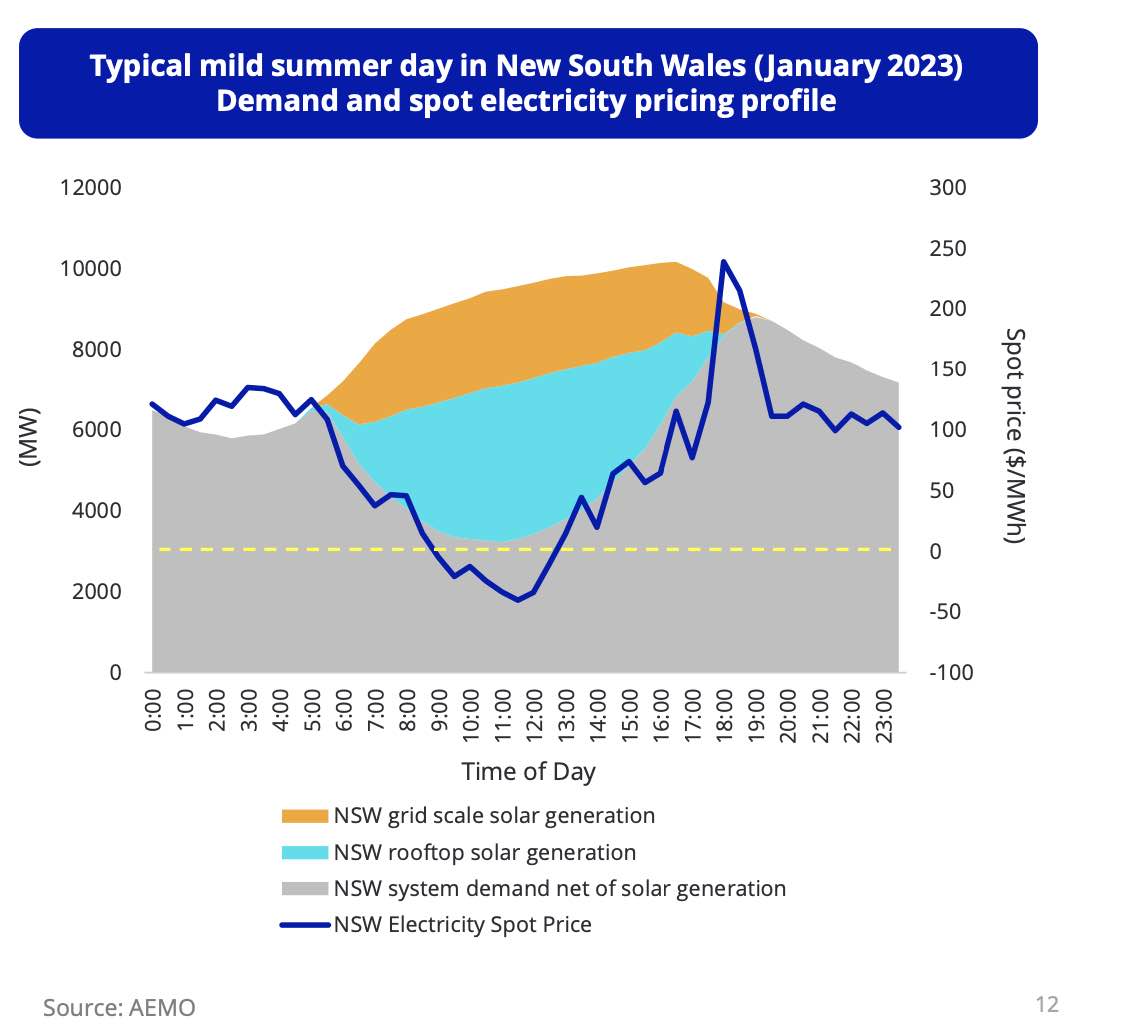
AGL – Australia’s biggest coal generator and single biggest polluter – is teaching its two remaining and ageing coal fired generators how to “flex” in the latter stages of their life cycles so that they can cope with the growing impact of solar “duck curves”.
The flexibility upgrades at its Bayswater black coal generator in NSW and the Loy Yang A brown coal generator in Victoria are seen as a necessity as the Australian grid absorbs more variable wind and solar, which is making it impossible for traditional coal generators to operate as “baseload.”
AGL’s task is made easier by the closure in April of the 52-year-old Liddell coal generator in NSW, which had little ability to dance around the growing share of rooftop solar in the grid.
But AGL managing director Damien Nicks says the ability to flex is essential to manage the impacts of lower customer demand, caused by the growing adoption of rooftop solar power, and negative prices during the midday solar peaks.
He says all four Baywater units can be flexed down by around 70 per cent from 680 MW to 200 MW, and all four Loy Yang A units can be flexed down around 45 per cent from around 550 MW to 300 MW.
“We have plans to lower the minimum generation levels of the Loy Yang A units by further 50 megawatts each, in FY24,” Nicks added.
The flexibility upgrades are already delivering benefits – about $7 million of gross margin benefit in FY23, through lower coal usage and by avoiding uneconomic running. Approximately 60 kilotons of carbon emissions were also abated.
“A key point I’d like to highlight here is that we are not flexing the Bayswater and Loy Yang A units beyond their original design parameters – but rather investing in the technology and assets we have to operate more efficiently as a response to the transition and renewables entering the market.”
AGL for all its talk about the acceleration of its decarbonisation plans, and pressure from its biggest shareholder, the Mike Cannon-Brookes owned Grok Ventures, the company still sources more than 80 per cent of its generation from coal power.
That is unlikely to change a huge amount before it closes either or both of Bayswater and Loy Yang A, hopefully by 2030 if climate targets are taken seriously and enough renewables and storage built, but more likely some time in the first half of thennext decade.
It aims to build 12GW of new capacity – wind, solar and storage – by 2035, and says it has increased its near time pipeline to more than 5GW from just over 3GW.
Its 2027 targets, see table above, include a quadrupling of its grid scale battery capacity whether owned or contracted to 1.5GW (with varying levels of storage), and a big increase in decentralised assets under orchestration.
It hopes to have between six and eight clients located or connected to one of its clean energy hubs that it will establish at Torrens Island in South Australia, and in the Hunter Valley.
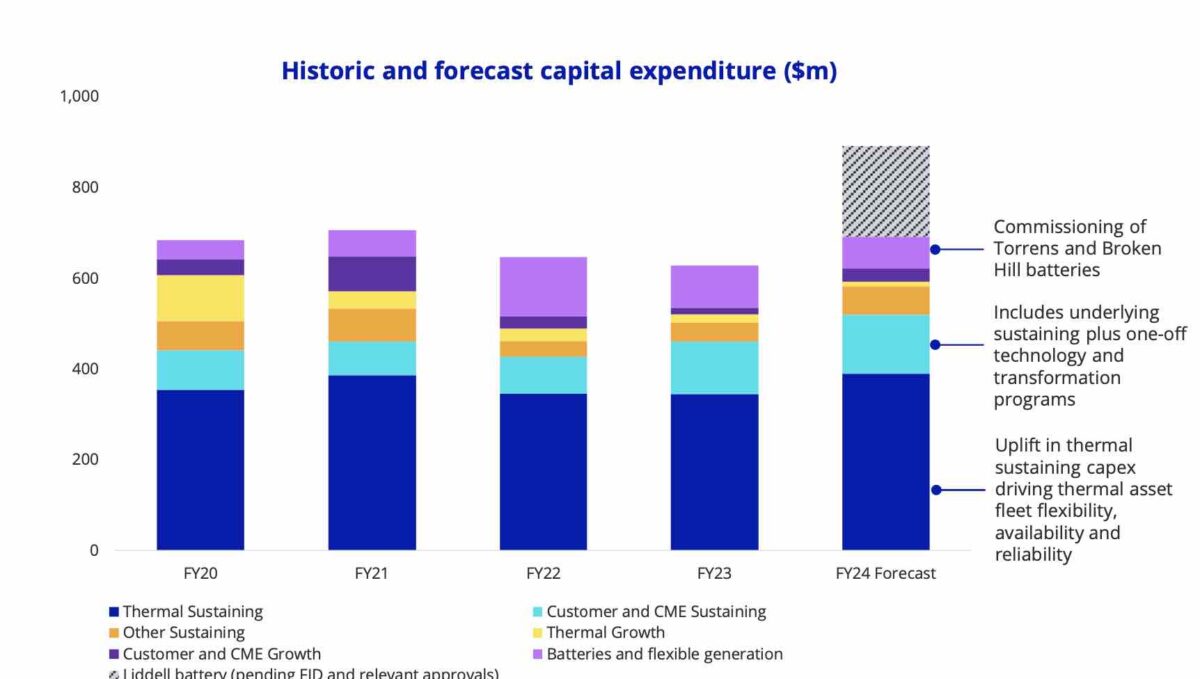
But in the coming year, AGL will be spending more money upgrading and keeping its coal and gas assets operational (and flexible) as it will on new wind, solar and battery developments.
Its planned renewable energy investments include up to $1 billion over the next two financial years on battery storage, with up to $800 million on the 500 MW, potentially four hour Liddell battery, with a final investment decision due later this year.
In the coming year it will also spend around $70 million on the full commissioning of the Torrens Island (250MW, one hour) and Broken Hill (50MW, one hour) batteries.
AGL reported a statutory net loss of $1.26 billion for 2022/23, reflecting the previously announced $680 million write down of its coal and gas assets because of their accelerated closure, and a further $890 million write down in the fair value of financial instruments, reflecting the impact of a drop in forward prices.
Its underlying net profit increased by 25 per cent over the previous year to $281 million, and it expects this to more than double in the current financial year to between $580 and $780 million.
This reflects the benefits (to AGL) of sustained higher wholesale prices, and the improved flexibility, also helped by the new Torrens Island and Broken Hill batteries.
Sabiene Heindl from The Energy Charter on the need for strong regional leaders for transition…
Big battery developers are facing increasing scrutiny from local communities about their projects. Some of…
Record levels of solar, wind and battery use are pushing down emissions in Australia but…
As the NT government fights to power future data centres with gas, its publicly-owned utility…
Bowen says transmission projects are key, including the VNI West link now under threat from…
Nine north-western Victoria councils are fighting to ensure their communities get the most out the…