A completed Maverick solar system at Borrroloola in the NT. Image: 5B
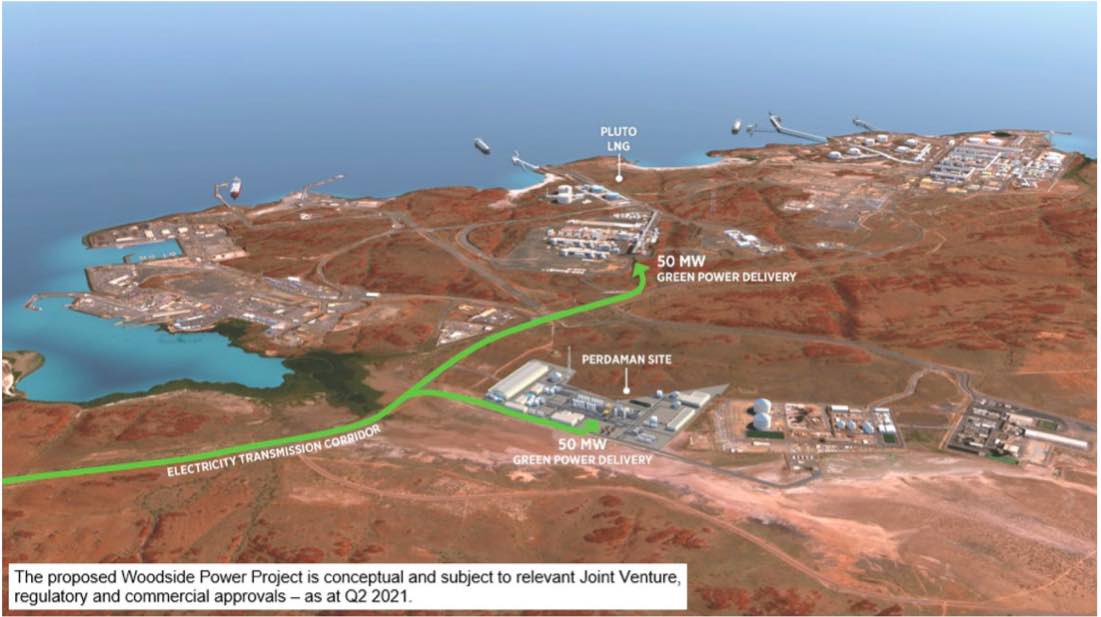
Australian gas giant Woodside says it may build a 50MW solar farm to help supply power to its massive Pluto LNG facility in Western Australia, but the project could double in size to 100MW if a neighbouring ammonia facility also signs up for solar power.
A 100MW solar facility on the Burrup Peninsula would be the biggest solar facility built outside the main grids in the country, overtaking the soon-to-be-opened 60MW solar facility at Chichester in the Pilbara mining province, although it could also be dwarfed by other mega projects looking at renewable hydrogen and exports.
“Woodside’s vision is for large-scale supply of renewable energy to existing and future industry on the Burrup Peninsula,” Woodside acting CEO Meg O’Neill said in a statement.
“We are lucky to have access to abundant natural resources, safe and reliable energy operations and both industry and government that are motivated to drive sustainable energy outcomes.”
It was not clear how much the output of the planned solar farm would account for in terms of the total energy needs for the Pluto LNG facility, which are usually energy hungry.
Perdaman, which operates an ammonia manufacturing facility on the Burrup Peninsular, is also considering using solar to reduce the amount of gas it sources from the Pluto facility, and slash its emissions.
Initial investigations suggest an additional 50MW could slash it gas consumption by half, and its emissions by at least 200,000 tonnes of CO2-equivalent per year, and allow it to increase production of ammonia, although not all of that ammonia would be produced with zero emissions sources.
“This exciting initiative with Woodside will further enhance the manufacturing of blue ammonia for supply to the Asian market and help position Western Australia as a first mover in implementing renewable energy in a world-scale downstream industry,” Perdaman Chairman Vikas Rambal said in a statement.
Woodside says it has undertaken a range of environmental, geotechnical and engineering studies and is “progressing key stakeholder consultations” ahead of seeking regulatory approvals for the power project.
Germany wants to build the world's first fusion power plant, and scientists say that might…
Government seeks expressions of interest to partner in delivering at least three new synchronous condensers…
Until recently, I had little interest in purchasing a household battery. I am now one…
Senate inquiry uncovers countless instances where misinformation – and often disinformation – is affecting public…
Ratings agency warns of downgrades for Snowy Hydro, saying budget for Snowy 2.0 soon to…
Electrification and Australia's boom in big batteries have helped to push out forecast gas shortfalls…