Source: Equinor
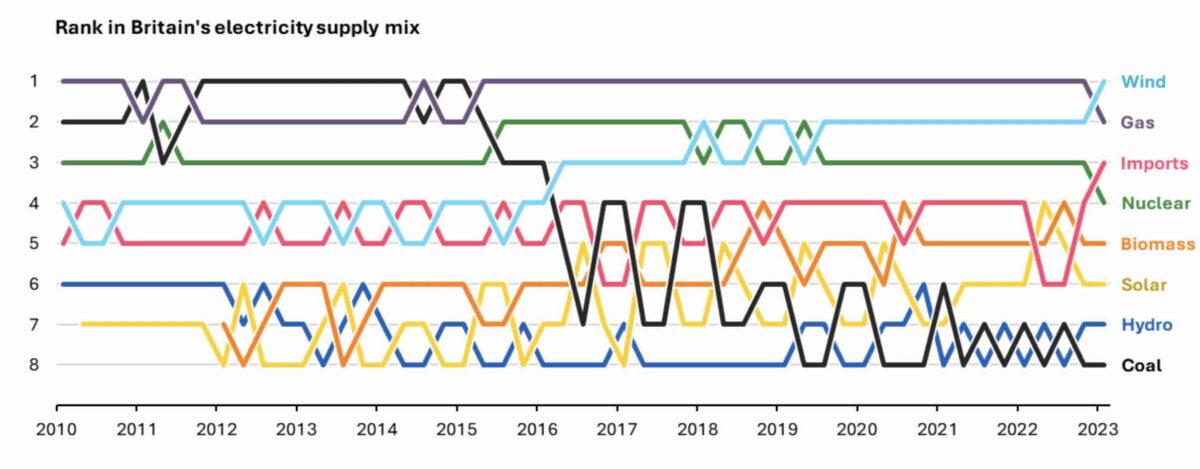
Many renewable energy milestones can seem fleeting – only hours or days long – but over the first three months of 2023 in the United Kingdom, wind energy beat out natural gas, the first time wind has generated the largest share of power in the country’s history.
According to an independent report by Imperial College London and released by Drax Electric Insights, wind energy generated 32.4% of Britain’s electricity during the first quarter of 2023, while natural gas delivered only 31.7%.
More specifically, wind turbines across the UK generated 24TWh of electricity, with output reaching 3% higher than the first quarter of 2022.
In turn, natural gas generation was down by 5%.
Across a wider spectrum of generation sources, almost 42% of Britain’s electricity across the first quarter came from renewable energy sources including wind, solar, biomass, and hydropower.
Fossil fuels, on the other hand, only contributed 33%, with the remainder coming from imports and the UK’s own shrinking fleet of nuclear reactors.
“The renewable power revolution has transformed how Britain gets its electricity, making our power grid cleaner and greener,” said Dr Iain Staffell of Imperial College London, and lead author of the quarterly Drax Electric Insights report series.
“In the space of a decade the UK has almost completely cut out coal, after relying on the most polluting fossil fuel for over a century to power our country.
“There are still many hurdles to reaching a completely fossil fuel-free grid, but wind out supplying gas for the first time is a genuine milestone event and shows what can be achieved when governments create a good environment for investors in clean technology.”
A $30 billion-plus data centre could significantly add to greenhouse gas emissions and drain as…
A coalition of over 30 organisations wants to accelerate electrification across Australia’s homes, businesses, farms,…
A trial to stop prepaid meter disconnections during heatwaves in the NT and WA may…
Solar industry warns that anti-dumping ruling will unfairly hit projects already being built, and add…
The Victorian government has denied claims it is backing away from its contested transmission plans,…
Original Power is leading a push to protect people using prepaid meters from being disconnected…