South Australia’s fleet of more than 2,500MW of large scale wind and solar farms will soon be free to operate at full capacity as four new synchronous condensers finally join the grid and begin operations.
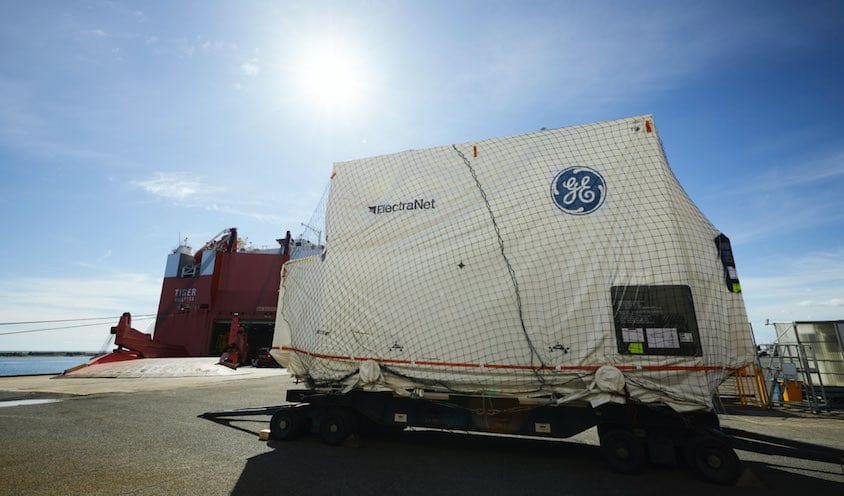
The first of the four syncons – big spinning machines that do not burn fuel, but which can provide key system services such as system strength – were supposed to join the grid a few months ago, but were finally switched on last week at the Davenport sub station near Port Augusta.
Another two syncons at the Robertstown sub-station should be switched on in the coming week, and while constraints on wind and solar could be relaxed within a few weeks, it could be months until new combinations that will effectively allow the output of wind and solar farms to double come into force.
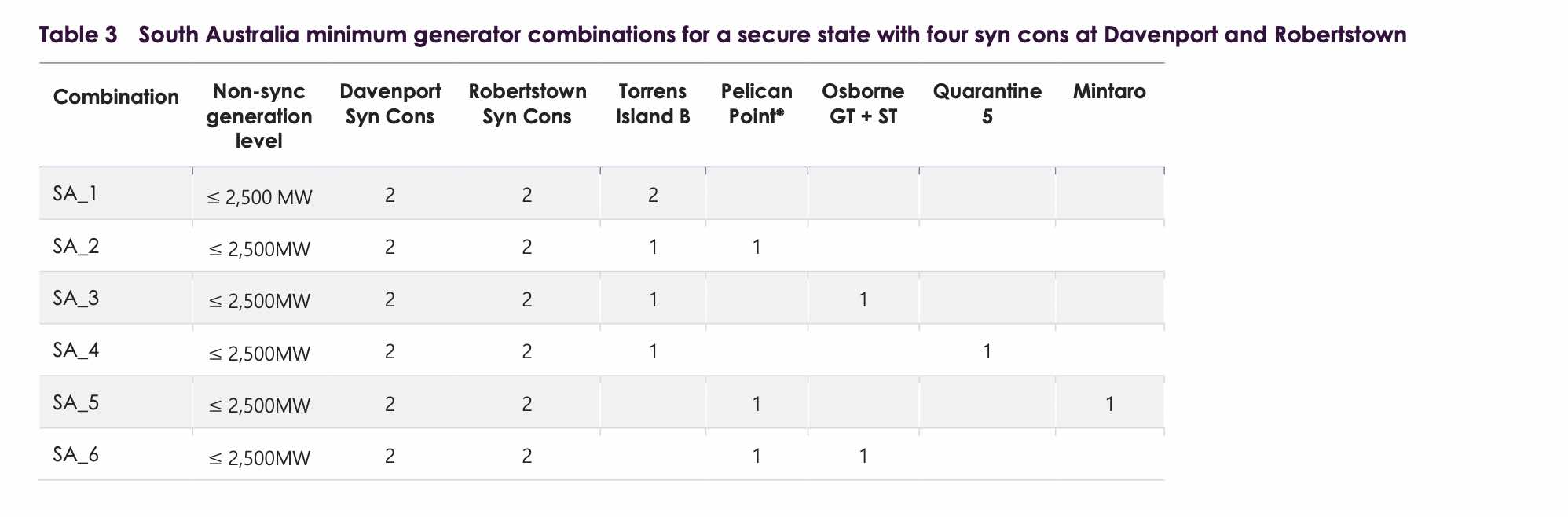
“At this stage there will be no change to the non-synchronous limits and generator combinations in South Australia,” AEMO said in a notice late last seek. (Non synchronous is a reference to inverter based technologies such as wind and solar).
“AEMO will transition to the new limits and generator combinations following the commissioning of the Robertstown synchronous condensers and a period of monitoring real-time performance.”
AEMO says there are three phases of testing – including the plant commissioning tests that are currently underway, and then an initial monitoring period of two to four weeks, where limits on wind and solar output will be progressively lifted from week two if no issues appear.
The third stage will involve an extended monitoring period of 6-12 weeks before the new combinations come into effect.
Wind and solar farms in South Australia are mostly restricted to a maximum combined output of around 1,300MW, to ensure there is enough “synchronous” generation from gas generators.
Sometimes, when there is a lot of demand and many gas units operating, maximum combined wind and solar output can reach 1,700MW.
The syncons are being introduced to reduced the number of gas units needed to provide system services. AEMO says the addition of the four syncons will allow the limit to wind and solar to be increased to a maximum 2,500MW with just two gas units also operating.
That new limit should easily cover the existing wind and solar farms in the state, although it will be tested once the country’s biggest hybrid wind and solar projects, the 317MW Port Augusta Renewable Energy Park, switches on in coming months, and when stage two of the Lincoln Gap wind farm is complete.
There are a host of other wind and solar projects queuing for construction to start, including the first stage of the potentially massive Goyder South hybrid project, and others which will see new market opportunities when the $2.3 billion Project EnergyConnect link to NSW is built by 2025.
South Australia over the last 12 months has produced a world-leading 62 per cent of its demand from wind and solar and up to 88 per cent of its total generation at times.
The state’s Liberal government has a target of reaching “net 100 per cent” renewables by 2030, although it is expected to reach that level well ahead of that date.
AEMO has spoken of the need to make the grid ready for 100 per cent instantaneous renewables as early as 2025 – a level that is likely to be reached first in South Australia.
It is also looking to fast-track the roll out of “grid forming” inverters, which can act as “virtual synchronous machines” and perform the same tasks and deliver the same services as syncons, as well as being able to deliver many more services and doing all this at a fraction of the cost.
Plan to expand the big battery built at the site of what was once the…
Andrew Forrest's iron ore miner says a demo plant in Brisbane that strips arsenic from…
Queensland LNP's first major energy tender in a long time - for fossil gas generators…
South Korea unveils a $A1.1 trillion energy transition strategy, aimed at expanding renewables and transforming…
State to introduce bill allowing mine at centre of High Court ruling to continue with…
Join Envision Energy and Renew Economy for a webinar exploring the technologies shaping Australia’s next-generation…