Coloured perovskite solar cells and films. © Plamen Petkov for Scientific American, Author provided (No reuse)
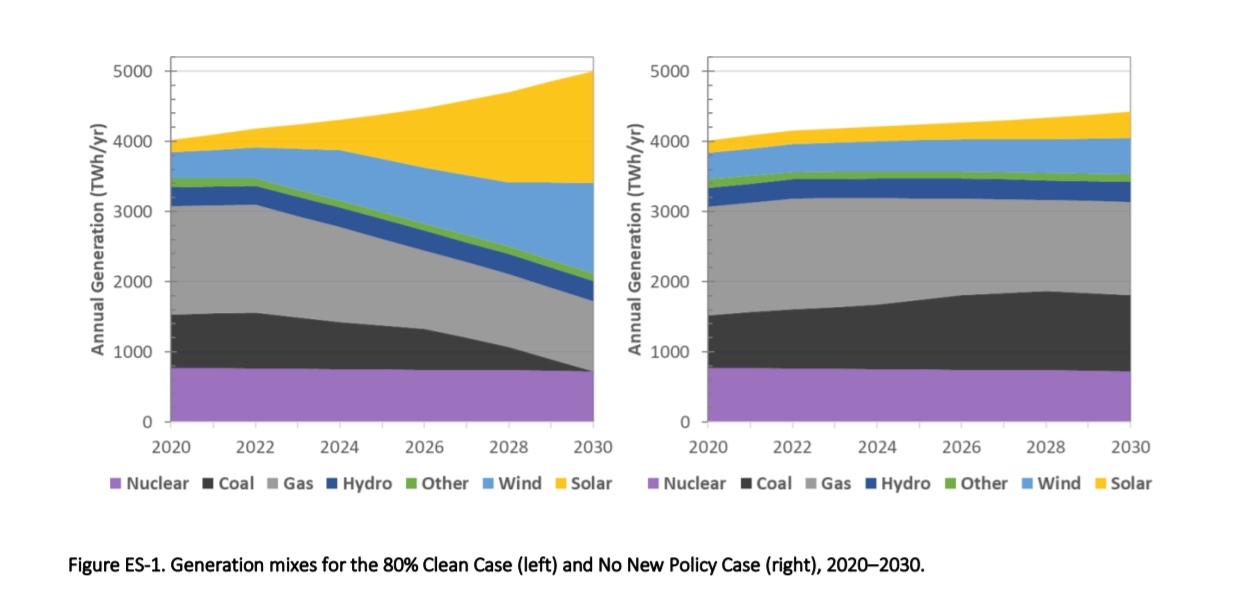
The White House has begun setting ambitious and tangible milestones to achieve a 100% clean grid in the coming decades, establishing a 2030 target of 80% clean power en route to the Biden Administration’s stated ambition of a fully decarbonised grid by the year 2035.
The target is uniquely ambitious and incorporates the use of wind, solar, nuclear and carbon capture, reported Reuters. The announcement comes alongside a new analysis from research firm Energy Innovation that demonstrates achieving the ambition would result in a windfall of benefits to US regions, including $1.5 trillion USD in clean power investment.
The analysis also finds that an 80% clean power target by 2030 would not jeopardise the reliability of power grids and would not come at a cost in terms of power bills.
Another analysis released today by the Rocky Mountain Institute finds that US could play a pivotal global role in limiting the world’s warming to 1.5C, beginning with and reliant upon a rapid transition in the country’s electric grids in the coming years.
“Our analysis reveals that limiting cumulative emissions requires that the United States prioritize immediately replacing existing fossil fuel infrastructure with efficient, zero-emissions alternatives, wherever possible. Because these immediate investments reduce more total emissions, they both have the largest impact on reducing the extent of climate change and provide more time to learn and define the more technologically difficult options needed to get to net-zero emissions”, wrote the researchers.
Shutting off rooftop solar is considered a blunt instrument, but a necessary option as household…
Tougher rules to protect Australia's environment have been welcomed by developers, but conservation groups say…
Karl Braganza, head of research at the BoM, explains El Niño and what it means…
Freshly minted NEM data shows solar-charged batteries discharging at record levels, helping lower wholesale prices…
It is now well established that the combination of new renewables and the huge growth…
Remote First Nations renewable energy projects are a complicated sell to investors, but a new…