The 60MW Chichester solar farm in the Pilbara. Image: Alinta Energy
Two First Nations-backed solar projects have been cleared for construction in Western Australia’s Pilbara, one that will help to power Rio Tinto’s Chichester iron ore operations and one that will be used to generate electricity on Horizon Power’s coastal network.
Western Australia’s regional Development Assessment Panel on Wednesday morning delivered the final approvals for construction of a 150 megawatt (MW) solar farm by the Yindjibarndi Energy Corporation (YEC) in partnership with AcenAustralia.
The Jinbi solar farm in July won environmental approval for development on land covered by the Yindjibarndi Native Title Determination Area, marking the first project assessed as part of the WA government’s Green Energy Approvals Initiative.
YEC was launched in July 2023 by the Yindjibarndi Aboriginal Corporation (YAC) and Philippines renewables developer Acen Corporation. It wants to develop around 750MW of wind, solar and batteries on Yindjibarndi Ngurra (country) where the YAC holds exclusive possession, the strongest form of native rights.
Last October, Rio Tinto signed a deal with YEC to roll out a series of solar, wind and battery projects to replace the gas-fired generators its huge iron ore mines currently depend on. The mining giant needs about 600-700MW of renewable power to displace most of its gas use from four gas-fired power stations in the Pilbara.
According to the WA government, YEC’s pipeline of projects will ultimately total 3 gigawatts (GW) of solar, wind and storage capacity and, if successful, could become one of the state’s largest renewable energy developments.
The second Pilbara solar farm to get the all clear is a much smaller 10MW project being developed by Pilbara Solar, a 50 per cent Aboriginal-controlled startup business and recognised social enterprise.
The company said on Thursday that the Junja Solar Farm had project would go ahead after receiving an Offer to Connect for to Horizon Power’s coastal network.
The project is being funded by around $30 million of private investment and income earned from he project will be put back into the community for social and housing programs.
“This is the final milestone in developing our first renewable energy project, a 10MW solar farm on our community land at Jinparinya near Port Hedland,” said Barry Taylor, spokesperson for the Jinparinya Community.
“The benefits of this project include 5% free carry ownership; the chance to increase our ownership with financing; annual lease payments; payment of community energy bills; civil works contracted to Cundaline Resources which is a business owned by our community members.”
The Junja solar farm will also be the first renewable Independent Power Plant connected to the Pilbara Network, and the preliminary engineering design includes the first solar tracking array in the Pilbara coastal region which experiences the most severe cyclones in Australia.
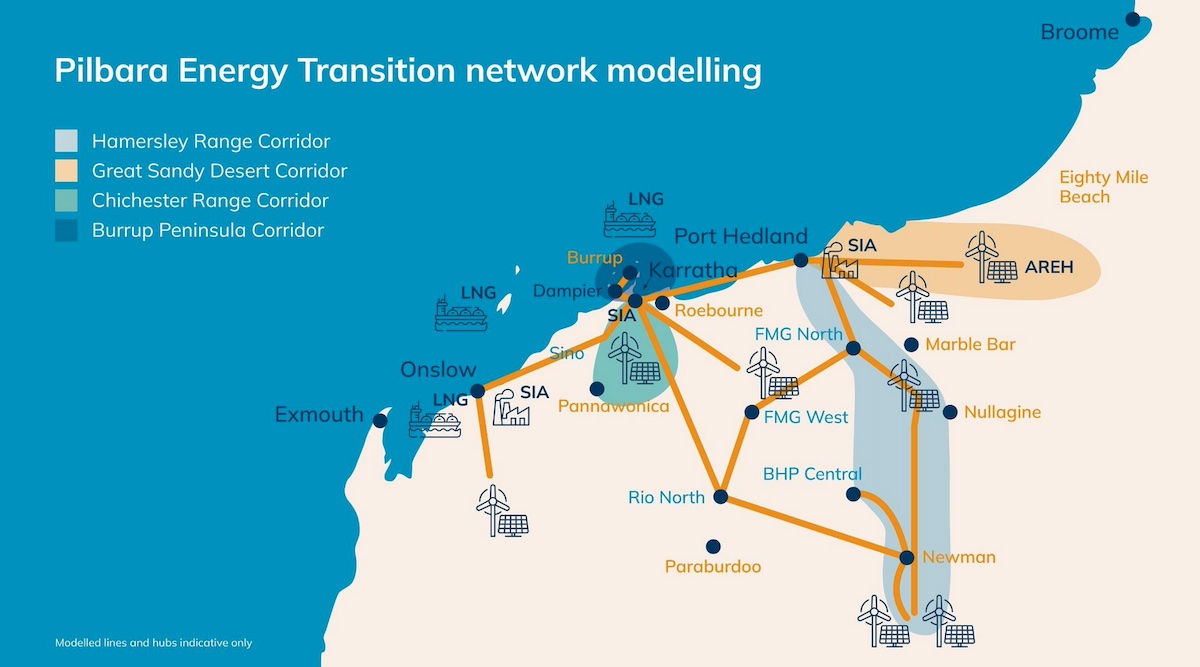
Both projects are also part of a broader agreement between miners including BHP and Rio Tinto, oil and gas majors Woodside, BP, and Atco, local energy groups such as Horizon Energy and Alinta, Fortescue Metals and Roy Hill, to stop building out a “feudal” network of their own electricity grids and instead collaborate on a Pilbara Energy Transition Plan.
The idea is to work together to coordinate the “responsible and timely” decarbonisation of the Pilbara that collaborates with Traditional Owner groups, use shared transmission infrastructure, and drives private sector investment while also tapping WA’s $3 billion allocation from Rewiring the Nation.
Doris Eaton, Nyamal Elder and Pilbara Solar director says the Junju solar farm provides First Nations people free rooftop solar for selected community buildings; sports team sponsorship; rolling apprenticeships and administrative and maintenance jobs for community members throughout its 20+ year lifespan.
“Junja means sunshine and this will be the first renewable energy project in the Pilbara with First Nations equity share,” Eaton said.
“The project is development approved, has land security with sublease registered with Landgate; all environmental, vegetation clearing, heritage, native title and other approvals have been obtained. The project is shovel-ready and open for business. We are ready to sell our green energy to Pilbara businesses.”
“We are so proud of this project,” adds Thudgari man and Pilbara Solar director, Peter Windie.
“It will bring an estimated $9 million of benefits to First Nations communities, including the Jinparinya Aboriginal Corporation which is the community residing on Country, and the Wanparta Aboriginal Corporation representing the Ngarla traditional owners.”
Sea surface temperatures are now way ahead of previous levels at this time of the…
When Greens elder Bob Brown addressed a throng of forest campaigners on Saturday, he did…
One of Australia's landmark renewable energy "gen-tailers" is reportedly up for sale, with its major…
Large-scale solar curtailment was "reduced significantly" in August as batteries help prevent electrons from going…
Seven home battery models from one of the up and coming new budget brands on…
French energy giant seeks federal approval to start work on offshore wind projects in newly…