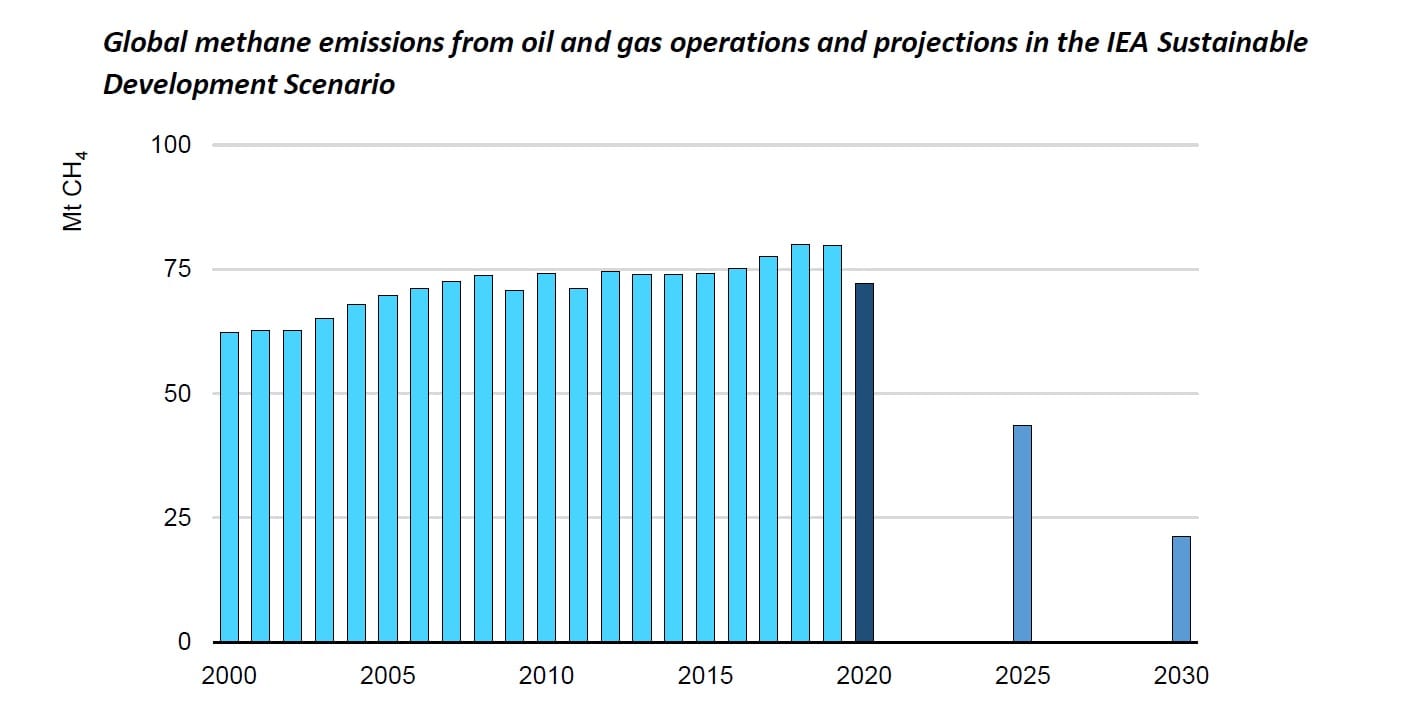
A new IEA report finds that a predicted ramp up in the extraction and processing of oil and gas associated with a looming economic recovery from COVID19.
The 2021 update of the “Methane Tracker” report shows that in 2020, a major fall in demand for oil and gas had the side-effect of a large reduction in associated methane emissions. However, the IEA said that even with this reduction, “oil and gas operations worldwide emitted more than 70 million tonnes of methane into the atmosphere last year. This is broadly equivalent to the total energy-related CO2 emissions from the entire European Union”.
Methane is a potent greenhouse gas associated closely with the extraction of oil and gas, and has many more times the impact on Earth’s climate systems than carbon dioxide. They are the second largest cause of global heating, and are significantly harder to track than carbon dioxide emissions.
“The largest source of anthropogenic methane emissions is agriculture, responsible for around one quarter of emissions, closely followed by the energy sector, which includes emissions from coal, oil, natural gas and biofuels”, writes the IEA in the new 2021 methane tracker report.
The IEA’s methane tracker project uses operational data from oil and gas operations, and for the first time in 2021, includes satellite surveillance data in collaboration with analytics firm Kayrros.
The report’s modelling shows that the world must reduce methane emissions by 70% (based on 2020 levels) by the year 2030, “equivalent to eliminating CO2 emissions from all the cars and trucks across Asia”.
The IEA hopes fossil fuel companies will seek to reduce these methane emissions for commercial reasons in addition to environmental reasons.
“There are increasing signs that consumers are starting to look carefully at the emissions profile of different sources of gas when making decisions on what to buy. A gas producer without a credible story on methane abatement is also one that is taking commercial risks”, said Birol.
The report comes as Australia’s federal government remains committed to a “gas fired recovery” from COVID19. Last year, major gas mining firm Santos was criticised for obscuring methane leakage data, and a range of related reports found that the fossil sector’s methane emissions continue to be largely under-scrutinised.
Construction begins at new wind and battery project that will help power one of world's…
The owner of the biggest wind farm in W.A. unveil plans for an even bigger…
The ageing cyclone proof wind turbines were the first "tilting" turbines in the state, and…
The Australian arm of a French energy giant is seeking federal environmental approval to build…
Rooftop solar uptake has ridden the wave of Cheaper Home Batteries, but new data shows…
A Taiwanese offshore wind farm has experienced its second turbine blade failure in two months.