AP Photo/David J. Phillip
As more information slowly emerges from the massive, historically significant blackout that occurred in Texas in February this year, some confusion has emerged alongside. The blackout lasted several days, resulted in several deaths, significant economic impacts and has had many political, social and economic flow-on impacts since.
Most recently, it was revealed that the Texas oil and gas regulatory body was actively campaigning to assign blame to renewable energy and defend the oil and gas industry, despite being a government body tasked with regulating fossil fuels.
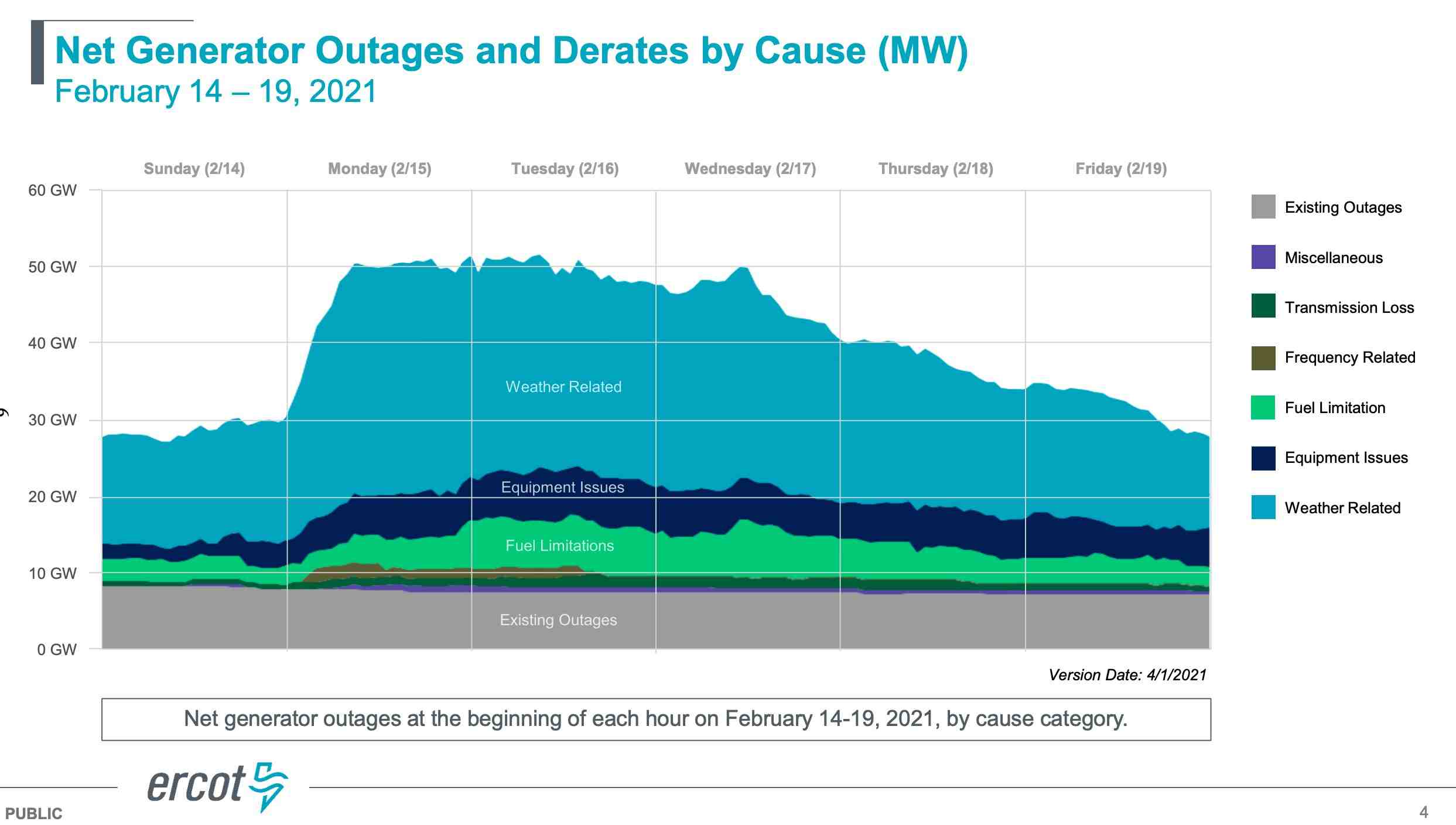
The regulator of the Texas grid, ERCOT, has released an ‘outage’ map, showing the total quantity of lost capacity sorted by the assigned cause of those lost gigawatts. It is generated from information obtained from Texas’ many generators, in response to requests for information sent out by the regulator. At a glance, it seems to show that “weather related” outages were the primary causal factor in the blackouts:
Joshua D Rhodes, an energy researcher at the University of Texas, Austin, suggested that comparing wind outages to the ‘expected’ generation used in pre-season system planning may have been a fairer approach:
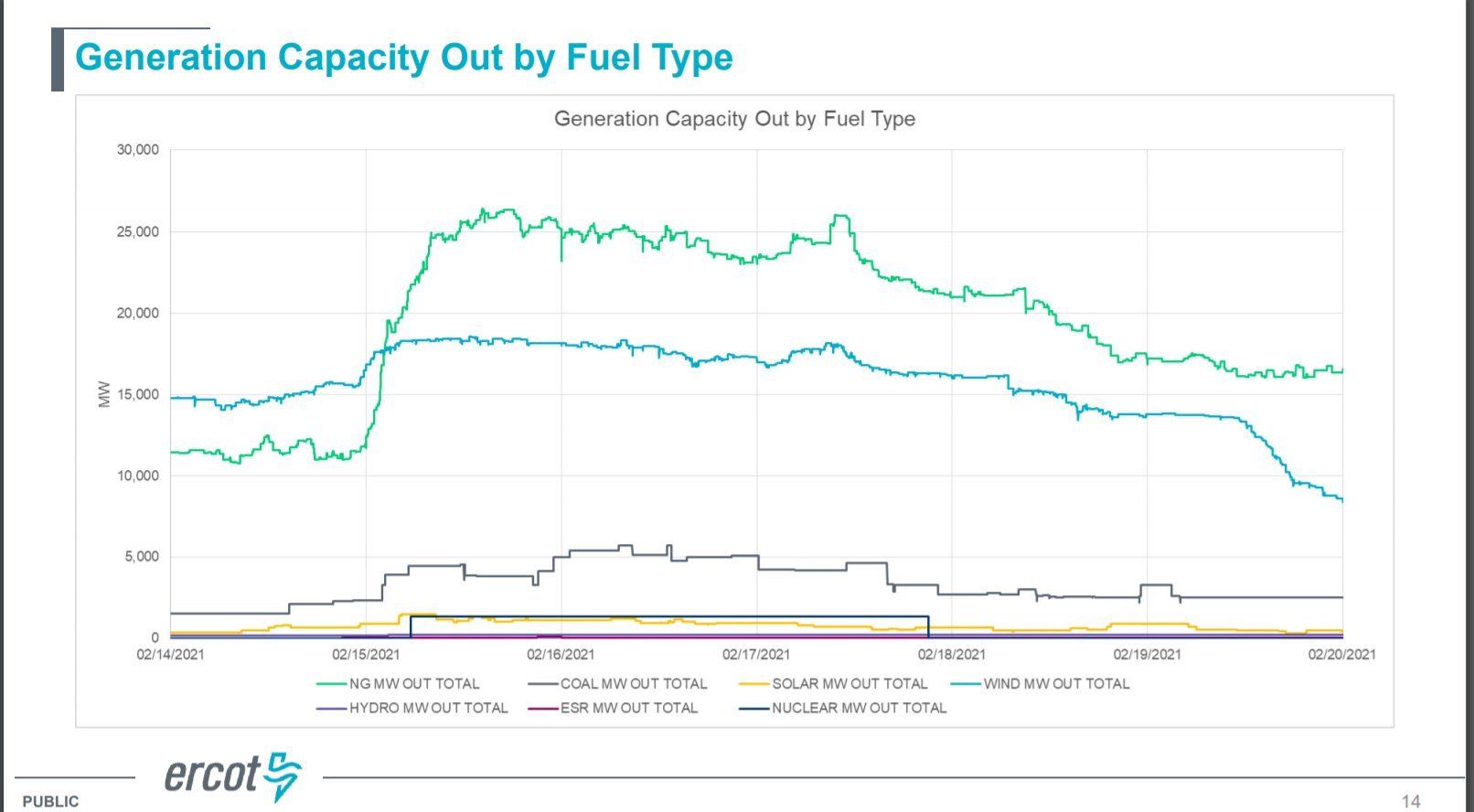
This seems to be a repeat of an ongoing issue around how the magnitude of generator outages are represented by ERCOT. In February, a preliminary report visualised the scale of outages across fuel types, but wind power’s megawatt outages were also by installed capacity, not by ‘potential power’ or by ‘expected power’:
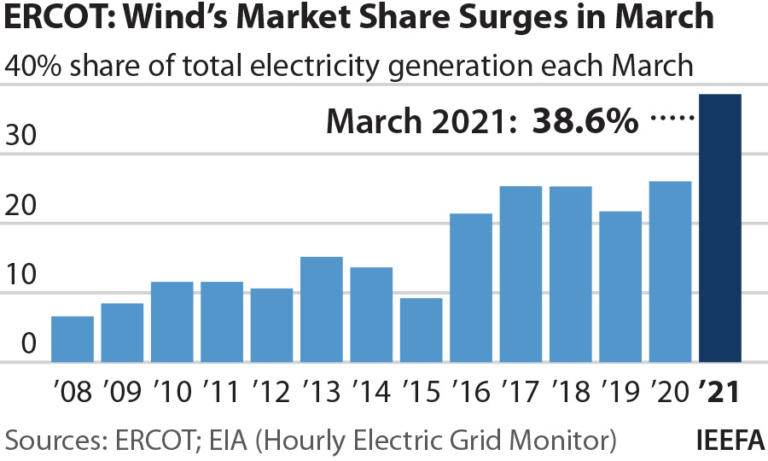
This was due to the installation of an additional 2,343 megawatts of wind power during the month of March, and solar installations climbed from 4,473 to 5,649 megawatts. As RenewEconomy wrote in March, the pipeline for batteries, wind and solar in Texas is extremely significant, with a fast pace of new capacity due to come online in the short term. By July this year, an additional 1 gigawatt of battery storage capacity is expected to be added to the Texas grid.
Yesterday, the UK’s Financial Times reported that an alliance of big tech, renewable energy companies and Wall Street investors are attempting to prevent legislation that would force wind and solar generators to pay for ancillary services in ERCOT, costs currently born by the consumers of electrical power. “The bills under discussion would assign ancillary services costs to solar and wind generators to the extent their operations caused “reliability issues”, according to the text of bills sponsored by Representative Phil King and Senator Kelly Hancock, both Republicans”, wrote the FT.
Vestas has landed a contract to supply turbines to the biggest wind project to begin…
I spent all my working life in coal mines before retiring in 2020. Since then…
BoM chart shows giant El Niño climate pattern in the Pacific is nearing record weekly…
Report suggests focus has shifted from how we can leverage rapidly improving emissions measurement technologies,…
The Australian Greens has named its new leaders, in a move the party says will…
Controversial plan to extend one of Australia's biggest coal mines for almost two decades secures…