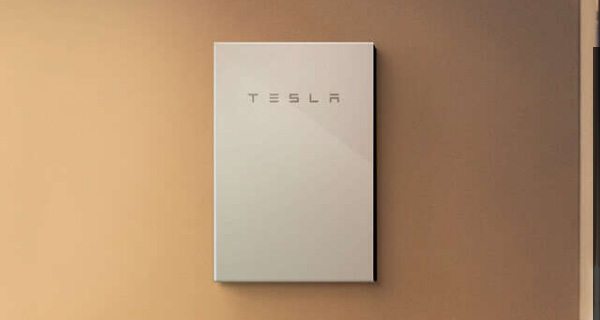
Less than a month after Tesla unveiled its Powerwall 2 home battery storage system at twice the capacity and around half the price (per kWh) of the first Powerwall, the new improved unit has opened for orders on the Australian market.
Tesla said on Wednesday that its 14kWh Powerwall 2 batteries were available for order online and in Tesla stores in Australia, as well as through the US company’s accredited local resellers, with installations here set to begin in February 2017.
According to the Tesla website, the lithium-ion batteries will cost $A8,000 per unit, with installation and “supporting hardware” starting at $1,450. According to an online quote from one accredited Australian Tesla reseller, a 3kW solar system with a Powerwall 2 would start at $17,900.
Interestingly, the original 7kWh Tesla Powerwall is still being advertised on this same website, but questions about the cost of the first generation battery – given the price of the Powerwall 2 – were not immediately answered.
As we reported at the time, and noted above, Tesla’s Powerwall 2 made quite a splash when it was launched in October in LA, alongside the company’s solar roof, next generation EV charger and commercial battery storage unit, the Powerpack 2.
As CME analyst Bruce Mountain wrote at the time, not only did Tesla effectively halve its battery price per kWh in less than a year, but it signalled that PV+battery+grid was “level-pegging with the average grid-only market offer …and cheaper than the average grid-only Market Offer (before conditional discounts).”
And Tesla’s Elon Musk is confident it will do even better than its predecessor. In a Q&A following the launch, Musk said his company “expects to sell more Powerwalls than cars,” owing to potential demand for the product in parts of the world where power isn’t reliable or even accessible – or is very expensive, as in Australia.
Tesla’s focus in Australia, however, appears to be on the hundreds of thousands of households in NSW, South Australia and Victoria that have long since had rooftop solar, but who are about to lose their premium feed-in tariff.
“With over 275,000 Australian households affected by the reduction of feed-in tariffs …the timing for Powerwall 2 to launch into the Australian market is ideal,” the Tesla release said on Wednesday.
“Most homes use only a fraction of the solar energy they generate, with owners currently using the benefits of the feed-in tariffs to gain the value from their asset. Powerwall 2 allows home owners to use more of their solar, storing the energy to use at any time rather than sending the excess energy back into the grid for the low return that is about to begin.”
Below are the specs as set out by Tesla reseller Natural Solar.
This article was originally published on RE sister site One Step Off The Grid. To sign up for the weekly newsletter, click here.
Panelists at energy summit in Sydney warn the impact of losing bipartisan support for big…
A four-hour big battery proposed for construction in state's south-east is seeking a federal green…
The Octopus Investments battery has approval for up to 2 GWh, making it one of…
AGL chief nixes the idea that the company would ever be building coal-fired power stations…
One of Australia’s oldest continuously working wind farms, and a vital ingredient of a world-leading…
New funding will help establish manufacturing facilities for two automated technologies – robots that install…