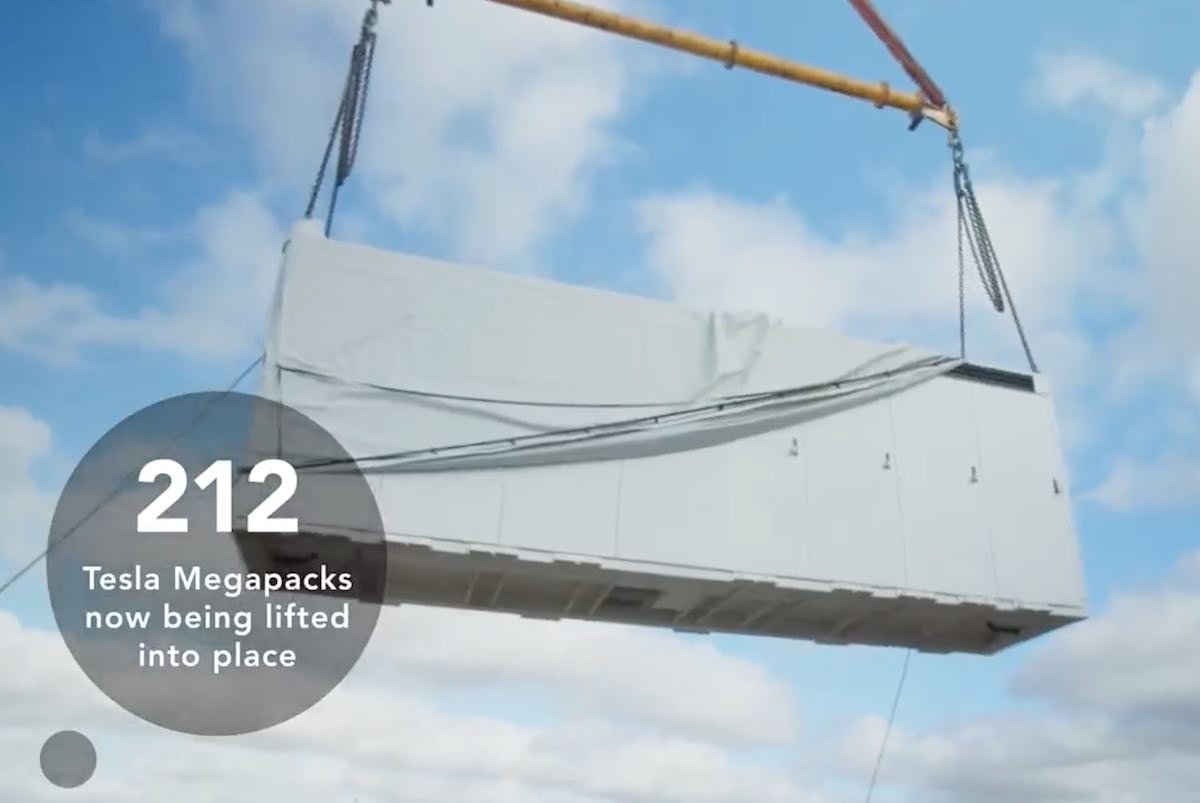
The biggest battery installation in Australia, the 300MW/450MWh Victorian Big Battery near Geelong, has reached the half-way mark, according to the project’s developers and construction partners.
Neoen Australia managing director Louis de Sambucy noted in a LinkedIn post on Wednesday that the “fantastic project” – which will feature new Tesla Megapacks – is now midway through construction, thanks to what he described as “great teamwork from all involved.”
Victorian transmission company AusNet Services also marked the occasion in its own LinkedIn post, noting that it had successfully energised both transformers that would connect the battery to the grid.
“This is a critical step towards connecting one of the world’s biggest batteries and supporting clean, reliable, affordable power for Victorians,” AusNet said in the post, also on Wednesday.
“We are proud to be working with Neoen and Tesla on this exciting project instigated by Lily D’Ambrosio MP and the Victorian government,” it said.
As RenewEconomy has reported, the Victorian Big Battery will be more than twice the size of the 150MW/194MWh Hornsdale Power Reserve, which was until recently the biggest battery in the world, and was recently expanded to add new synthetic inertia and other key grid services to South Australia.
Like Hornsdale, the new Victoria battery will use Tesla technology, but in this case using the new 3MWh Megapacks (rather than the smaller Powerpacks), which Tesla says can deliver a major peaking plant four times quicker than traditional fossil fuel projects.
The project’s milestone was also marked by Cleve Schupp, the head of marketing and consumer sales for Tesla Energy in the Asia Pacific, and by Victorian energy minister Lily D’Ambrosio, who said she was “thrilled to see” the state’s big battery move closer to completion, and shared a video of the project.
The cost of the Victoria Big Battery has not been revealed, but will be borne by Neoen. It will, however, be paid a “service charge” of $12.5 million per year for a 250MW and 125MWh component under a 10 year contract with the Australian Energy Market Operator.
The battery’s primary role will be to participate in Victoria’s System Integrated Protection Scheme, which like the Hornsdale battery will put it at the front line of providing grid security, thanks to the battery’s speed and flexibility, and allow for an increase in operating capacity on the main transmission link between Victoria and NSW.
Check it out on RenewEconomy’s Big Battery Storage Map of Australia
Even the booming home battery market could not escape the January doldrums, with the summer…
Malcolm Turnbull says more "simpler" pumped hydro needed as solar outpaces wind, and insists that…
The first solar-battery hybrid has begun sending power into Australia's main grid in the evening.…
Transparency, accountability, membership and corporate structure will all come under the microscope as part of…
Former prime minister Malcolm Turnbull is pushing for more hydro, but is still pumped up…
The Australian government has been urged to come clean on security threats posed by climate…