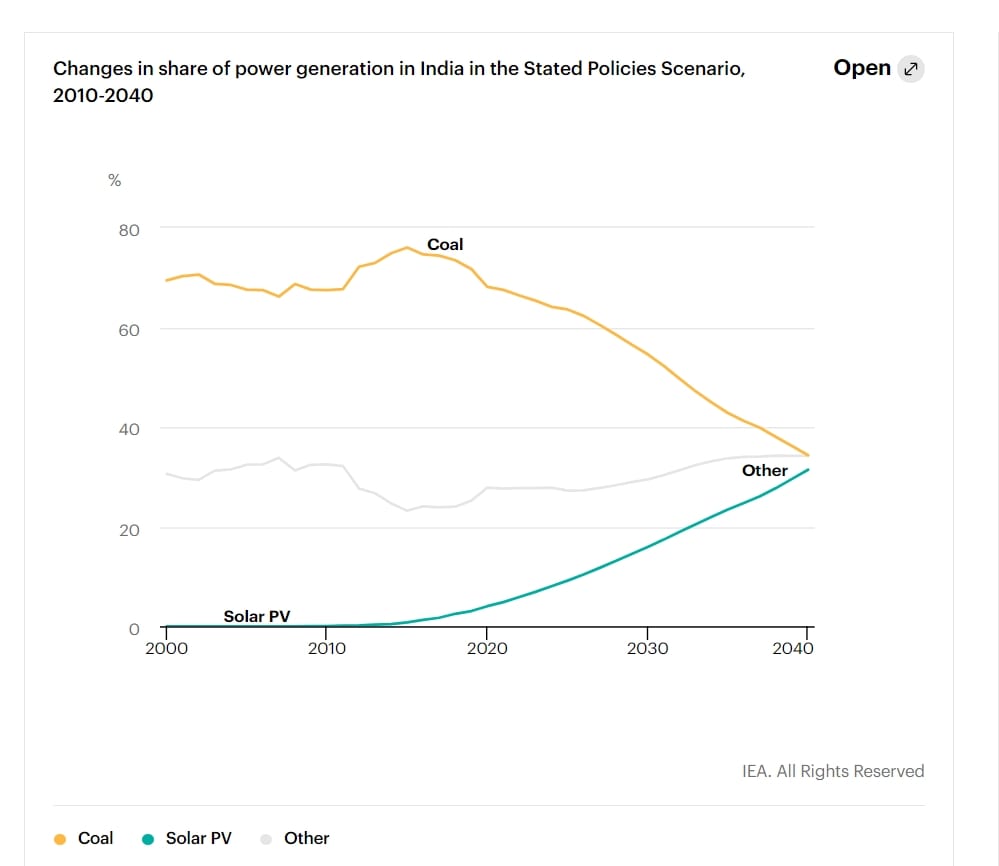
A major new report from the International Energy Agency (IEA) suggests India is headed for significant growth in solar power that may end up overtaking coal as the largest source of power within coming decades.
While coal currently comprises 44% of total primary energy demand in 2020 in India (including transport) and modern renewables just 3%, the IEA’s various scenarios examining India’s future all predict the upcoming decline of coal-fired power alongside a rise in solar.
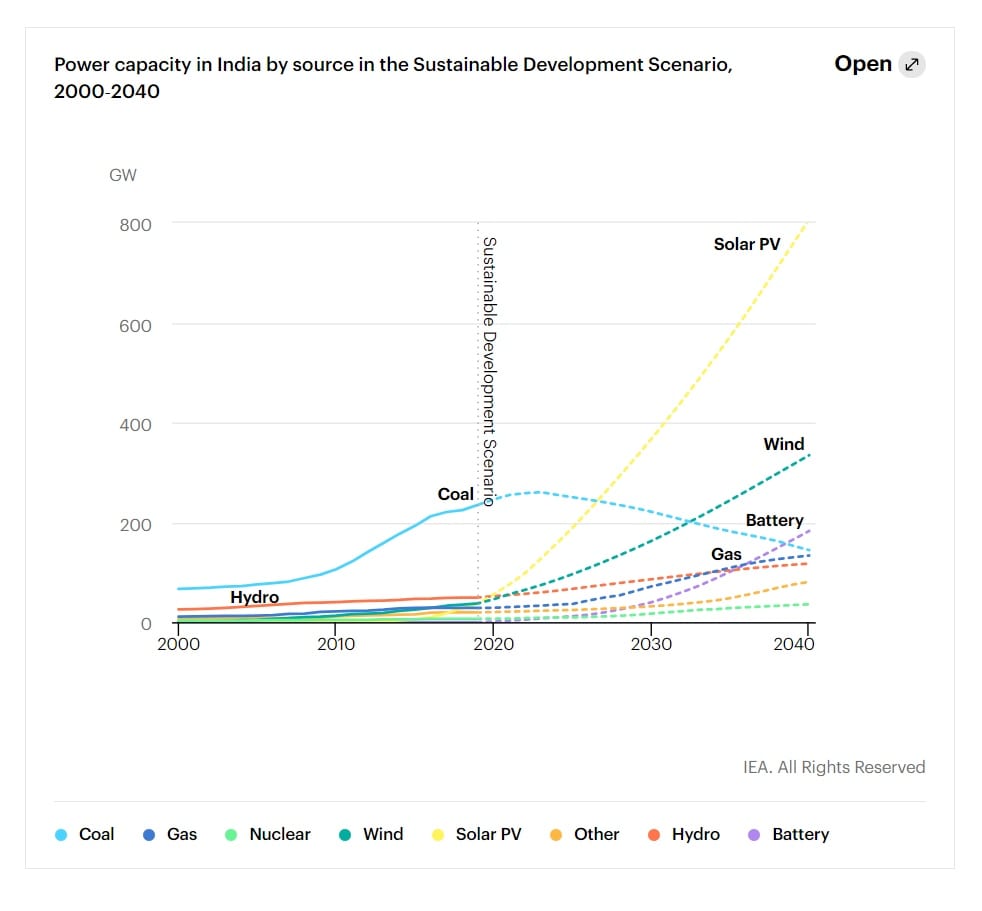
In the organisation’s ‘Stated policies’ scenario, “India adds capacity the size of that of the European Union to its installed base over the next two decades, with solar PV and wind accounting for more than three-quarters of the capacity additions as their costs fall. By 2030, new solar PV, whether alone or paired with battery storage, becomes competitive with existing coal-fired power”.
The ‘Sustainable Development Scenario’, which sees deeper decarbonisation, sees 800 gigawatts of solar deployed by 2040.
“India has made remarkable progress in recent years, bringing electricity connections to hundreds of millions of people and impressively scaling up the use of renewable energy, particularly solar,” said Dr Fatih Birol, the IEA Executive Director.
“What our new report makes clear is the tremendous opportunity for India to successfully meet the aspirations of its citizens without following the high-carbon pathway that other economies have pursued in the past. The energy policy successes of the Indian government to date make me very optimistic about its ability to meet the challenges ahead in terms of energy security and sustainability.”
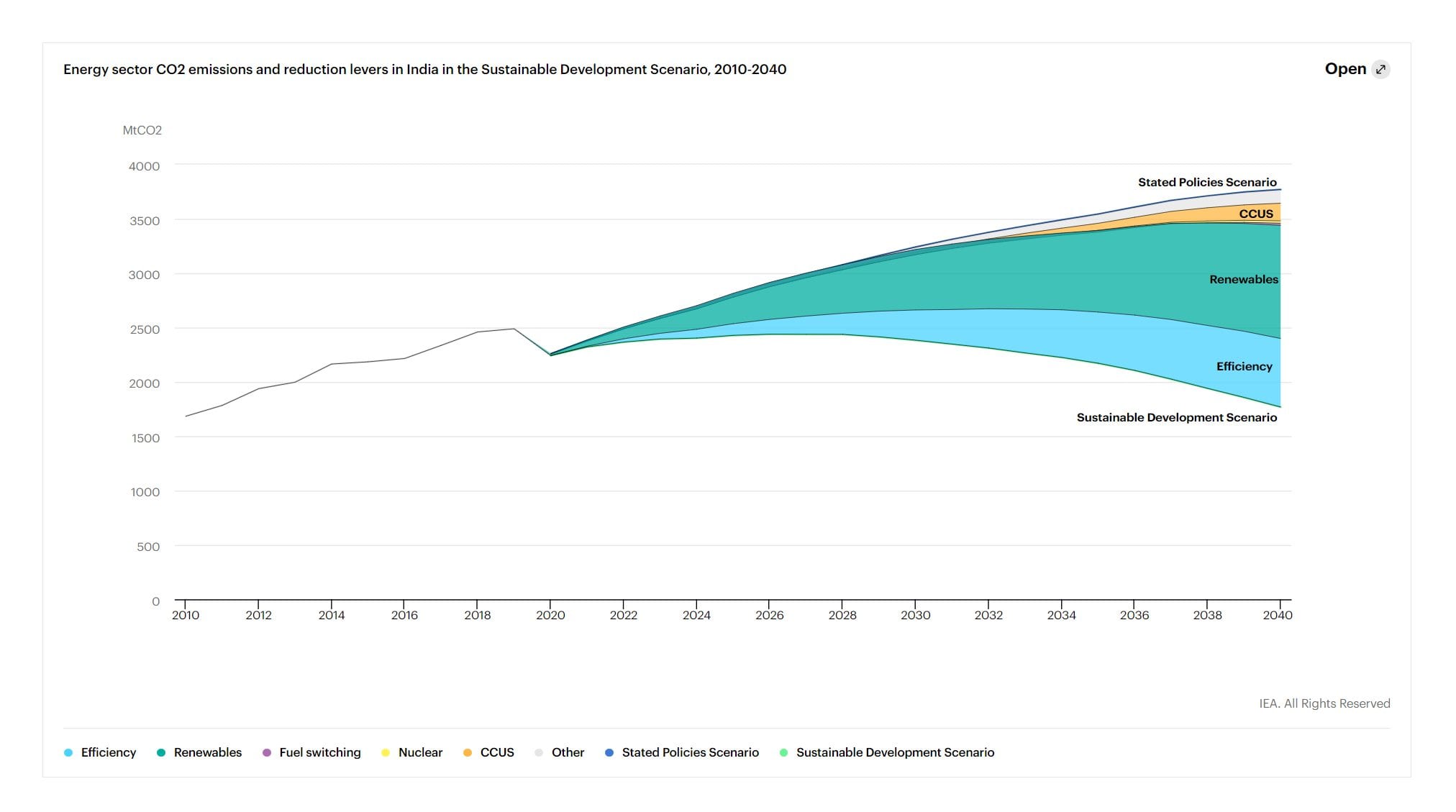
India’s grids will require significant changes, in the context of a transition in which many more people in the country are being connected to electricity. Efficiency improvements, new power lines and battery storage will help integrate wind and solar into the grid. Renewables play the largest role in reducing emissions between the STEPS and SDS scenario in the IEA India Energy Outlook.
Most significantly for Australia, India following the best-case scenario in the IEA’s model results in significantly lower coal demand. In the STEPS scenario, 2040 coal demand across all sectors is 772 megatonnes of coal equivalent. In SDS, it is 277 mtce. Today, coal demand in India is 525 mtce. India is one of Australia’s main customers of coal exports, and a large reduction in consumption in the country would result in a significantly lower demand for Australian coal exports.
Few organisations have so consistently campaigned to stymie climate action – possibly anywhere on the…
Tom Geiser from Good Heat on the technologies to provide carbon-free industrial heat. Plus: LNP's…
Days apart, one Australian minister called for reduced dependence on fossil fuels, while another literally…
Swiss storage giant completes purchase of the project site for big four-hour battery, setting a…
Installation of the "golden" turbine is being hailed as a "huge milestone" for a wind…
A paddock of solar and an innovative converter could allow Visy to cut gas use…