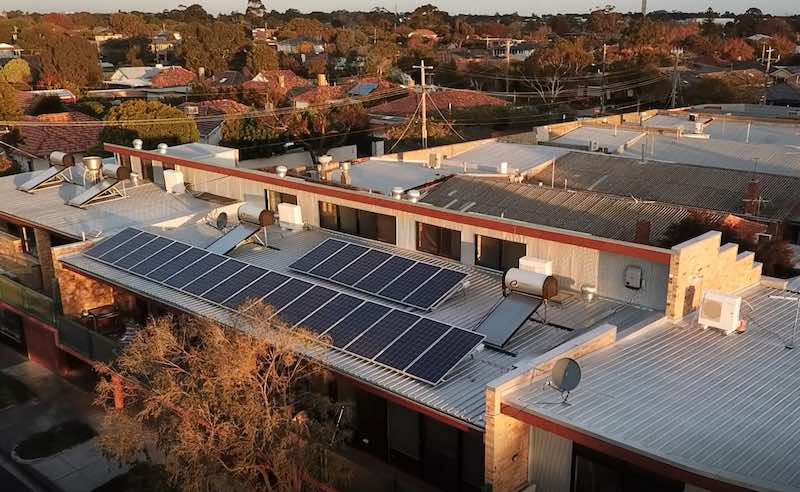
The quest to extend the benefits of rooftop solar to Australia’s millions of renters and apartment dwellers has claimed a small but significant victory, with the successful installation of a PV system on a mixed residential and retail building in the Melbourne Bayside suburb of Highett.
The 7.2kW shared solar system was switched on early this month by Melbourne start-up Allume Energy, and is now delivering cheap PV power to five apartments, a baker, a hair salon, and an occupational therapist.
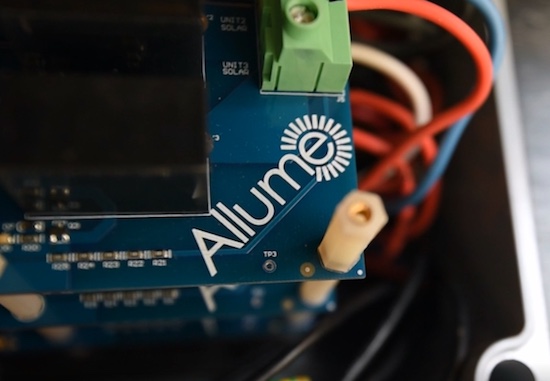
The mix of software and hardware that makes this possible is basically contained within a small box called SOLSHARE, designed by Allume to work within the building’s existing metering infrastructure – or behind the meter – to allow solar to be distributed and billed to individual apartments.
It’s a solution that Allume has been working on since its inception in 2015. The young company is also a graduate of the 2016 Melbourne Accelerator Program.
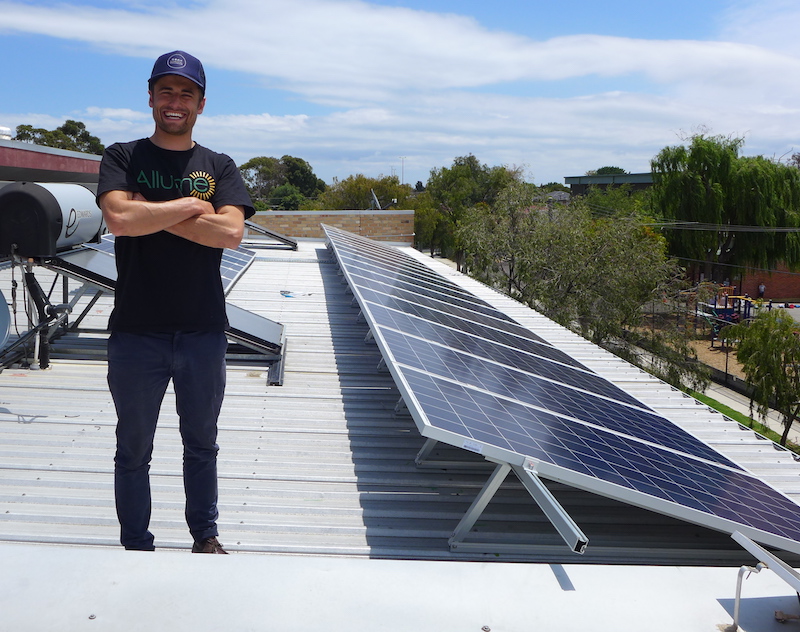
And while 7.2kW might seem like a pretty small amount of solar for that number of clients – it works out to just under 1kW per tenant – Allume CEO and co-founder Cameron Knox says smaller is often better when it comes to shared solar.
“The effect of the aggregation means that that amount of solar actually serves the customers more efficiently than if they had an individual system each,” Knox told One Step on Wednesday.
“The baker is using quite a lot of power in the early morning, and then the hair salon starts using a lot of power a bit later. And then in the afternoon, the apartments start to kick in,” Knox told One Step on Wednesday.
“The balance of power being used in the building really works to maximise the use of the solar.”
On the business side of the equation, the rooftop PV system is installed at no upfront cost through a 10-year “roof licence” with the landlord or the owners corporation, through Allume’s financial backers, Ovida.
Ovida have obtained a electricity retail exemption from the Australian Energy Regulator for all states and territories except Western Australia and the Northern Territory.
Allume’s part of the transaction, like other recent offerings targeting customers traditionally “locked out” of the rooftop solar market, works on a “pay for the power, and not the panels” basis.
Through a power purchase agreement with the tenants, Allume charges those who opt in only for the solar electricity they use, at a locked-in rate of 30 per cent less than the retail electricity price.
Tenants – being tenants – are not locked in to the PPA, however, allowing them to terminate the agreement if they move out of the property.
Knox says Allume can afford to provide this flexibility by having multiple consumers to hedge against the churn risk.
Giving the customer confidence that they “can’t lose” by connecting to the solar system is key, says Knox – who acknowledges that the most difficult part of installing these shared solar projects is not technological, but human.
“The biggest challenge for us is getting all of the residents engaged,” he said.
“The advantage that our technology has is that not everyone has to sign up, but engaging everyone in a single building is (the goal).”
To do this, Knox says education is key, in particular, encouraging potential customers to look at their bills and work out what their retail rate is, and how much they could save with solar.
“I think that’s a really good thing to get people to do. Education is really important. A lot of people just don’t know what they’re actually paying for in their electricity bills.
But soaring electricity prices has done at least some of that educational work for them, particularly among small businesses.
Not surprisingly, Knox says the biggest supporters of the SOLSHARE scheme are usually the highest consumers of power.
In the case of the Hampton project, that included the baker and the hairdresser, who were getting “hit pretty hard” with electricity prices from their retailer.
“Clare (the hairdresser), when we approached her, was already getting high electricity bills, and contemplating how she was going to make her business work.”
Meanwhile, Allume is being kept busy with “no shortage of leads,” says Knox.
“We’re working with Moreland Energy Foundation (in Melbourne’s inner north), doing a few projects with them. And we’re launching interstate in spring.”
This article was originally published on RenewEconomy’s sister site, One Step Off The Grid, which focuses on customer experience with distributed generation. To sign up to One Step’s free weekly newsletter, please click here.
State utility helps to bring major new battery project to financial close, in a deal…
Solar recycling hopeful says it is "losing an insane amount of money" waiting for the…
For renters watching rooftop solar spread across the neighbourhood, Australia’s energy transition can feel frustratingly…
Since 2020, Australia's subsidies for fossil fuels have totalled almost six times the amount given…
One minute, Victoria's new energy minister was promising industry stakeholders that Labor will hold the…
First battery units arrive at what will be the biggest storage facility in Australia's most…