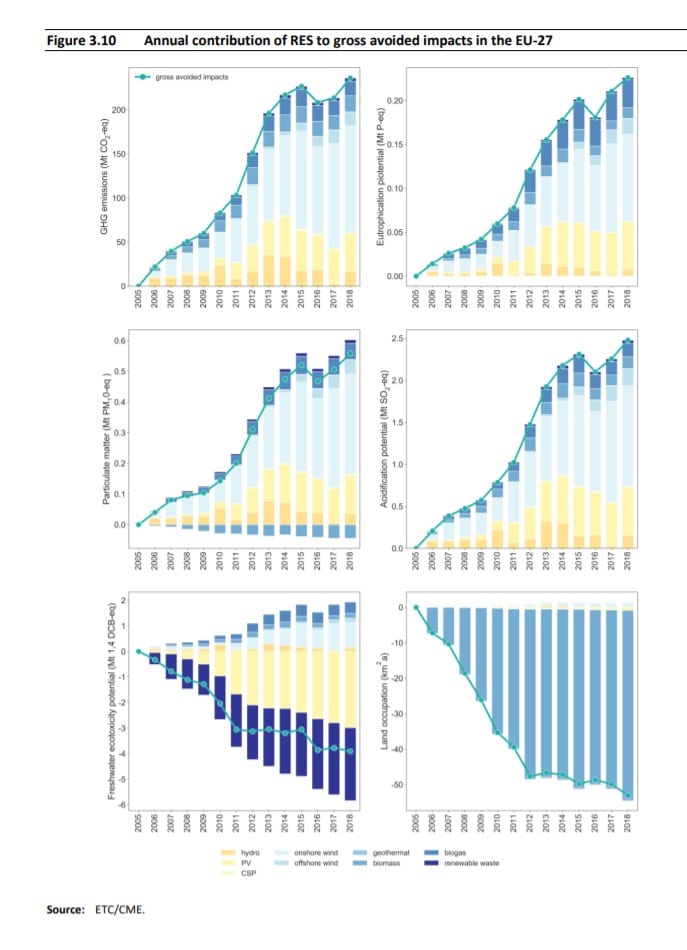
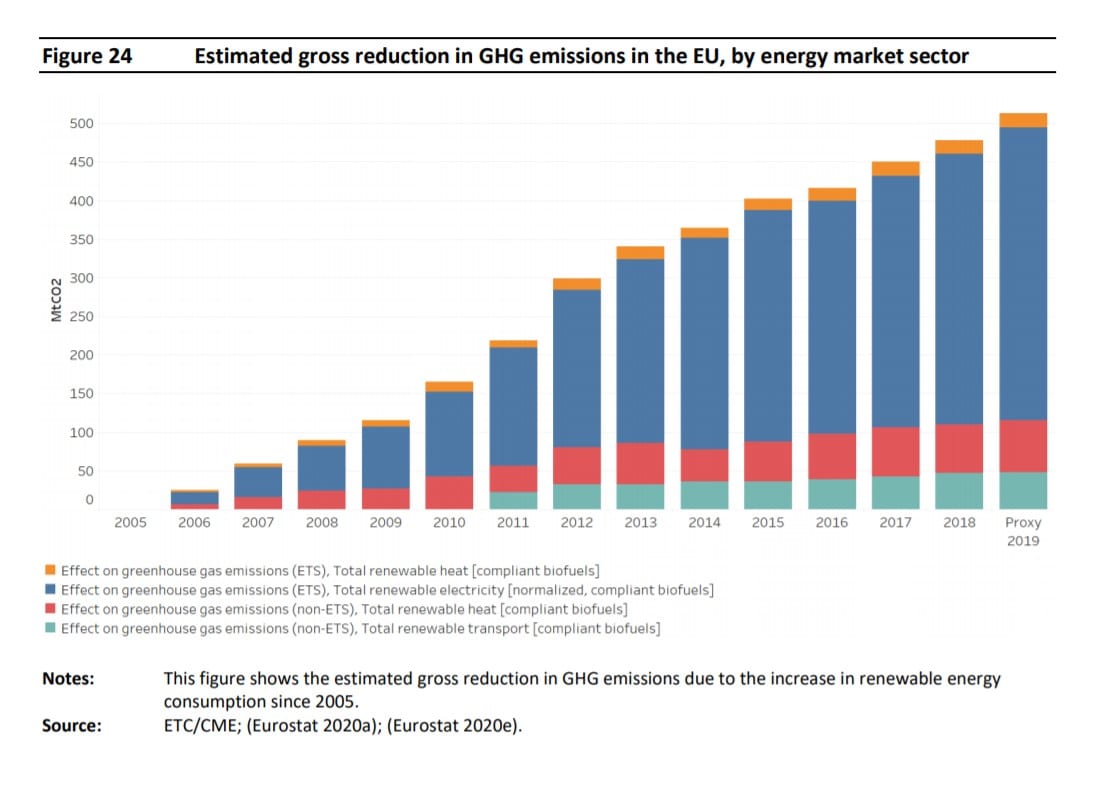
Renewable energy growth has reduced greenhouse gas emissions and air pollution and delivered a range of other co-benefits since 2005, according to a new briefing document released by the European Union’s (EU) European Environment Agency (EEA) on Monday.
Renewables, which include biomass in this report, have risen to 34% of all electricity generation, doubling since 2005, but fossil fuels still produce the largest share, at 38% of total generation in 2019. One quarter of all greenhouse gas emissions come from the electricity sector in the EU.
The briefing cites a detailed life-cycle analysis of renewable energy conducted by the Norwegian Institute for Air Research (NILU), published in late December 2020.
The research compares the impacts of renewable energy, both positive and negative, to a counterfactual scenario in which no new renewables were built. Emissions, air pollution, acidification and eutrophication (in which bodies of water become excessively oxygenated, damaging ecosystems) were all improved by renewable energy growth.
The outcomes for freshwater eco-toxicity were a net decrease, because “solar PV has a relatively high impact intensity for ecotoxicity because of the emissions of metal, related to mining and smelting operations, and chlorine from the purification of solar-grade silicon,” however some of thsse impacts were offset by wind.
Land impacts were greater due to renewable use, but the vast majority of this had come from the high usage of biomass in the EU. The bulk of emissions reductions from the use of renewables came from onshore wind power, follower by rooftop and utility scale solar, and then by biomass.
For the EU’s climate pledges to be met, renewable energy must grow to nearly 70% of all EU generation by 2030 and to more than 80% by 2050, which in turn allows other sectors to reduce emissions through electrification, such as road transport.
The EU proposes several pathways for reducing the impacts of this growth in renewable energy, such as prioritising better end of life material recovery for solar PV. Among renewable technologies, PV has a relatively high emissions impact in the manufacturing process, and as such, the EU proposes increases the proportion of clean electricity used in PV manufacturing to bring down this emissions intensity.
Demand-side management, such as energy and resource efficiency, circular business models and lifetime extensions for non-combustible power sources can all help, as can improved effort to site and design large-scale renewable projects to better suit local and broader ecosystem needs.
The former leader of the Nationals, David Littleproud, says he has written to the LNP…
Australia's most powerful battery completes second of its shock absorber tests, and then flexes its…
Energy ministers meeting details how the federal government plans to set and enforce standards for…
One solar company fined $100,000 for failing to have fall protection in place, another made…
Huge battery and data centre proposed for nuclear power plant site in Germany, as renewables…
Shortfalls in governance of consumer energy resources will be obvious - and potentially costly and…