A new report published by Global Energy Monitor has found that the world’s coal producers are significantly expanding their supply of coal, despite growing calls to restrict mining projects to help drive decarbonisation.
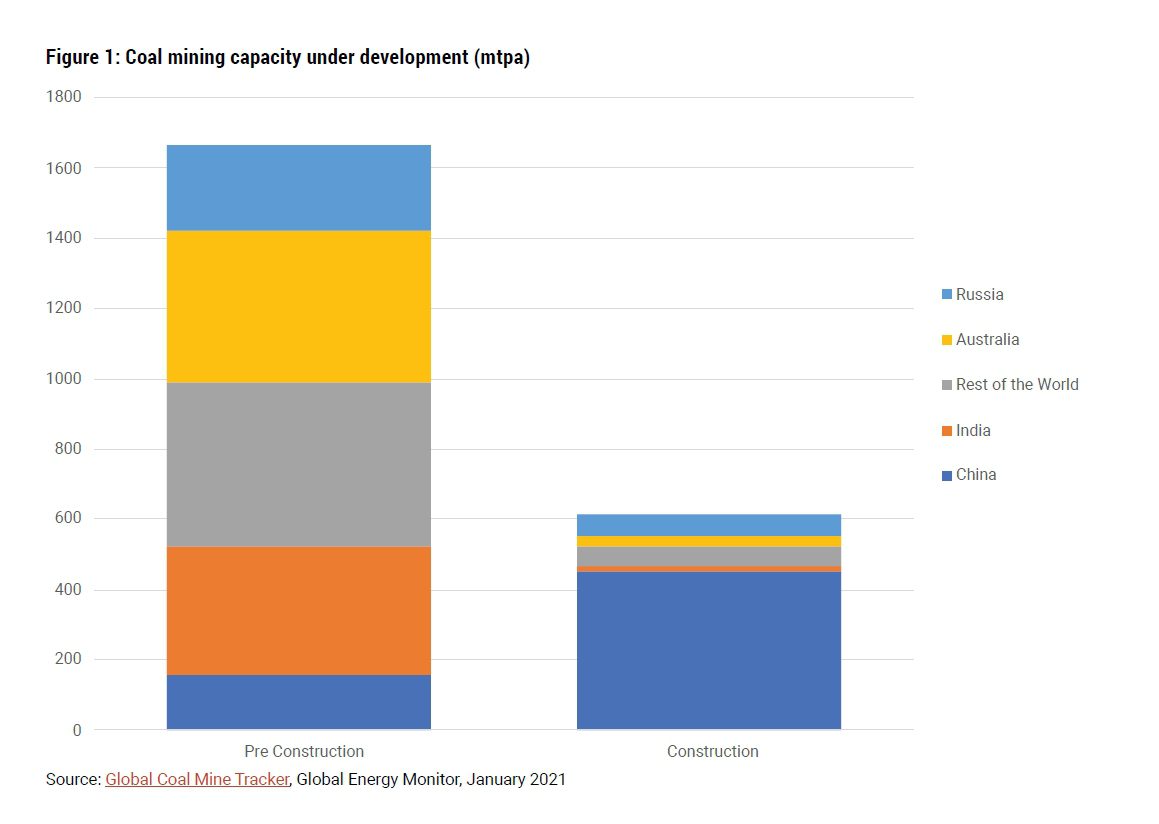
The analysis found that 2.2 billion tonnes per annum of new mine projects around the world, a growth of 30% from current coal production, is being pursued globally. A handful of states and provinces in Australia, China, Russia and India are responsible for 77% (1.7 billion tonnes per annum) of the new mine activity.
If these coal mines are seen through to completion, the product supplied will increase emissions around four times beyond a 1.5°C compliant pathway. One quarter of the proposed capacity, 0.6 billion tonnes of coal per annum, is capacity that is already under construction, much of it at risk of becoming stranded due to climate policies.
Australia has the second highest quantity of mine proposals, with 31 megatonnes per annum (mtpa) of capacity under construction and 435 in the planning stages. China is first, and India and Russia are third and fourth respectively.
“While the IEA has just called for a giant leap toward net zero emissions, coal producers’ plans to expand capacity 30% by 2030 would be a leap backward,” Ryan Driskell Tate, a research analyst at Global Energy Monitor and lead author of the report, said. “Demand for coal is plummeting and financing for new coal projects is drying up. New mines and expansions of existing mines will be producing coal for a world in which coal is unviable economically, and untenable for the environment”.
A recent report from Ember highlighted that the emissions footprint of Australia’s existing coal exports is greater than the domestic emissions of Germany. While much of the mining capacity in China and India is sponsored by state-owned enterprises, Australia’s corporate developers are more varied. “Against market headwinds, even private coal companies in Australia and Russia remain committed to new projects”.
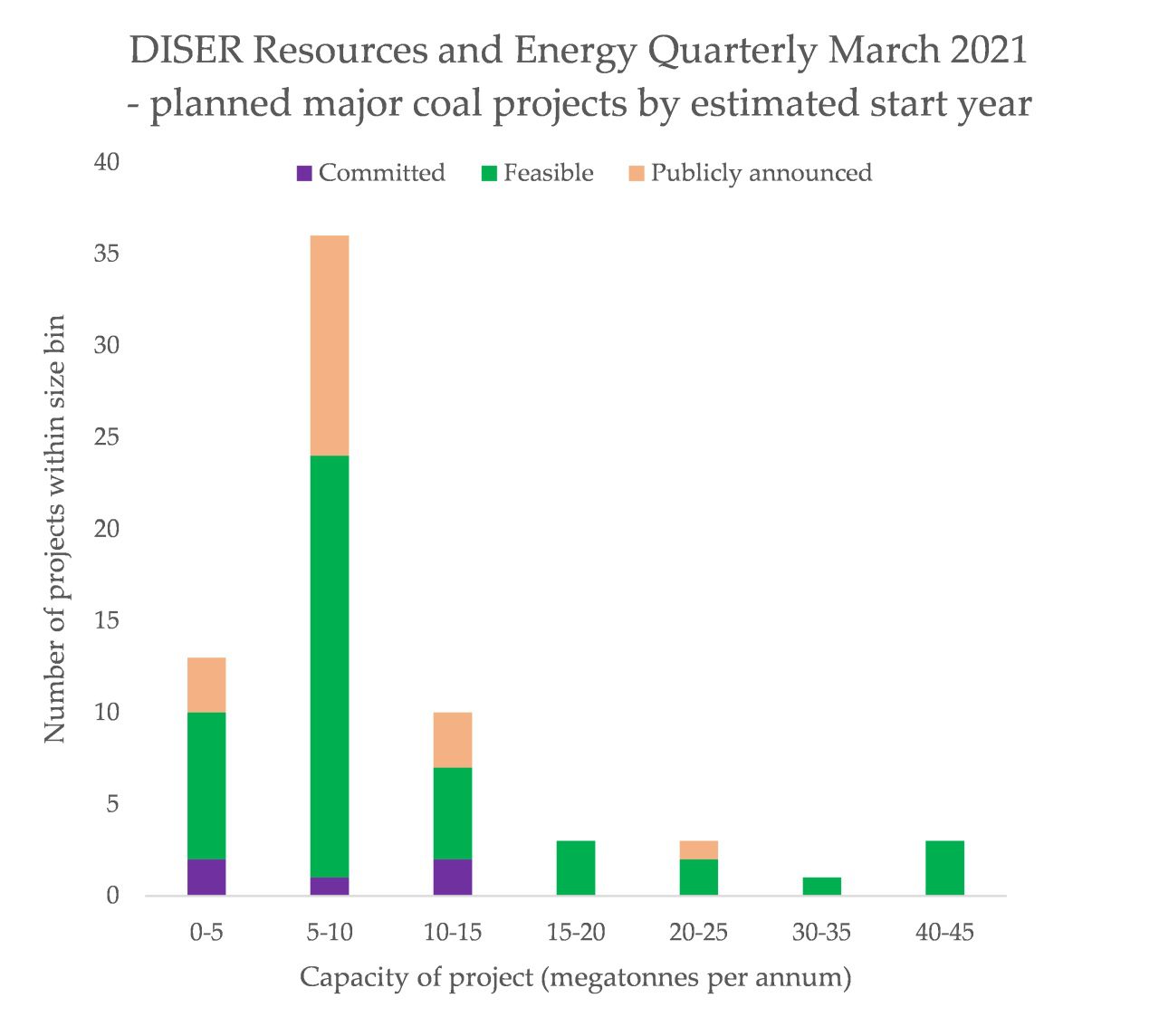
Relative to existing production, Australia’s planned coal mines are the largest percentage increase across all countries studied in the report, though Australia also has the highest proportion of coal projects in the ‘pre-construction’ phase. This means they are vulnerable to status changes if there are shifts in investment, governments or civil society groups.
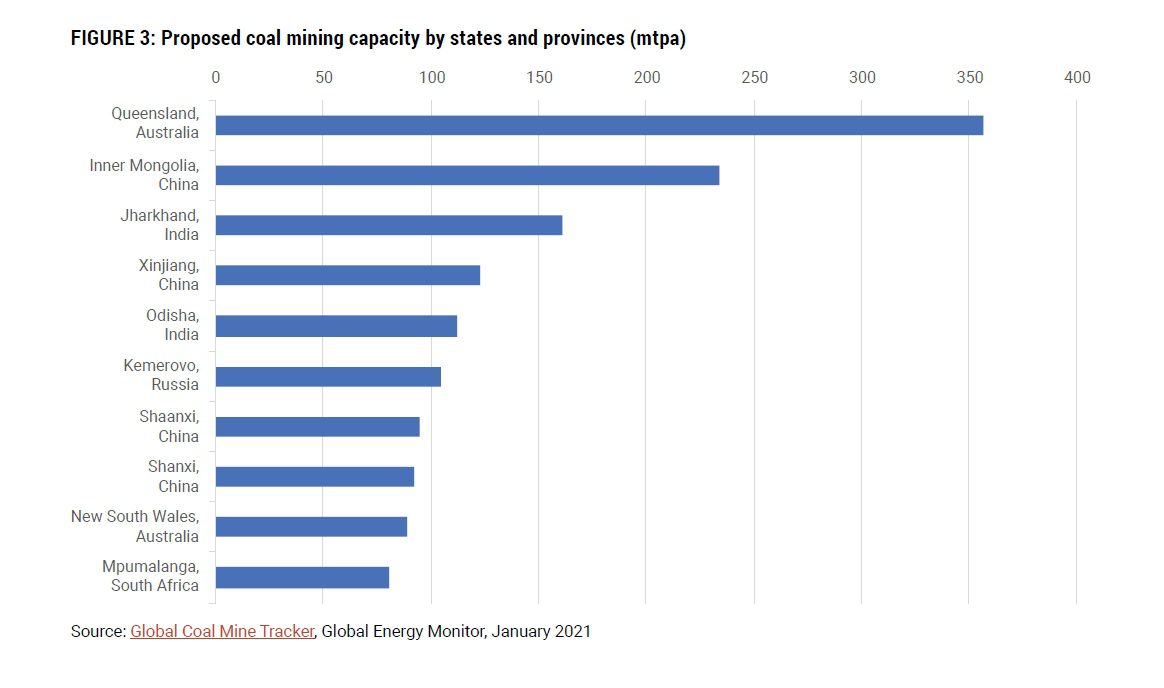
“The coal-fields of Queensland, Australia, have more coal under development than any state or province in the world (357 mtpa), bolstered by projects in the Bowen and Galilee Basins”, the research finds. New South wales come in ninth, after a collection of major Chinese and Russian provinces.
Several Australian firms dominate the top ten coal mine developers by planned capacity, such as Mineralogy (second) and Valiant Resources (fifth). Coal India and Adani are first and third. The report estimates Australia’s capital costs of projects under development is $15.8 billion USD, all at risk due to policy changes or changes in demand for coal due to global climate policies.
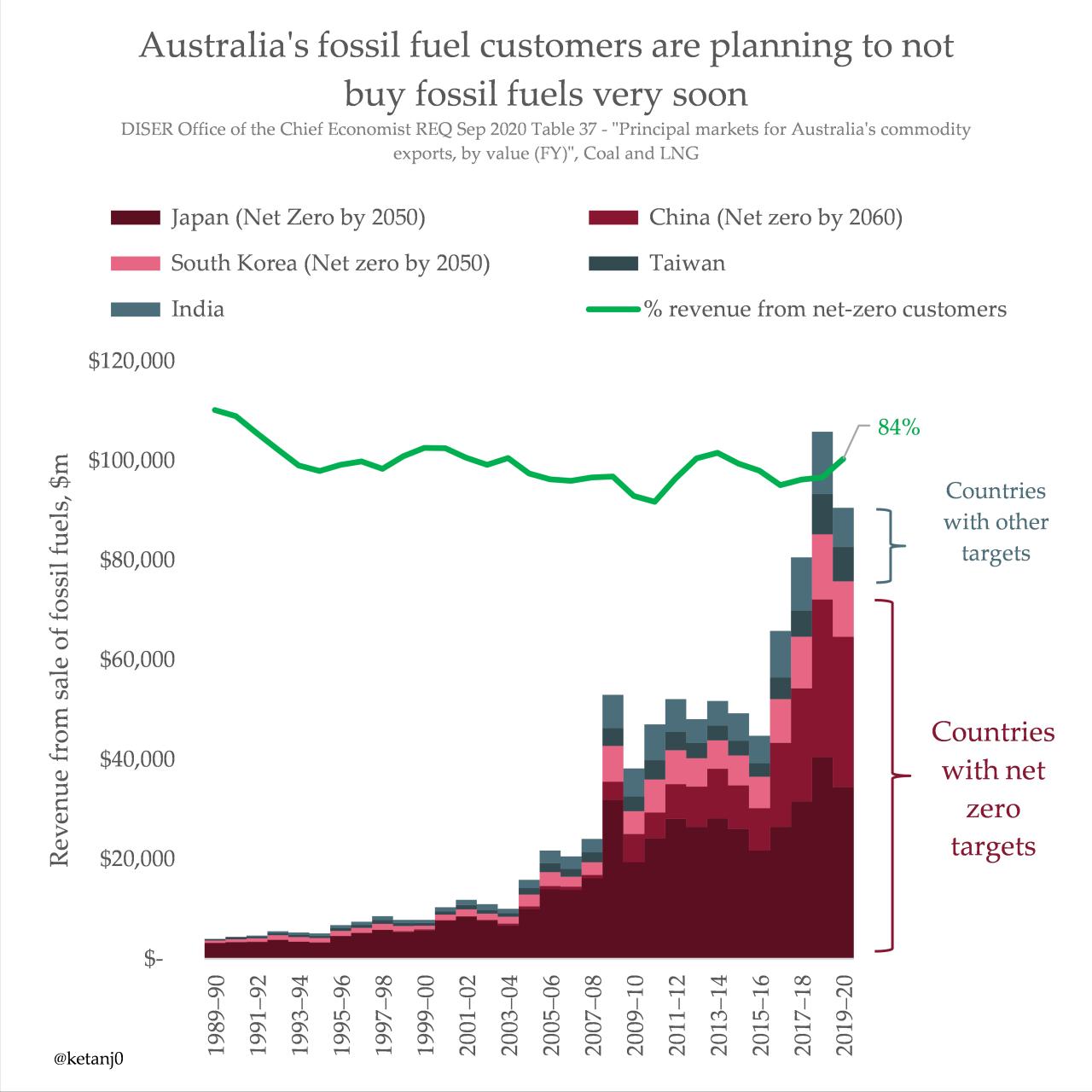
“All of Australia’s thermal mine proposals are early phase developments and thus vulnerable to cancellation, especially with foreign governments moving to cut emissions and reduce demand”. The majority of Australia’s thermal coal customers have now established net zero targets, and are very likely to announce plans to meet those targets in the short term at COP26, due to be held later this year.
A recent poll from the Lowy Institute found broad cross-party support for a moratorium on new coal mining in Australia, but the idea has not been welcomed from political circles. Recently, former Prime Minister Malcolm Turnbull suggested the concept, but that resulted in him being fired from a position advising the New South Wales government on energy transition issues. The firing of Turnbull was welcomed by Deputy New South Wales Premier John Barilaro, who later ‘saluted‘ a train transporting coal from a mine to a port.
We're having a break to rest, reflect and reboot.
A flurry of late orders has broken the wind investment drought in Australia, with global…
Electricity prices can be kept near today’s levels in a post-coal National Electricity Market, but…
A legal move to extinguish any native claims over land proposed to host the giant…
We discuss some of the major events of the past year - the dominance of…
SEC to build state's first publicly owned wind farm, that will be the first to…