A rooftop system in Queensland. Source: Canadian Solar
The extent to which the federal Coalition’s nuclear power plans clash with Australia’s world-leading rooftop solar uptake has been highlighted by new analysis that estimates tens of thousands of residential PV systems would have to be shut off on a daily basis to allow just one nuclear plant to operate.
The Queensland Conservation Council report models the potential impact of nuclear power on the Sunshine State’s future grid by measuring it against the latest projections of the Australian Energy Market Operator’ in its’s 2024 Integrated System Plan.
The ISP sets out a detailed 20 year plan for how Australia will meet its energy needs while retiring all coal fired power stations by 2040, using mostly renewable energy and storage. Nuclear is not a part of this plan.
Using the most likely scenario of the ISP, the Step Change, the QCC finds that adding just one, 1GW nuclear plant to the equation in 2040 would displace more than 3,700 GWh of cheap renewables, due to the inflexible nature of “always on” nuclear power generation.
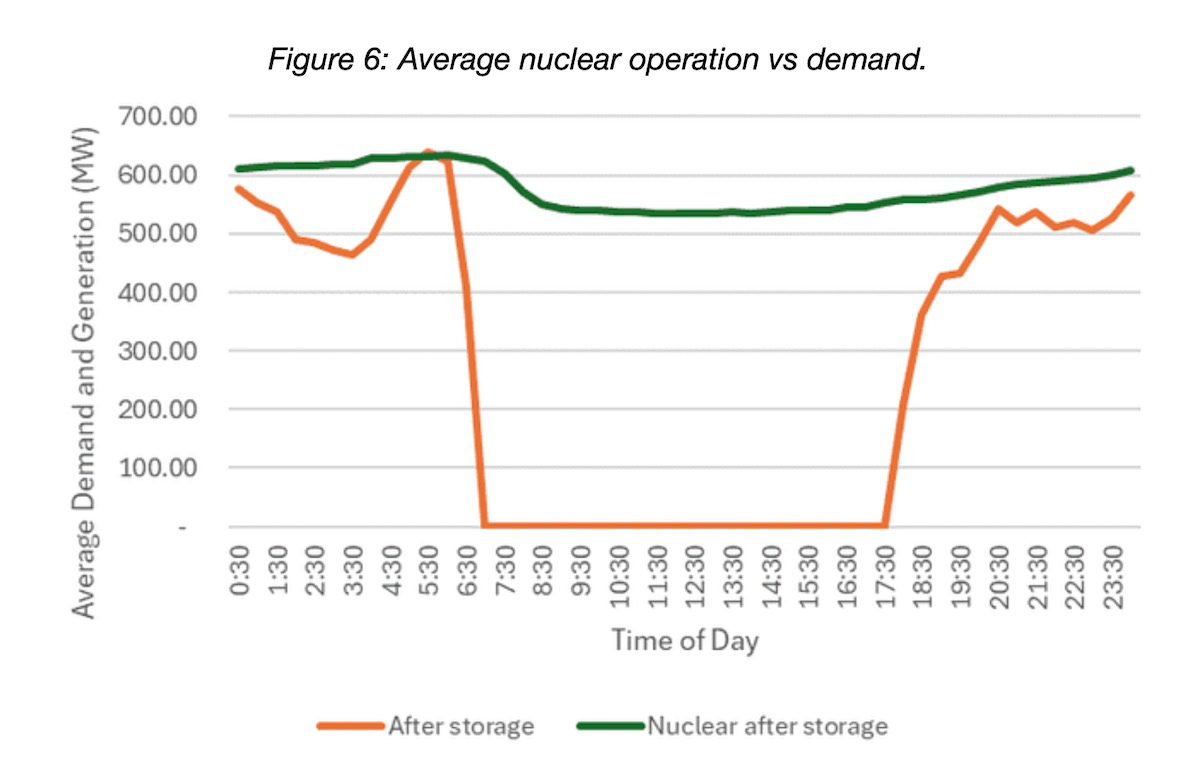
“A [1,000MW] nuclear power station, which can only run down to 500 MW …would usually be supplying more energy than the system needs (Figure 6),” the report says.
“This means the equivalent of an average of 45,000 Queensland household solar systems would need to be shut off every day. We would be shutting off cheap energy, like people’s rooftop solar, to allow expensive nuclear power to run.
“This report shows that, even if large-scale nuclear energy can be built in 15 years in Australia, we won’t need it.”
The new data supports what just about every other informed participant in Australia’s energy transition – from the market operator, to regulators, policy makers, utilities and the energy market itself – understand, and have been saying, about what will and won’t work in a grid that is changing dramatically.
In March, Simon Holmes à Court showed the Smart Energy Council conference how the hollowing out of daytime demand from rooftop solar creates the “complete opposite” energy demand profile of what a new nuclear power station wants to do.
And just last week, the University of Western Australia’s Bill Grace gave his own detailed analysis of why the sort of baseload power nuclear provides “is no longer necessary or commercially viable.”
QCC energy strategist Claire Silcock says this week’s report confirms that nuclear power has no place on Australia’s grid and isn’t what is needed to meet future energy demands at least cost.
“What we need is flexible generation and storage which can move energy from when we have lots of it, in the middle of the day, to when we need it overnight,” Silcock says. “That is not how nuclear power stations work.
“The earliest we could possibly build a nuclear power plant in Australia is 2040 – by then we will have abundant renewable energy and technology like batteries and pumped hydro will be providing the flexible storage we need to support that renewable energy.
“Nuclear is also much more expensive than renewable energy backed by storage,” she adds.
“It’s as clear as day that the federal Coalition’s nuclear plan is a fantasy to delay the closure of Australia’s polluting coal-fired power stations.
“We would like to see the federal opposition focus on a real plan for bringing down emissions and power prices and that would mean backing renewable energy and storage.”
Consumers are changing the way they use the grid, with the Solar Sharer causing a…
Big batteries and households continue to have a big impact on Australia's main grid, helping…
The cost of Snowy 2.0 has doubled again, this time up to a potential $25…
Australian solar innovator 5B has landed a new order for 70 MW of its pre-assembled,…
Midday prices rose from around zero to $25–30 in the last 30 days, and that…
The extension of the SRES has triggered a jump in interest for solar panels -…