Source: BP Images
Norway’s ‘Government Pension Fund’, known colloquially as ‘the oil fund’, uses revenue derived from Norway’s sizeable oil and gas extraction industry to create a range of diverse investments around the world. Most of the fund is directed toward ownership intersts in companies, spanning 74 countries and 9,202 companies, most recently weighted towards technology companies.
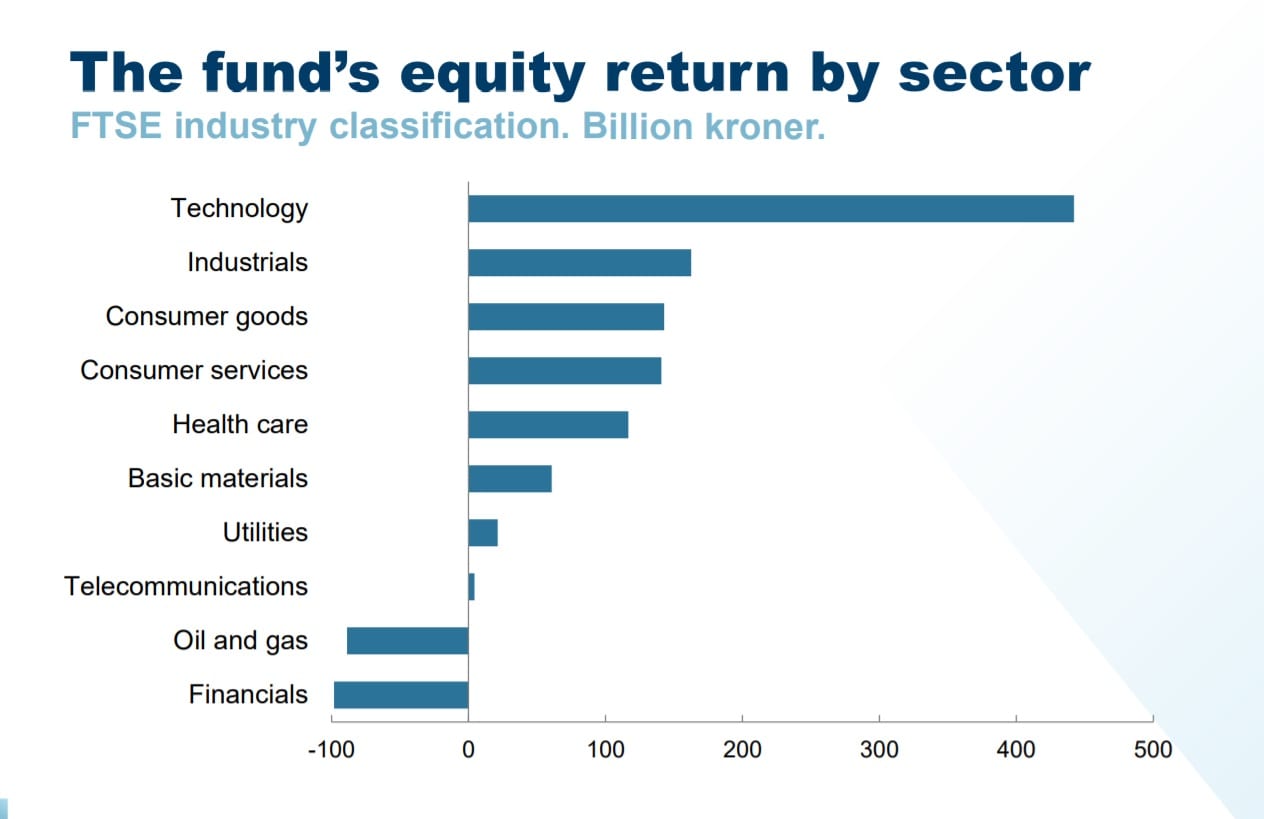
Recently, the managers of the fund, Norges Bank, announced their 2020 results. A massive return of 1,070 billion kroner (around 162 billion Australian dollars) was mostly thanks to high performance on technology stocks, particularly Apple. “Technology companies had the highest return in 2020, with a return of 41.9 percent. This is mainly due to the pandemic resulting in a massive increase in the demand for products for online working, education, trade and entertainment”, said CEO of Norges Bank Investment Management Nicolai Tangen. The fourth largest single contribution to absolute return in 2020 was Tesla, contributing 36 billion kroner.
In 2020, the money poured into the fund from the sale of oil and gas products is around 87 billion kroner. And curiously enough in the report on the fund’s investments, slightly more than that was lost as the value of fossil fuel investments plummeted. It was the second worst performing category in their database, followed only by ‘financials’.
The decline in value of fossil fuel investments seems likely to continue. Though the oil fund’s managers have promised to rapidly exit coal investments, they have made little commitment about oil and gas – and it’s likely to work against the fund’s managers when it comes to managing returns.
The only wind farm under construction in NSW has entered the grid management system, the…
Large-scale solar generation hit record highs in three states across Australia's main grid in September,…
High Court reverses NSW approval for an extension of one of the country's biggest coal…
NSW and federal governments are tipping in more than $1 billion to improve roads, with…
Construction begins at new wind and battery project that will help power one of world's…
The owner of the biggest wind farm in W.A. unveil plans for an even bigger…