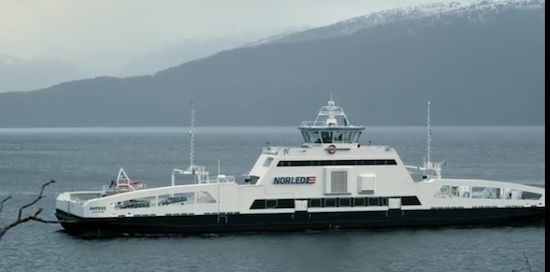
The impressive data, revealed at the Nordic EV summit in Oslo last week, is reportedly better than expected from the ferry – which was launched in 2015, and is called Ampere – and has resulted 53 further orders for Noregian shipbuilder Fjellstrand.
Norled itself has obviously been happy with the performance of the ferry, having already commissioned another, called Elektra, which was launched last year.
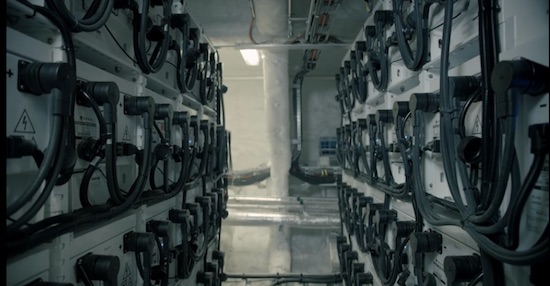
As Elektrek explains, the ferry is the fruit of a partnership between Norled, Fjellstrand Shipyard, Siemens and Corvus Energy – the latter two of which developed the boat’s electric powertrain and battery system, giving it more than 1 MWh of capacity.
The website also notes that ferries are prefect candidates for electrification, due to the fact that they often travel short distances and dock for relatively long periods of time at established ports, where they can be charged.
Elektrek says that Norled have been charging their ferries through battery packs at each port, which helps maintain a high charge rate while reducing peak demand costs.
And they are not the only electric ferries around. In 2017, ABB was working on converting two of Sweden’s HH Ferries Group’s massive ferries from diesel engines to 100 per cent battery-powered.
New large all-electric container barges dubbed ‘Tesla ships’ are also launching this autumn and an new all-electric cargo ship with a massive 2.4 MWh battery pack recently launched in China.
If you ask me, things are becoming extremely interesting on this front.
And just last month, Dutch company Port Liner revealed that five autonomous electric barges were set to begin operating between the De Kempen intermodal terminal in the south of the Netherlands and Antwerp beginning in August of this year.
Cleantechnica reports that the “Tesla Barges” have – designed to fit beneath the many bridges found in the Netherlands and Belgium – are expected to displace as many as 23,000 trucks, most of them diesel powered, from area roads.
And, of course, China is in the game, having launched the world’s first electric cargo ship in December of last year, which it is using to ship… coal.
This article was originally published on RenewEconomy’s sister site, One Step Off The Grid, which focuses on customer experience with distributed generation. To sign up to One Step’s free weekly newsletter, please click here.
Renewables retailer and home energy management specialist has closed a nearly twice oversubscribed funding round…
Intergenerational Report estimates coal and gas output could shrink about 70% by 2050 if emissions…
EPBC waves through one of a series of renewable energy projects being built to wean…
Victoria's coal country is rapidly morphing into battery country, as one huge project starts commissioning,…
VicGrid has released its preferred route for the 60 km new transmission line needed to…
In this special episode recorded live from Everything Electric Sydney, we explore how close Australia…