Image: Goldwind LinkedIn
The recent dunkelflaute – several days of low solar and wind generation on Australia’s National Electricity Market – has driven debate about how it can be managed.
The main challenge occurs in winter, when solar generation decreases, especially in southern Australia where the sun is low in the sky and cloud is common, and this is compounded by low wind.
These situations occur very rarely, so private investment in generation capacity is less likely to be cost-effective, while prices at those times can be high.
The first issue is that this problem is driven by high electricity demand in cold weather. The main driver of this is use of inefficient heating equipment used in thermally inefficient buildings.
It is bemusing that this is rarely mentioned in discussions about addressing the problem. As the International Energy Agency and the European Union repeatedly point out, energy efficiency is “the first fuel” in the transition to net zero. In Australia, it is the “forgotten fuel.” It’s certainly not rocket science.
Electricity retailers and network operators know exactly who is using lots of electricity at critical times. Retailers have ongoing financial relationships with those consumers, and network operators also know their addresses. It seems obvious that they should voluntarily or, driven by governments, focus on helping these consumers to improve efficiency and implement “flexing” and energy storage.
A paper I co-wrote with Amandine Denis-Ryan for IEEFA, Optimising the ‘Battery of the Nation’ | IEEFA, showed how Tasmania could, by driving energy efficiency and maximising cheap electricity imports from Victoria, make more stored water available to supply more electricity to the mainland in winter.
This could ‘trickle charge’ distributed mainland batteries so they could continue to operate for multiple days. This can also take advantage of existing powerlines when they have excess capacity outside times of peak demand.
Other existing hydro systems could also do this. And pumped hydro can also play a role.
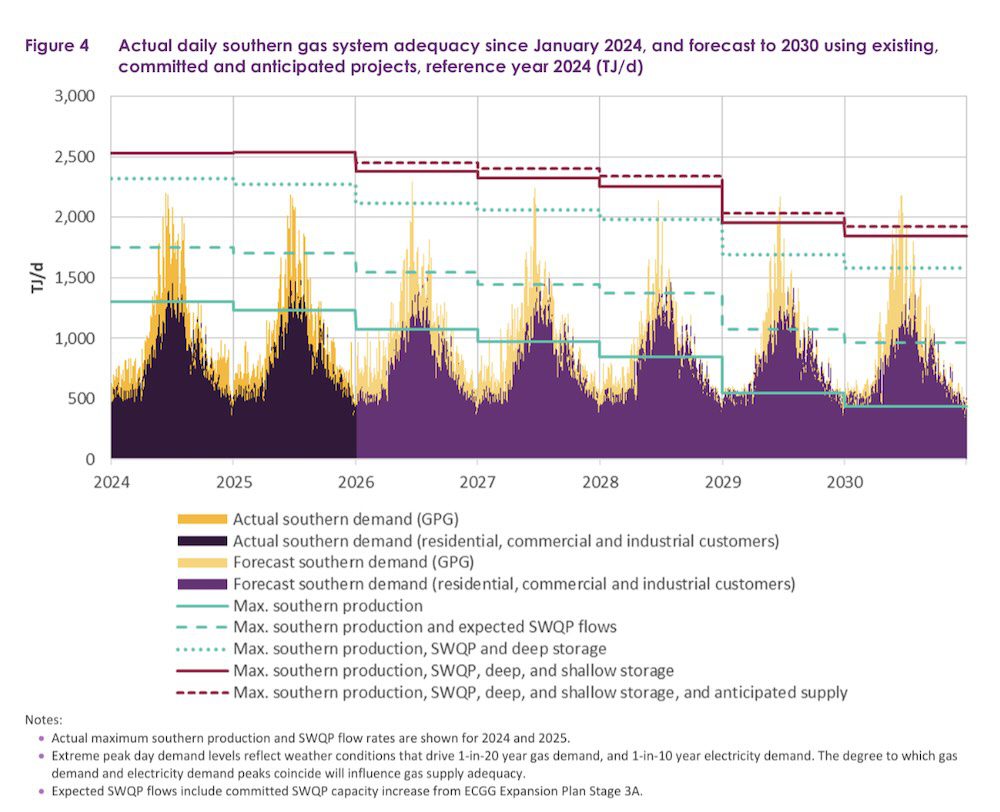
Declining gas supply when southern Australian gas demand, for direct use of gas and for electricity generation, means improving building energy efficiency and managing its peak demand will also help to address the gas challenges.
As we electrify, these approaches will be increasingly important. AEMO’s 2026 Gas Statement of Opportunities yet again shows southern Australian high winter demand for direct use of gas and gas-fired electricity, as well as projected declines in available gas.
It’s pretty obvious what is driving this, and that we could do something about it with targeted building energy policy.
Industry should be advocating for this, as their gas supply is likely to be reduced in preference to limiting consumption of voters’ homes.
And instead of treating short- and long-term energy storage as separate issues, we should integrate their use, as outlined in our IEEFA paper.
The solution seems obvious, yet our supply-side dominated energy policy and culture seems blind to it.
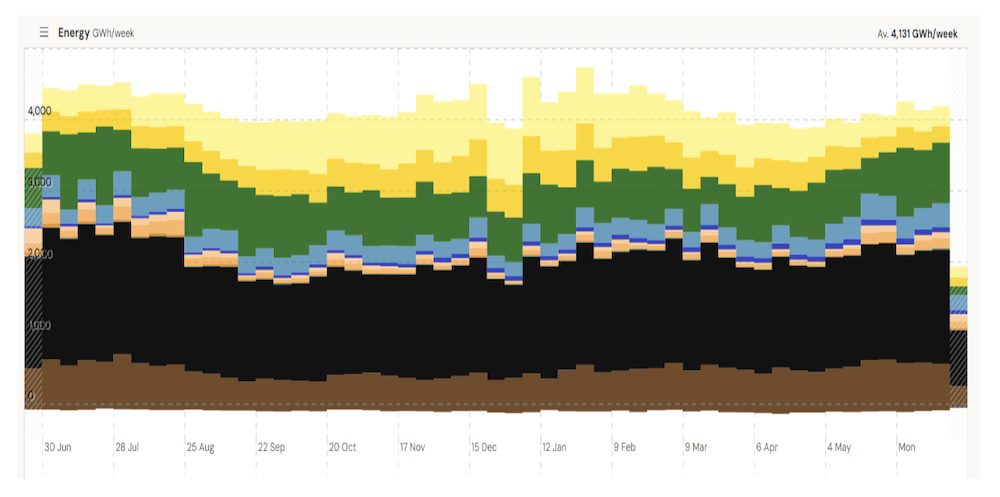
Openelectricity shows the situation for electricity. In winter, even if we look at weekly average data, if we look beyond the solar and wind, demand for fossil fuel and hydro generation is highest, and for sustained periods, with high reliance on gas.
AEMC commissioner Rainer Korte on what the new rules on reporting and data sharing will…
Developer says it is good to go on early works and construction of the largest…
AEMO says proof that grid forming battery inverters can deliver heartbeat of the grid will…
Days after lodging new plans for a more than 500 MW wind farm, Squadron dumps…
AEMO’S head of systems Nicola Falcon on the 2026 ISP and the importance of grid…
Flagship pilot program to set up 100 sites around the country to collect used solar…