Power grid manager PJM has an answer. Results of a three-year study of the power plant fleet operations from Chicago to Virginia show that raising renewable energy to 30 percent of the electricity supply can reduce CO2 emissions by 40 per cent. And this can be done while maintaining the reliability of the electric system.
PJM Interconnection, LLC., is the federally designated operator for the power grid in 13 states plus D.C. PJM, like the other ISOs (Independent System Operators) or RTOs (Regional Transmission Organizations) are charged with coordinating power plant operations and transmission infrastructure to reliably meet electricity demand. These ISOs have several layers of supervision. If PJM did something against its own rules, an aggrieved party can take the matter to the Federal Energy Regulatory Commission (FERC), where the ISOs are regulated. (You may have heard of FERC in the second season of House of Cards, episode 19.)
Moving along to the study of 30 percent renewable energy, and resulting CO2 reductions, PJM developed the data for this major effort, working with GE and other consultants. They examined the transmission operated by PJM (and beyond), the set of 1,400 power plants that serve 61 million people, including the fuel needs and performance of the current power plants. (You can find links to the full report and executive summary here.)
To predict how the power supply would work in the year 2026 with 10 times more wind power and solar than already running on the system, the study used actual hourly energy demand and wind and solar patterns. The wind and solar facilities were spread out for 10 scenarios, including the 2 percent existing renewable generation, up to 30 percent energy from wind and solar in different mixes.
The PJM scenario with greatest CO2 reduction is 30 percent renewable energy, using the best sites for wind, including a low amount of offshore wind, and one-sixth of the renewable energy coming from solar. The CO2 emissions change from over 500 million tons in year 2026 when running the grid as usual, to a new level of 300 million tons with this addition of renewable energy. That is a 40 percent reduction.
This should be useful when considering EPA regulations for carbon emissions from existing power plants. If the EPA 111(d) regulations apply to all fossil fuel power plants, and the new standard allows a shift to low-carbon electricity generators for compliance, this PJM renewables integration study shows a way forward. The ISOs and RTOs are well-positioned if the EPA 111(d) compliance can be met through the management of fleets of power plants and the displacement of fossil fuel plants with zero-carbon electricity supplies.
Range of CO2 reductions reaches 40%
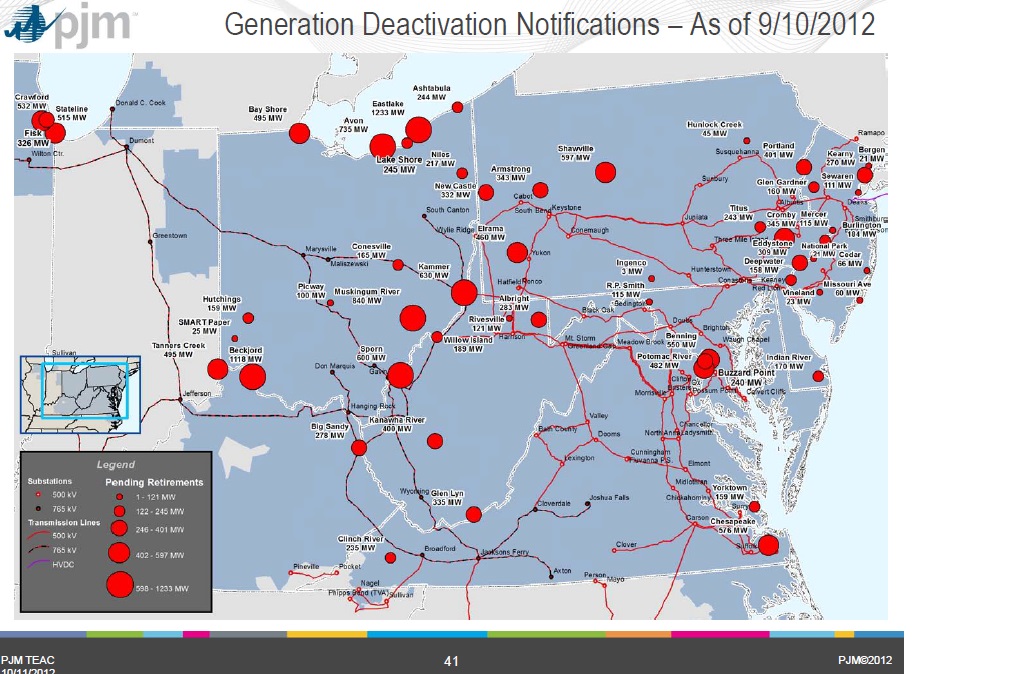
PJM planning for power plant retirements in 2012
Absolutely. Remember, PJM is already managing the grid planning with the retirements of some 50 plants with a total over 13,000 MW. One of PJM’s primary roles is to evaluate the impacts on the grid from all this change and figure out how to reliably meet electricity demand in its service territory. (See map of plant retirements below.)
In other words, no one has a more complete picture, or more data, on the operations of the power system in the PJM region than PJM itself. This is an organization with a total 2012 budget of $322 million for running the grid. In each region with an Independent System Operator or Regional Transmission Organization, there is no other more knowledgeable authority on the subject of running the regional power grid. If PJM says that changing the power plant fleet to provide 30 percent of electricity from wind and solar can be done with CO2 savings as high as 40 percent, no one is more credible.
There are solid indications that other regions can achieve CO2 reductions with high levels of renewable energy. We describe the growth in renewable energy and grid operators successes around the U.S. with experience of wind above 20 and 30 percent of the supply (in one hour) in our Ramping Up Renewables report.
Additional studies by utility operators with 20 and 30 percent renewable energy (on an annual basis) can be found at the Utility Variable-Generation Integration Group web site. Each region has a different mix of plants and resources, so the details must be examined. But it is clear from this new PJM study that using renewable energy to reduce power plant carbon emissions is a viable option that we can use for compliance with these upcoming regulations.
State utility helps to bring major new battery project to financial close, in a deal…
Solar recycling hopeful says it is "losing an insane amount of money" waiting for the…
For renters watching rooftop solar spread across the neighbourhood, Australia’s energy transition can feel frustratingly…
Since 2020, Australia's subsidies for fossil fuels have totalled almost six times the amount given…
One minute, Victoria's new energy minister was promising industry stakeholders that Labor will hold the…
First battery units arrive at what will be the biggest storage facility in Australia's most…