Plans to capture carbon from Chevron’s Gorgon gas project have not gone to plan. Chevron Australia
Back in the mid-2010s, Tony Abbot tried to kill the Australian Renewable Energy Agency. There was no logic, no justification, and no real effort to explain the decision. It was hand-waved away as an agency of extreme cronyism.
“[The Australian Labor Party] established reams of authorities and independent advisers—CEFC, ARENA, CCA. God knows how many of their lapdogs were on the payroll telling them what they wanted to hear”, said the then back-bencher, now energy and emissions reduction minister Angus Taylor, in 2014.
Today, the goal is the same, but the tactics are more patient, more corrosive and cleverer in the worst possible way.
Instead of all out war, the Morrison government is disabling any emissions reductions functions left over from the Labor years of 2007 to 2013 by rebuilding them plank-by-plank, from the inside out. ARENA and the CEFC, derided by Taylor as “lapdogs” of the Labor government, are now being pushed to hand cash to the fossil fuel industry to fund highly improbable and consistently failing carbon capture projects, and even fossil gas projects.
This comes after the government slashed funding to ARENA, and stacked the board with some friendly faces, including one of Taylor’s best friends, his former advisor and an economist with a history of fierce opposition to renewable funding. The new remit of the renewable energy agency is to fund any project that ““could reasonably be expected to control, reduce or prevent anthropogenic emissions of greenhouse gases to a material extent”, along with a remit that covers ‘low emissions’ technologies in addition to zero emissions technologies. RenewEconomy’s Michael Mazengarb revealed that RioTinto, one of Australia’s highest emitters, is now set to receive grants from ARENA.
In case you had any doubts about who the target audience for these changes is, Australia’s largest oil and gas lobby, the Australian Petroleum Production & Exploration Association (APPEA), said the changes to ARENA “put oil and gas in driver’s seat”. At least they’re being honest: this broad effort isn’t about attacking the renewable energy industry, but handing power and control to the fossil fuel industry, in a world where they’re watching power slipping from their fingers.
The script has been flipped. Fossil fuels are the alternative energy, now – and they’re badly in need of government intervention, subsidies, loans and handouts to survive in a world changing much faster than they ever predicted. Torching clean energy funding simply isn’t enough anymore; these bodies need to be re-tooled and redefined, as rapidly as possible. The Australian Fossil Energy Agency. The Gas and Coal Financing Corporation. It’s a scrabbling, panicked response to the massive global shifts not just in policy but in markets, in behaviour and investment.
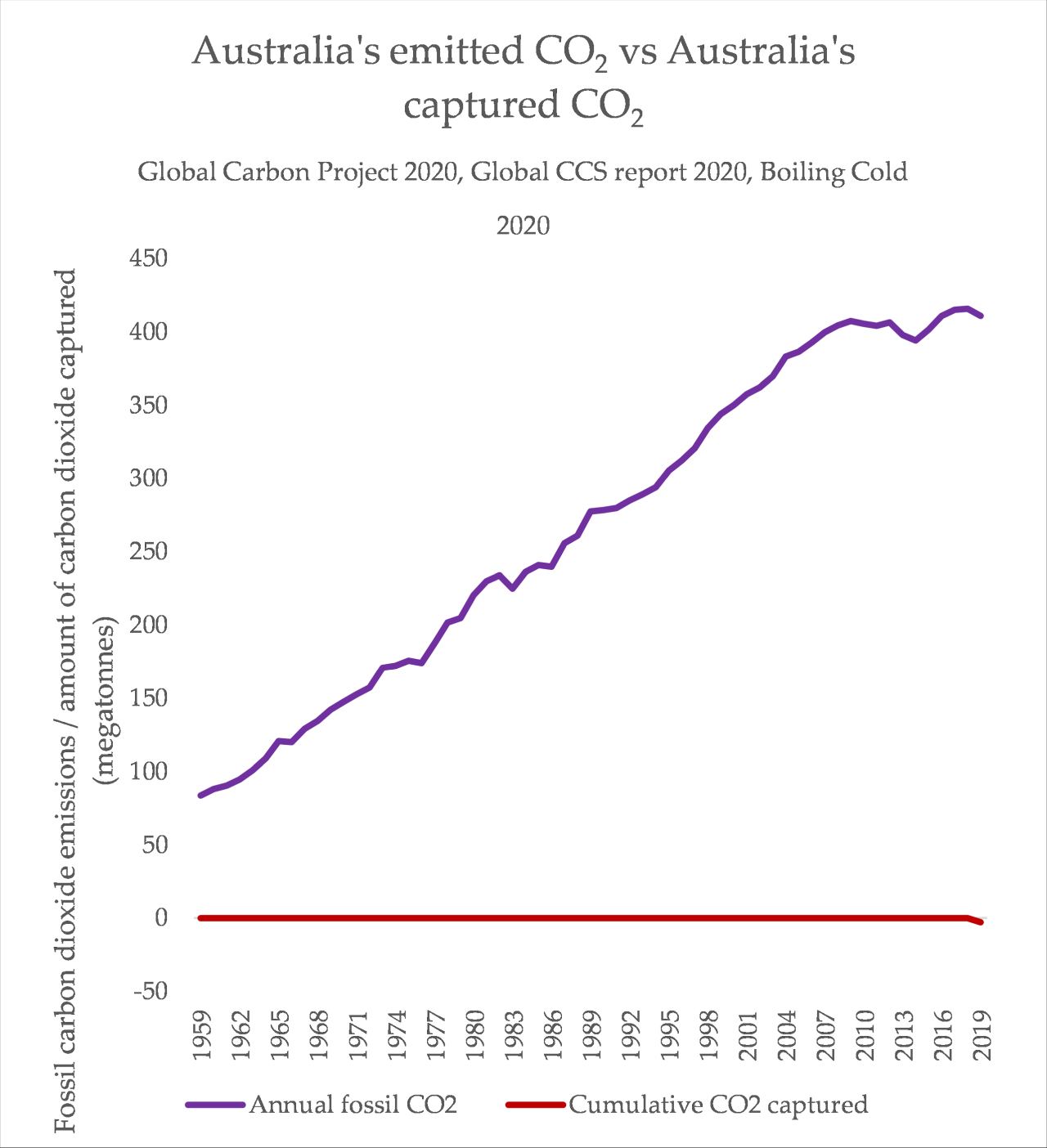
It’s not clear whether one-off grants nicked from renewable agencies will even slow down the decline of fossil fuels. The carbon capture ruse is well past its prime. After decades of billions and billions dedicated to funding CCS in Australia, it has captured a measly total of around three cumulative megatonnes of CO2. Australia’s fossil emissions in 2019 alone were around 400. Compare that to the total of around 270 megatonnes of CO2-e avoided through the deployment of renewable energy since 2011, in Australia.
It is only May, and the Australian government has been on a truly wild fossil fuel spending spree. This isn’t just brought on by ideology, or by cronyism, or by the incredible avalanche of political donations from fossil fuel companies. There’s a logic to it: the government is trying to transmogrify Australia’s climate action apparatus into climate delay apparatus because the fossil fuel industry is – finally – actually threatened.
Rapidly improving battery densities, falling costs and changing market signals behind potential major expansion of…
In the race to renewables, the big question is whether "faster than we thought" is…
The sale of a 100 kilowatt and 200 kilowatt-hour sodium-ion battery system is being claimed…
CEFC boss Ian Learmonth explains why big wind projects may finally get delivered this year.…
A Victorian parliamentary inquiry on apartment energy issues has recently reported and identified several issues…
Head of green bank says Tomago green transition deal likely to get big wind projects…