Fortescue Metals says it sees significant global opportunities in the electrification of heavy transport following its purchase of Williams Advanced Engineering, far beyond plans for electric trains and electric trucks in its own operations.
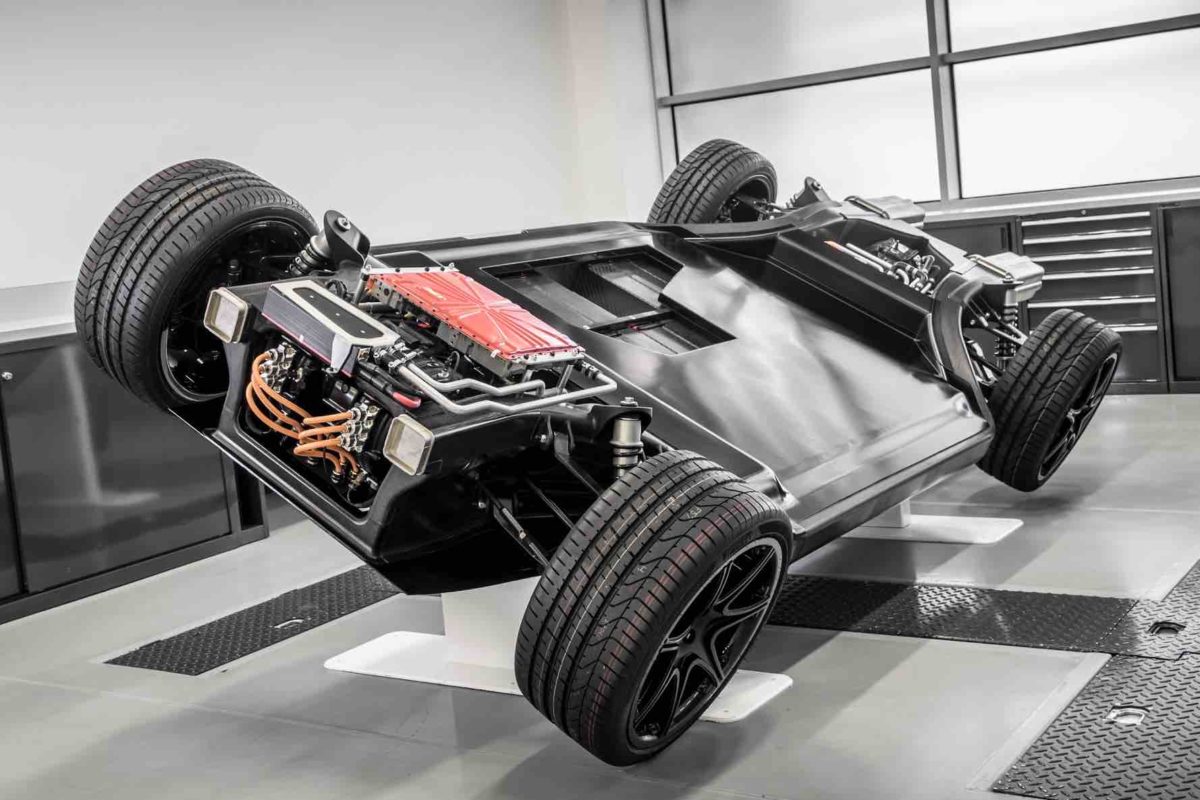
The $310 million purchase of the engineering offshoot of the famed Williams F1 racing team gives access to multiple technologies, including advanced battery and management systems, EV drivetrains and even specialised sporting equipment.
But while the development of an EV drivetrain could be adopted by the likes of luxury car brands such as Lotus and Jaguar, Fortescue itself says its focus will be on electrification of its own heavy transport and machinery, and the vast global market that will emerge, rather than making electric cars.
“Fortescue and Williams Advanced Engineering will develop battery electric solutions for Fortescue’s rail, mobile or fleet and other heavy mining equipment to accelerate the rapid abatement of diesel usage across our operations,” outgoing CEO Elizabeth Gaines told journalists in the quarterly market briefing on Tuesday.
“And, as the world transitions, the potential market for WAE’s technology and engineering capability is very significant, and that will extend beyond the decarbonisation of Fortescue.”
The development of an EV drivetrain last year also potentially gives Fortescue access to an EV manufacturing opportunity, in the same way it has plans for a 2GW hydrogen electrolyser factory in Queensland through its joint venture with Plug Share, and a potential thin film solar facility.
But Gaines, in response to a question from RenewEconomy, said that the focus, at least initially, is on the “huge” global heavy industry sector.
“Think about the number of heavy industry vehicles operating globally,” she said. “There is a significant market.
“So I don’t think we’re necessarily focused on passenger is EVs at the moment, the heavy industry opportunity is significant, not only for our internal decarbonisation, but the commercialization of that technology is is a significant opportunity.”
The other new announcement – the latest in a string of actual and potential green hydrogen and other technology deals over the past six months from Fortescue and its now 700-strong Fortescue Future Industries subsidiary – is the signing of an MOU last Friday with Sinosteel.
That MOU aims to complete a rapid appraisal of the potentially massive Midwest magnetite project, that could include a renewable energy and green hydrogen hub at nearby Oakajee, north of Geraldton, where the state government also has plans for green energy.
Asked about the potential scale of this project, Gaines said it was too early to say: “The scale of the iron ore opportunity will help to determine the energy requirement costs, and also the opportunity for further exports of energy as well.”
The state government has previously called for expressions of interest for a 1.5GW facility, but there are multiple different, and even bigger project proposals, in the surrounding areas.
Fortescue chairman Andrew Forrest has announced he wants his company to produce around 15 million tonnes of green hydrogen a year by 2030, although it could turn out that the chosen delivery system is as ammonia, depending on the customer.
If it was in the form of hydrogen, those plans would require more than 200GW of new wind and solar capacity – in Australia or around the world – to produce that amount. Even in the form of ammonia, it would require more than 50GW.
Last December, Fortescue and Incitec Pivot announced plans to replace fossil fuel ammonia with renewable ammonia to save the latter’s Brisbane ammonia facility. They said the 300,000 tonnes of green ammonia would require around 1,000MW of wind and solar capacity.
A landmark renewable energy and green hydrogen project in New Zealand has reached financial close…
Households could face a four-fold increase in network costs as a result of the regulator's…
A major reform intended to drive investment in renewable energy and storage capacity could have…
HMC is expected to move on its first new big battery project, after securing a…
State government fast-tracks approval for another two battery storage projects, taking total number of projects…
Federal green tick sought for 2.8 GW offshore wind project, but final scale will depend…