Prime MInister Scott Morrison with FMG CEO Andrew Forrest at the site in the states North West. Picture - Justin Benson-Cooper / The West Australian
One of the more insidious claims at last week’s ‘Leaders Climate Summit’ coming from Australia’s leadership – namely, the Prime Minister Scott Morrison and Energy and Emissions Reductions Minister Angus Taylor – is that Australia has been a global leader in climate action, and particularly for renewable energy.
“We are deploying renewable energy ten times faster than the global average per person. We have the highest uptake of rooftop solar in the world”.
In some senses, it is true. Australia really does have the world’s highest per-capita installations of solar PV, by capacity. The rate of renewable energy growth is uniquely high, though “ten times faster than the global average per person” is hard to verify.
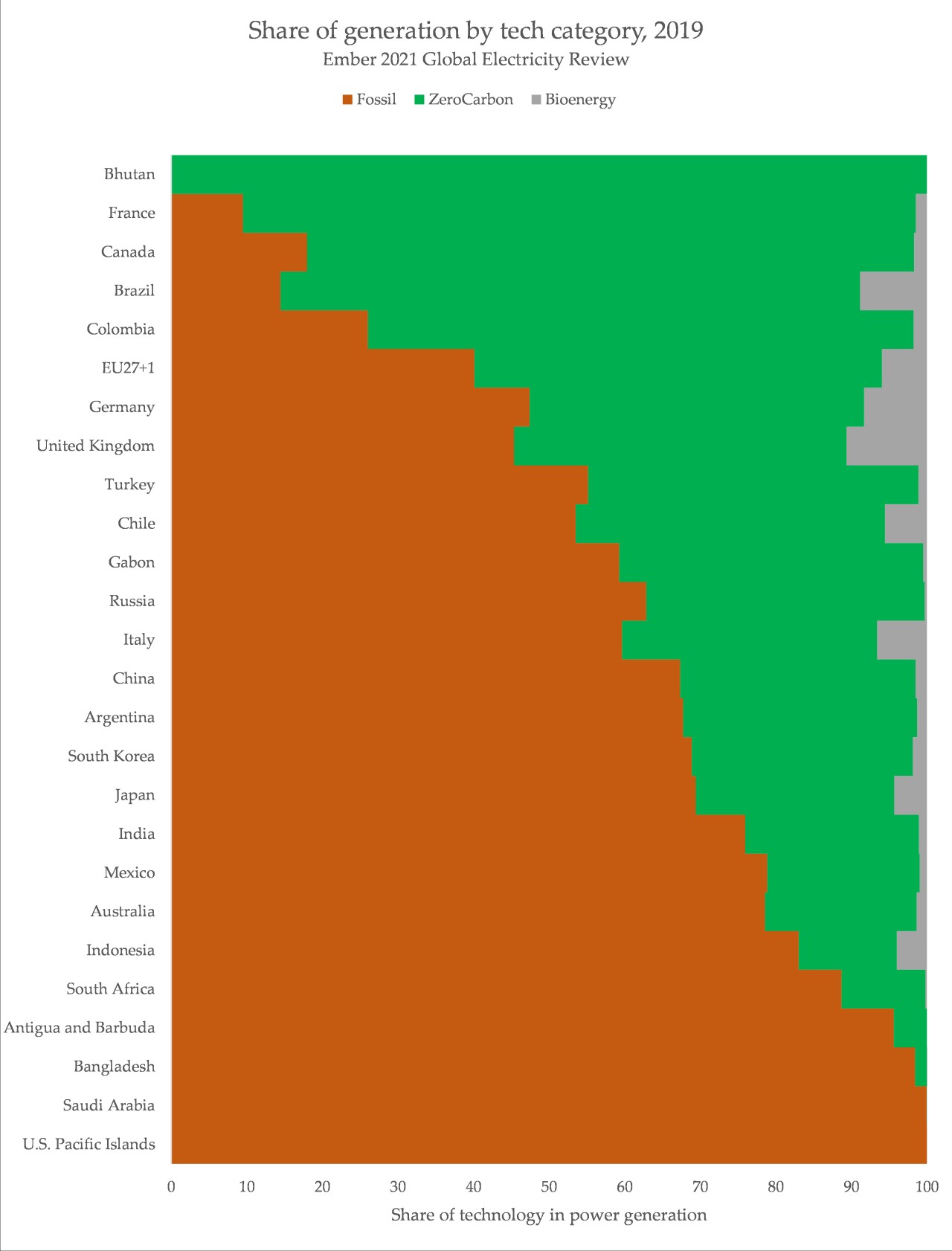
But neither of these take away from the important fact that Australia’s electricity grid continues to have one of the highest shares of fossil fuels in the world. Of the 26 countries or regions that were allocated a speaking slot at the Biden summit, Australia ranks 20th in terms of the share of fossil energy in its electricity grid in 2019 (2020 excluded due to many countries not having data for this time), as shown in Ember Climate’s 2021 Global Electricity Review:
While Australia has a high installation rate of rooftop solar PV, and a fast growth of renewable energy in general, it is also starting from a point of high fossil fuel dependence. That means only countries like Indonesia, Bangladesh and Saudi Arabia have a higher fossil share, of the countries that spoke at the Biden summit.
Excluding the land-use sector, which is reported differently across countries and suffers from wild variations in data across many countries, Australia ranks third last in the list of 45 countries under the UNFCCC’s data, with a change in emissions between 2005 and 2018 of 31.3%. Only Cyprus and Turkey saw a larger increase in emissions.
A new gas-fired power station – built by the government – is purportedly still on the cards, as is a potential rule change to allow subsidies for coal and gas plants on Australia’s grids. There is a very long way to go before Australia starts to properly crawl up the list.
Renewable energy developer launches new, wholly owned subsidiary that will continue to progress its 2.5…
Big battery signs 20-year service deal to meet its market and regulatory obligations, including the…
The climate wars are back: On one side of politics there is no sign they…
Chinese power giant Sungrow unveils a series of new storage and micro-grid technologies, including a…
Regulator warns that the complete lack of policies to guide this state's customer transition away…
First of its kind financing platform has room for more giant solar and battery hybrids,…