As we saw last week, the world’s biggest economies are, slowly but surely, ratcheting up their climate ambitions. For the US, for instance, an ambition for a fully clean grid by 2035 is one step closer, with an upcoming policy to set a target of 80% clean power by 2030; merely nine years from now. The bulk of this will be driven by wind and solar. And ditto for the UK, whose grid ambitions involve a 95-99% zero carbon grid by 2035.
As RenewEconomy reported yesterday, a new report from Australia’s grid operator, AEMO, shows that the transition is accelerating. “The two most striking elements of the Q1 report, though, were the fall to record lows of black coal output – down to an average of 11,006MW, its lowest Q1 output since NEM start more than two decades ago, and 1,018MW lower than the same period last year – largely as a result of more outages and displacement by rooftop solar”, wrote Sophie Vorrath and Giles Parkinson. And gas-fired power had its lowest quarter since 2005.
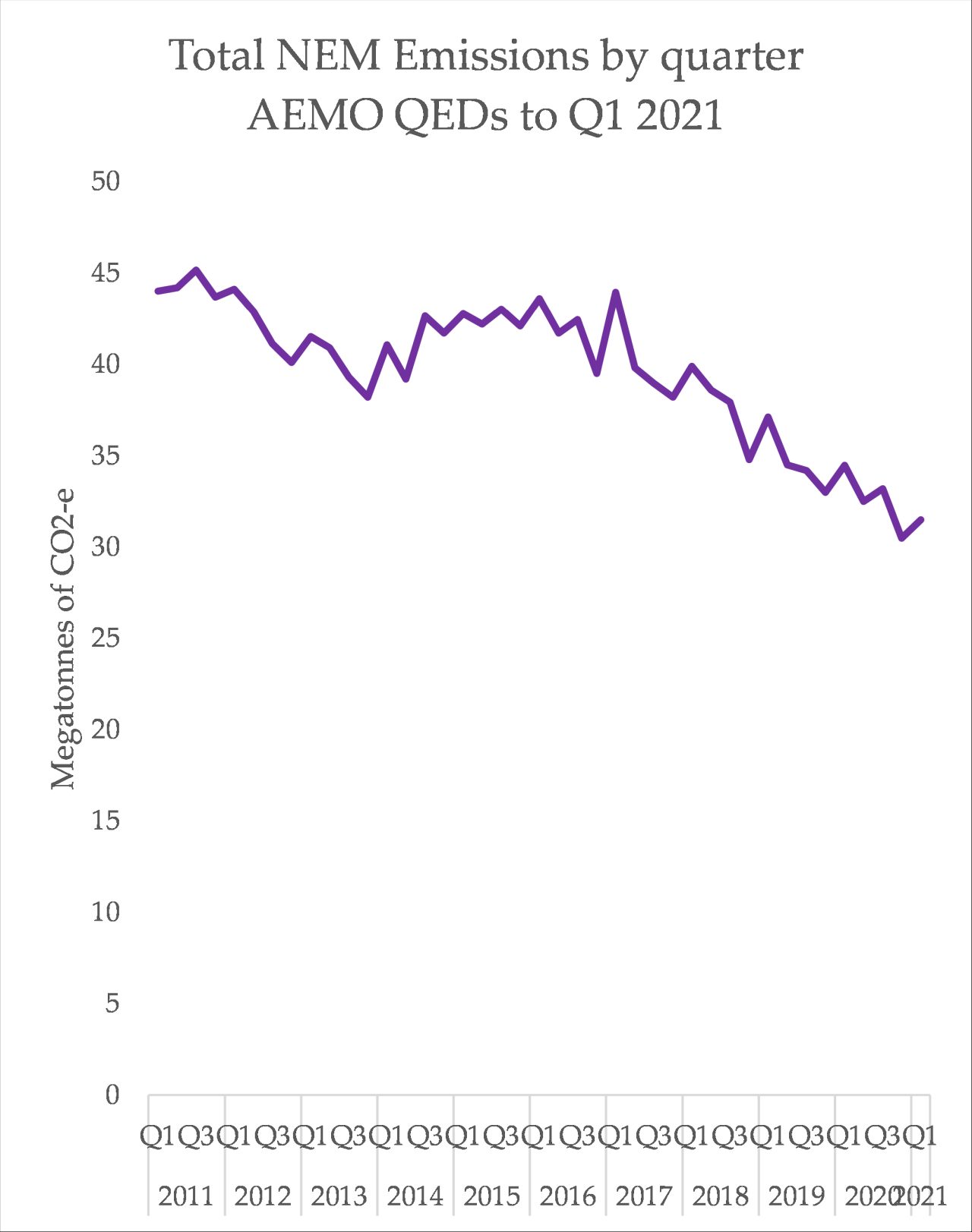
What’s the impact? Every quarterly report from AEMO includes that quarter’s history on emissions. And the last few weeks of announcement set a simple, important target that can be compared around the world: when does the grid hit zero? We can see how far the National Electricity Market has come so far:
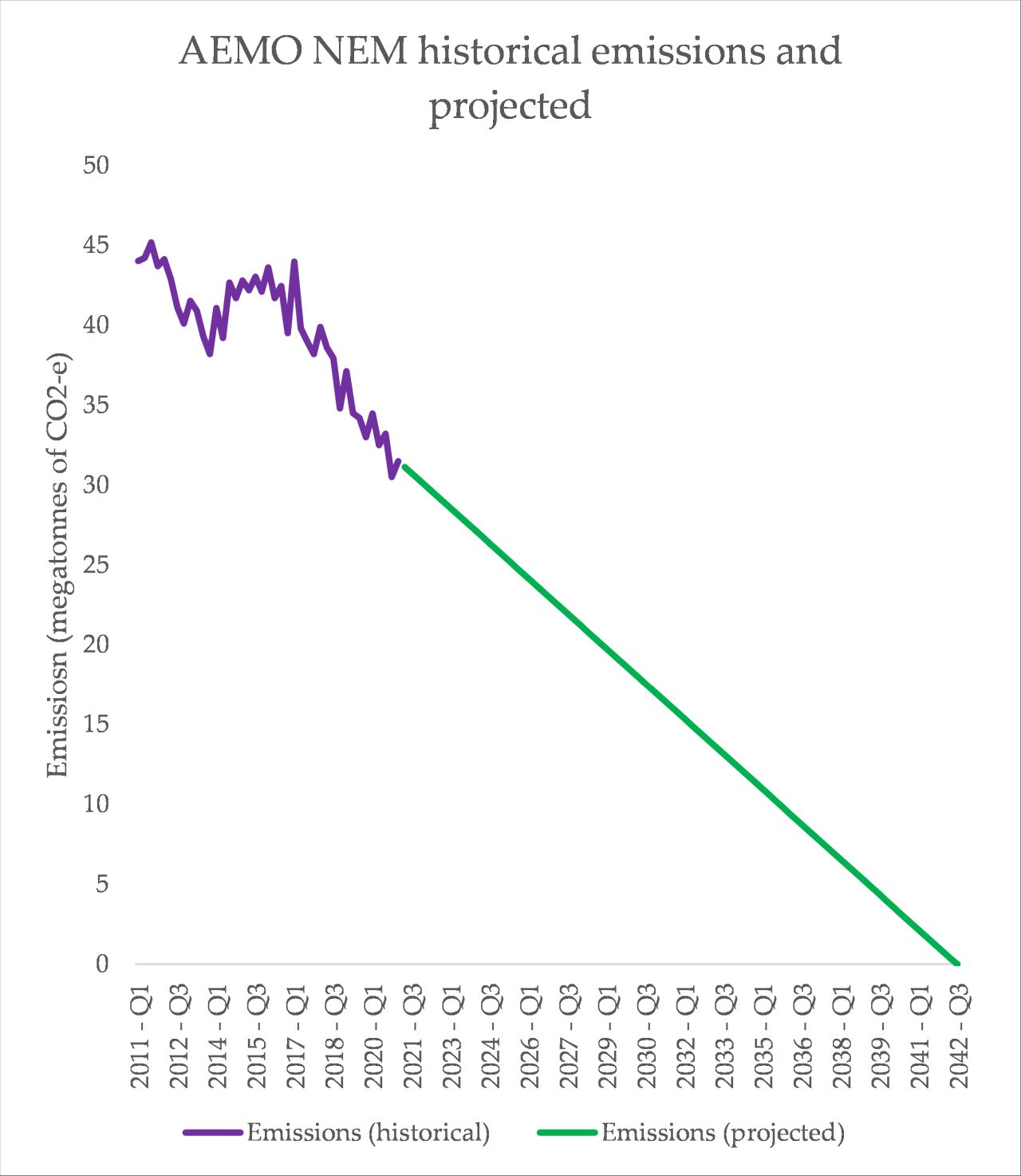
On average, Australia’s NEM has been shedding around one and a half megatonnes of CO2-e every quarter, and around 8 to 12 megatonnes per year. The rate of decarbonisation will obviously change, but we can guess roughly when Australia’s NEM will hit zero emissions at the current rate:
If Australia were to maintain its emissions reductions as per the reductions over the past two years, the NEM would reach zero emissions by 2042.
That is pretty good, and it reflects the massive changes in renewable energy that have played out over the recent years. But Australia’s renewable growth also faces a range of threats, such as insufficient government policy, so this could be slower. And of course, if governments were to step up, accelerating the total decarbonisation of the grid on par with countries like the US and the UK are actually entirely feasible.
The former leader of the Nationals, David Littleproud, says he has written to the LNP…
Australia's most powerful battery completes second of its shock absorber tests, and then flexes its…
Energy ministers meeting details how the federal government plans to set and enforce standards for…
One solar company fined $100,000 for failing to have fall protection in place, another made…
Huge battery and data centre proposed for nuclear power plant site in Germany, as renewables…
Shortfalls in governance of consumer energy resources will be obvious - and potentially costly and…