The New South Wales Labor government has announced a major new firming tender that explicitly excludes standalone batteries and pumped hydro, in order to ensure sufficient new gas-fired power plants are built to help deal with long periods of wind and solar droughts known as “dunkelflautes.”
The new tender – announced by state energy minister Penny Sharpe on Tuesday – is designed to address potential reliability shortfalls to emerge in 2033/34 as more coal fired power generators such as Bayswater and Vales Point exit the grid.
The tender will seek 1.5 gigawatts of new capacity and will differ from previous firming tenders held by the state and federal governments, because it will require the new generators to be “net energy” providers, effectively excluding both standalone big batteries and pumped hydro.
This plan is in contrast with the federal Capacity Investment Scheme (CIS), which specifically excludes gas. The NSW Electricity Infrastructure Roadmap has always permitted gas peaker plants to compete against batteries and pumped storage for the long-term energy service agreement (LTESA) contracts, but they have been unable to do so.
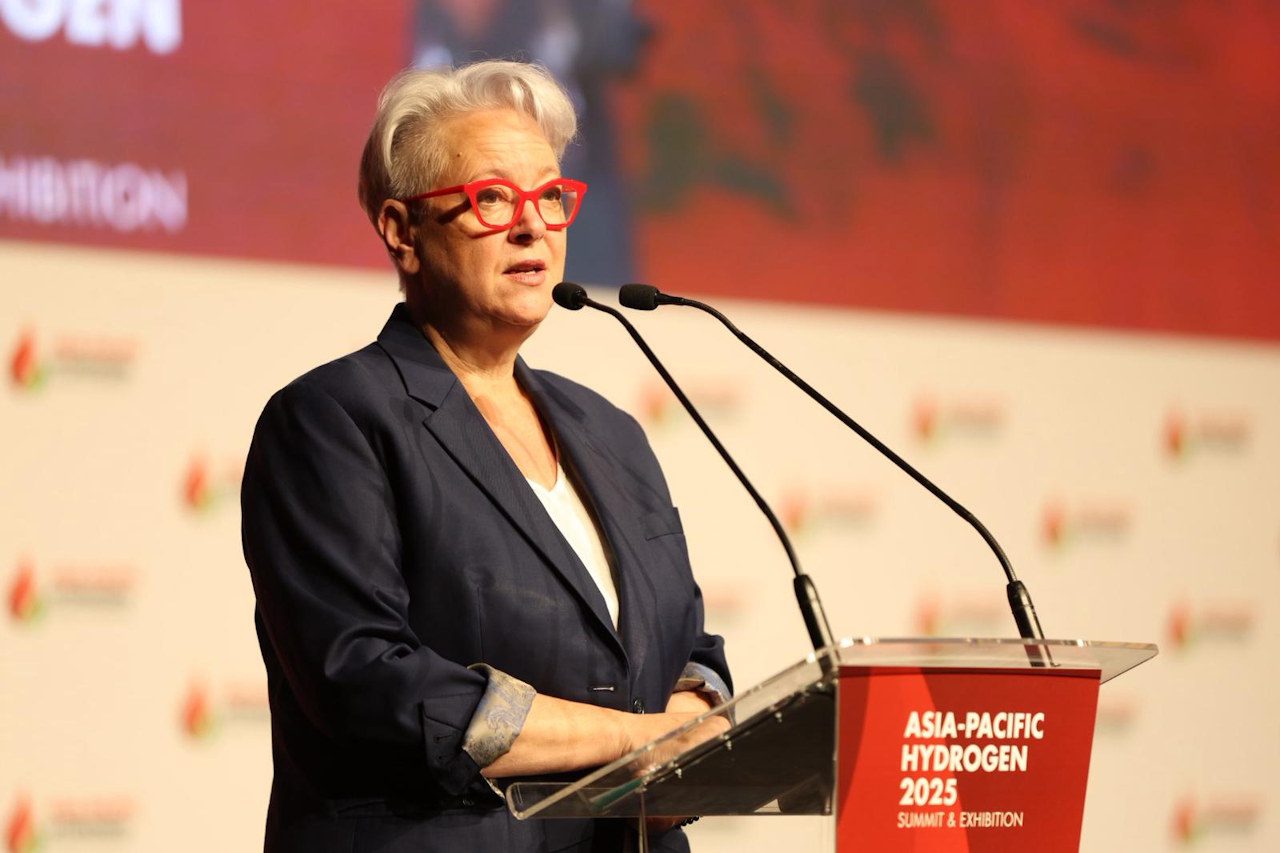
“We are delivering new renewable energy to power NSW and have seen a huge proliferation in battery storage, but gas peakers will have an important role to play in keeping the lights on,” Sharpe said in the statement distributed ahead of an address to the AFR energy and climate summit in Sydney.
“While gas-fired power stations will operate only occasionally, they will play a critical role in maintaining reliability during rare periods when renewable generation is low and available storage has been exhausted,” she said.
“By planning years ahead, NSW is giving industry the time and certainty it needs to invest in and build the infrastructure needed to keep electricity reliable as coal-fired power stations retire.”
The tender comes as some of the country’s biggest utilities have sought planning permission for big new gas generators, including Origin and Energy Australia.
Gas has been unable to compete in firming tenders seeking at least eight hours storage in both NSW and in South Australia. Those firming tenders will continue in NSW – and are expected to be filled by batteries and other storage technologies – but the government has had to create a new design to ensure gas gets a guernsey.
“Long-duration energy storage, such as large batteries and pumped hydro, will meet most reliability needs,” the government statement said. “However, there will be occasional extended periods of low solar and wind generation when electricity demand is expected to exceed storage reserves.”
The statement cited AEMO forecasts that presently forecast a reliability shortfall in the grid by 2033–34. The Minns Labor Government says is planning seven years ahead, giving industry time to develop and deliver these critical projects before they are needed.
The government said the tender would be conducted by ASL, the independent NSW Consumer Trustee. “Consultation has now opened on the proposed tender design, giving industry an opportunity to provide feedback before the tender is launched in 2027,” the statement said.
There are three key criteria for the new tender design, the most important of which is “net energy contribution”, meaning the facility must increase the total volume of energy supplied to the system and not rely on energy consumed from the grid (as batteries and pumped hydro do) to deliver the contracted capacity.
The facilities must also be dispatchable and must be able to maintain energy supply over periods of at least eight hours, and ideally longer.
The ASL documents suggest that hybrid projects, which combine wind and/or solar with storage, will be eligible, but are expected to be best suited to the existing long duration storage tenders.
The government still expects “cheaper and cleaner renewable energy” to dominate the state’s electricity supplies come 2033 when two more coal-fired power stations are likely to have retired.
NSW has been slow to introduce new wind generation capacity, in particular. Still, the government defended its progress, saying the amount of large-scale solar and wind in operation in NSW had increased by more than 80% since the Minns Labor government was elected in March 2023, and the amount of storage installed had increased 39-fold.
By 2050, gas-fired power would provide about 3.9% of NSW’s electricity, the government said.
At the moment, we’ve got about 2.5 gigawatts of gas, which is about 2% of the whole system,” Sharpe told the conference. “[W]e’re expecting that gas in the end will be about 3.9% of the system.
“We’ve always been open to gas – that’s always been part of our design,” she said. “[W]e think it’s small but significant and needed.”
Sharpe likened the gas peakers to Sydney’s sole desalination plant that is “ready to go [but] actually only operates absolutely when needed”
“We’ve got good renewables, we’ve got good batteries, we’ve got good long-duration storage,” she said. However, when there is a long gap over several days in renewable energy supplies, “we need that backup” from the gas peakers.
(Sydney’s desal plant actually operates every day, although it can be ramped up supply as much as 15% of the city’s water needs. “While the Plant was originally designed to operate only in times of drought, it has remained operational since 2019 to help address several storage dam water quality issues arising from bushfires, flooding and significant maintenance tasks in Sydney Water’s supply network, according to the plant’s website.)
It’s also not clear what timetable the government is working to, given that securing new gas turbines and completing their construction now requires about eight years, Aaron Trueman, ABB’s energy industries division lead in Australia, told Renew Economy on Monday.
Sharpe said the tender gave NSW “a seven-year lead” to get the gas plants up and running.
It’s also unclear how where the additional gas will come from, nor how adding gas peaker plants will assist NSW meet its greenhouse gas emissions reduction goals, including cutting 2005-level carbon pollution 70% by 2035.
Asked about the progress of Santos’s proposed Narrabri coal-seam gas field in northern NSW – which potentially could supply new gas peakers – Sharpe said “Narrabri already has approvals” but need to clear other hurdles.
“I would just generally say that Santos have put back its decision making on Narrabri several times, separate to before the gas reservation policy came in,” she said. “[W]e’re waiting for it to go ahead. I’ve put in place a lot of the kind of permissions that have allowed that to go through”, including for a gas pipeline.
Renew Economy has sought comment from the NSW Net Zero Commission about the emissions impacts for the state from the new firming tender.
As for wind, the NSW government plans a 2.5GW tender “that will come up before the end of the year”, Sharpe said. In addition, guidelines from the state’s data centre framework would require them to source 40% of their power through long-term power purchase agreements from wind.
“Wind is incredibly critical to NSW, so it’s a big focus [of our] attention,” she said.
As Renew Economy reported last week, however, NSW has just one wind farm under construction, and that project began in 2024. Critics have blamed the slow pace of planning approvals as among the reasons for the limited new investment in wind energy.
As about whether the 2880-megawatt Eraring power station might extend its operations beyond April 2029, Sharpe said: “Well, it’s ultimately a matter for Origin [Energy],” the owner.
“Our approach is pretty straightforward, which is that we are managing coal out as we’re putting renewables in, and the delicate balance that, as everyone knows, is in a pretty dynamic environment,” she said. “My preference is to have very clear closure [dates] so that we can actually plan for it.”
The new firming tender is expected to open in early 2027, following consideration of stakeholder feedback and finalisation of the Firming LTESA product and tender design. Facilities will need to be operating by 2033.
To join more than 29,000 others and get the latest clean energy news delivered straight to your inbox, for free, click here to subscribe to our free daily newsletter.