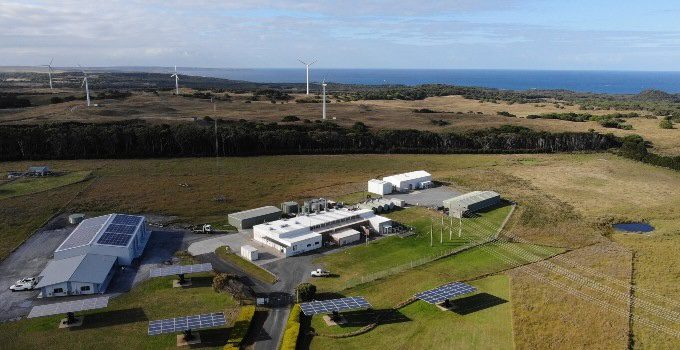
One of Australia’s oldest continuously working wind farms, and a vital ingredient of a world-leading hybrid microgrid that regularly powers a Bass Strait island with 100 per cent renewables, has had its life extended by at least 10 years following the completion of a major upgrade.
State-owned utility Hydro Tasmania said on Tuesday that it has successfully refurbished the 2.5 megawatt (MW) Huxley Hill Wind Farm on King Island, including the repair of one of the project’s wind turbines that was damaged during an extreme wind event in early 2025.
Rather than replacing the five turbines with new units, the project, led by Hydro Tasmania subsidiary Entura, “repowered” the wind farm by restoring and reusing as many components as possible, including nacelles refurbished in Denmark and on-island restoration of turbine blades.

The Huxley Hill wind farm’s first three 250 kW Nordex N29 wind turbines were installed all the way back in 1998, followed by another two Vestas V52 turbines in 2003.
Before 1998, the electricity for King Island – which is not connected to either the Tasmania or mainland grids – was generated entirely from diesel fuel at a 6 megawatt (MW) power station.
These days, the five wind turbines form a vital part of the King Island Renewable Integration Project (KIREIP), a hybrid off-grid power system designed to supply 65 per cent of the island’s energy needs using renewable energy.
Since the initiation of KIREIP, which has had backing from the Australian Renewable Energy Agency (Arena), the wind combined with a 1.5 MW solar farm (added in 2023), a 3 MW / 1.5 MWh lead-acid battery backup, two 1 MVA stabilising flywheels mean King Island is regularly powered by 100% renewables.
The wind farm’s two Vestas V52 turbines alone provide around 32 per cent of King Island’s annual energy demand, displacing approximately 640,000 litres of diesel each year, Hydro Tasmania says.
At the time of writing, wind energy was supplying 95 per cent of the electricity at King Island while solar was supplying the remaining 5 per cent (see screenshot below). The island’s five remaining diesel units were switched off.

Hydro Tas says the refurbishment of the KIREIP project extends the working life of the wind farm’s five turbines by at least 10 years, ensuring they continue to play a vital role in the hybrid renewables system that powers the island.
Jesse Clark, Hydro Tasmania’s executive general manager of assets and infrastructure, says the upgrade project demonstrates how existing renewable energy infrastructure can be renewed in a sustainable way. It also demonstrates that the life of wind energy assets is often a good deal longer than initially planned.
“King Island has long been a model for remote communities across Australia and around the world,” Clark said in a statement on Tuesday.
“Completing this upgrade means the wind farm can continue delivering reliable renewable energy for the island for years to come, while reducing costs and waste by making the most of existing infrastructure.”
King Island production supervisor Jeramy Whitehouse-Summers said returning the one damaged turbine to service was a particularly important milestone for the island’s energy system.
Repairs to the turbine – which suffered wind damage last year – included restoring the damaged section of the tower, repairing concrete at the turbine foundation, rebuilding the rotor with new blades from the original manufacturer, and installing a refurbished nacelle.
“The turbine is now back in operation generating renewable energy for the community and helping reduce our reliance on diesel,” Whitehouse-Summers said.
“The successful repair demonstrates the resilience of King Island’s renewable energy infrastructure and the expertise of the teams involved.”
If you would like to join more than 29,000 others and get the latest clean energy news delivered straight to your inbox, for free, please click here to subscribe to our free daily newsletter.